
There’s something truly captivating about Otomi style patterns. Their striking balance between simplicity and intricate detail has always captivated me. Originating from the Otomi people of central Mexico, these hand-embroidered designs feature vivid colors, whimsical animals, and decorative botanical motifs. They are hugely versatile and can be used on almost anything, from pillows, pouffes and table runners, to framed textiles, or inspire beautiful prints that can be used in a multitude of fun and fantastic ways. The Otomi style brings rich cultural history into contemporary spaces and is also full of meaning, which makes each piece so unique. If you’re craving a design style that’s vibrant, meaningful, and instantly conversation-worthy, Otomi-style patterns might be your next décor obsession.
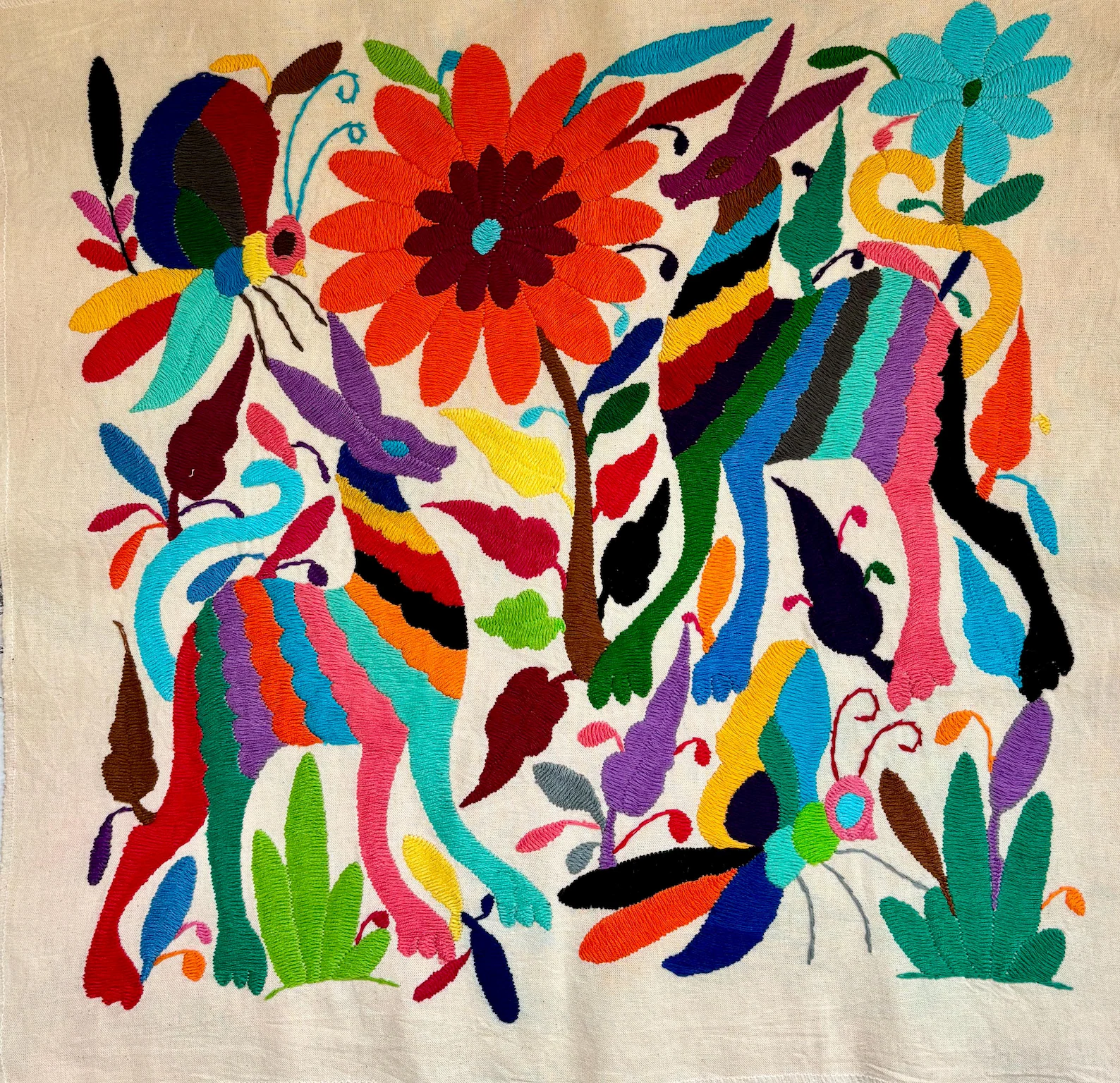
Table of Contents
What Makes Otomi Style Patterns Unique
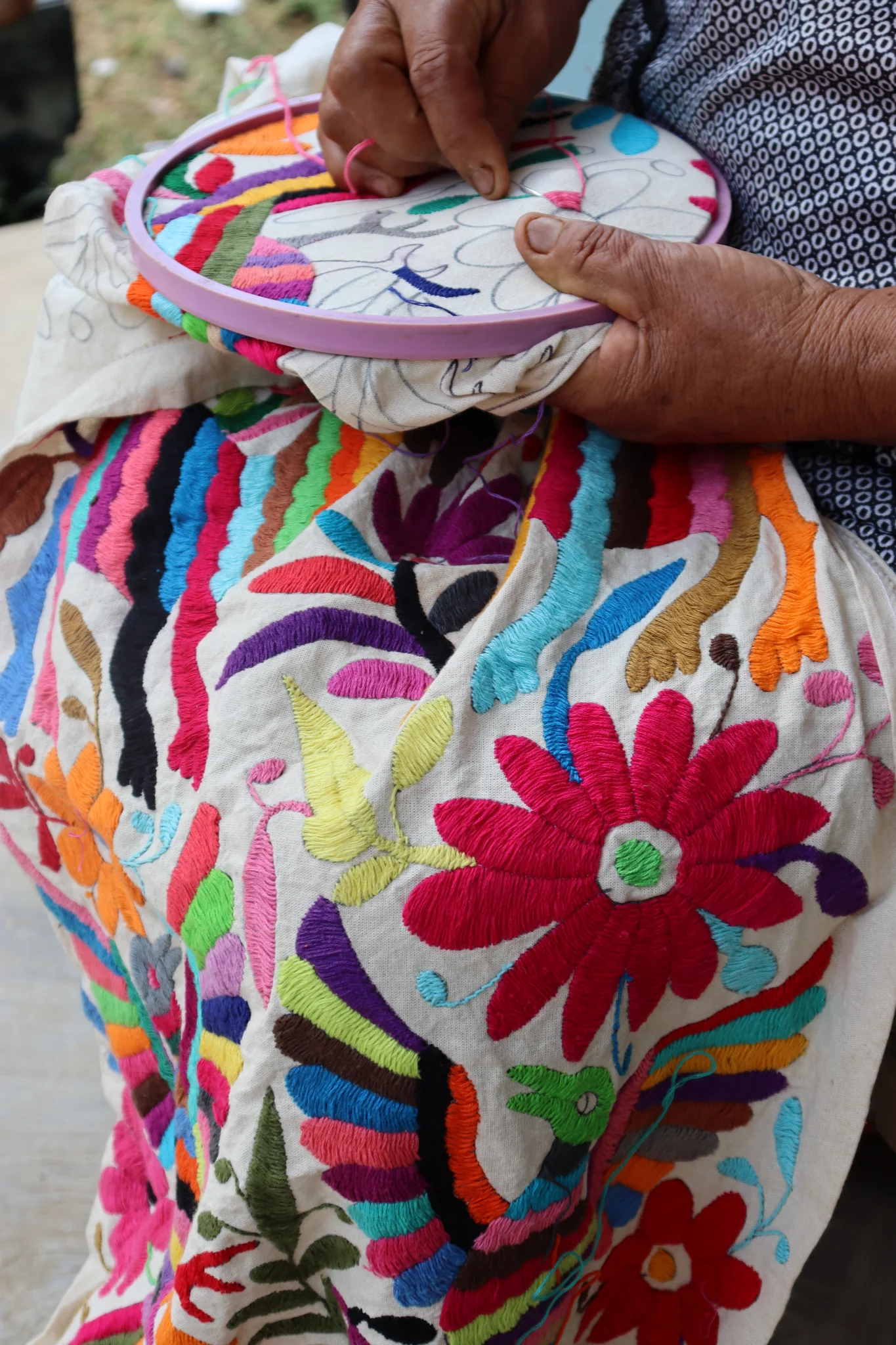
In a world where trends race by at a dizzying pace, I believe it’s worth pausing to explore the deeper meaning and history behind them—an act that helps us slow down and connect more fully. Otomi patterns are extremely personal; they’re full of symbolic meaning, rooted in nature and folklore. They are said to stem from prehistoric cliff paintings in the Tepehua-Otomi mountains in the area. The Otomi people of central Mexico, particularly the Tenango region, have been its curators for millennia. The embroidered designs we are more familiar with today became fashionable in the 1960s, when a regional drought affected the agricultural economy and Otomi people were forced to diversify. That being said, there is evidence that embroidery existed in the pre-Hispanic period in Mesoamerica, but it underwent radical change with the introduction of European techniques and designs. Tradition still prevails, with most of the work still being undertaken by individual families, but there are cooperatives of women who work together to produce and promote their products.
Symbolism Behind Otomi Style Patterns
Otomi designs are rich with symbols drawn from nature, folklore, and everyday life—though each artist may interpret them differently. If you’re inspired by design with a touch of prehistoric heritage, you’ll find below some of the most common motifs and their traditional meanings.
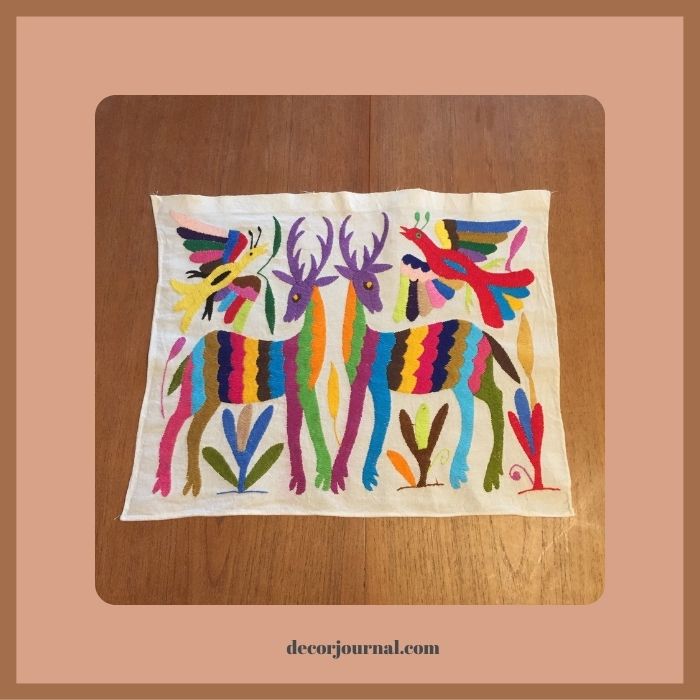
If you’re looking for a lucky charm or a lottery win, then the deer is for you, representing abundance, fertility, and harmony with nature.
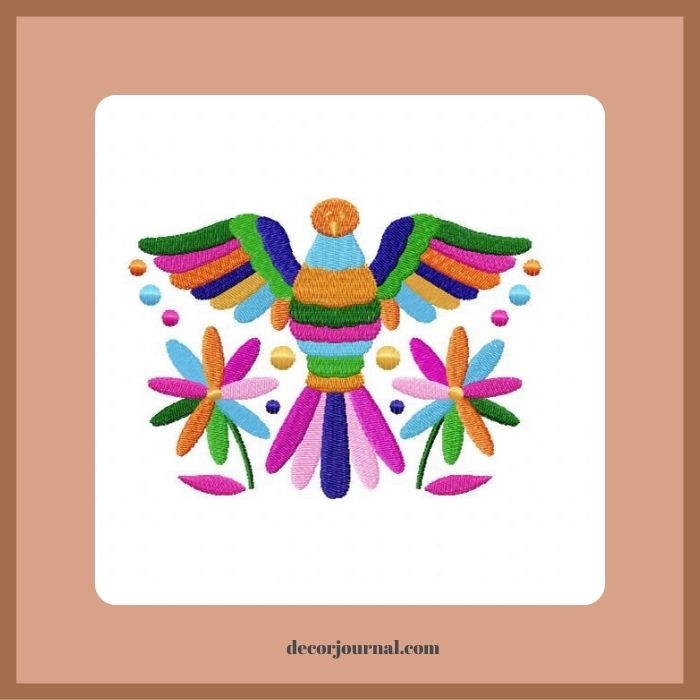
The bird motif represents freedom, joy, and connection between the earth and the sky.
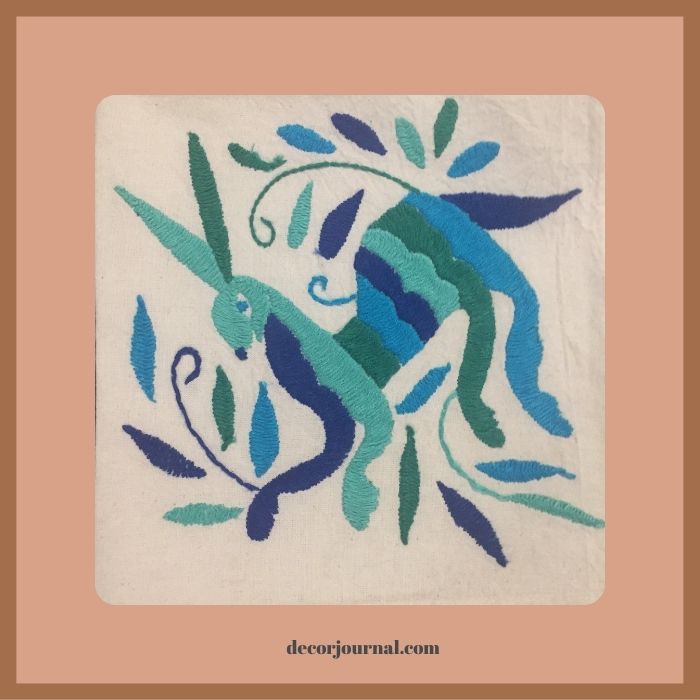
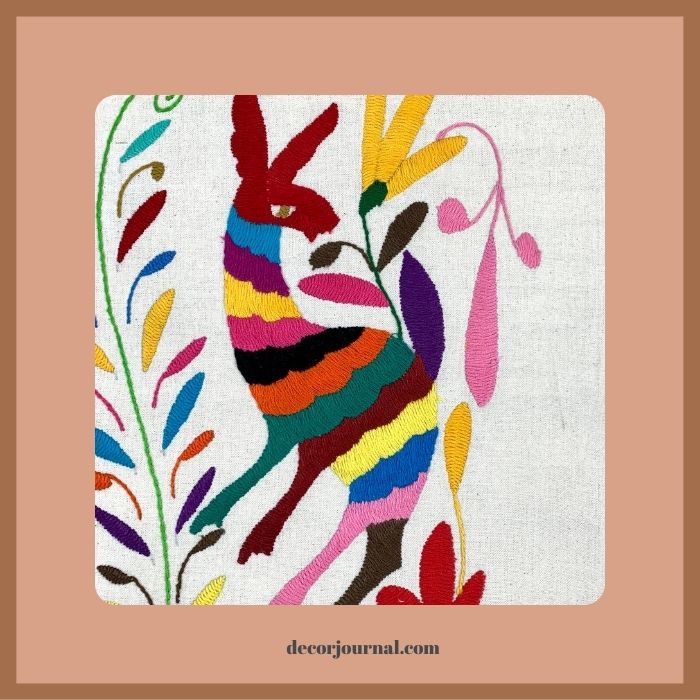
Rooted in their agricultural heritage, the Otomi fill their designs with symbols of fertility, and few are as fitting as the rabbit. Known for its boundless energy and prolific nature, it stands for fertility, playfulness, and good fortune.
Armored animals (like armadillos) symbolize protection and resilience.
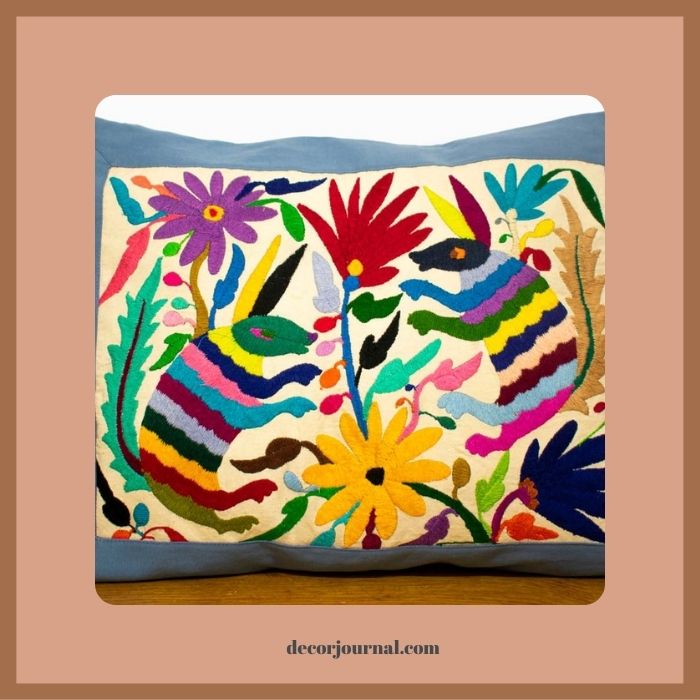
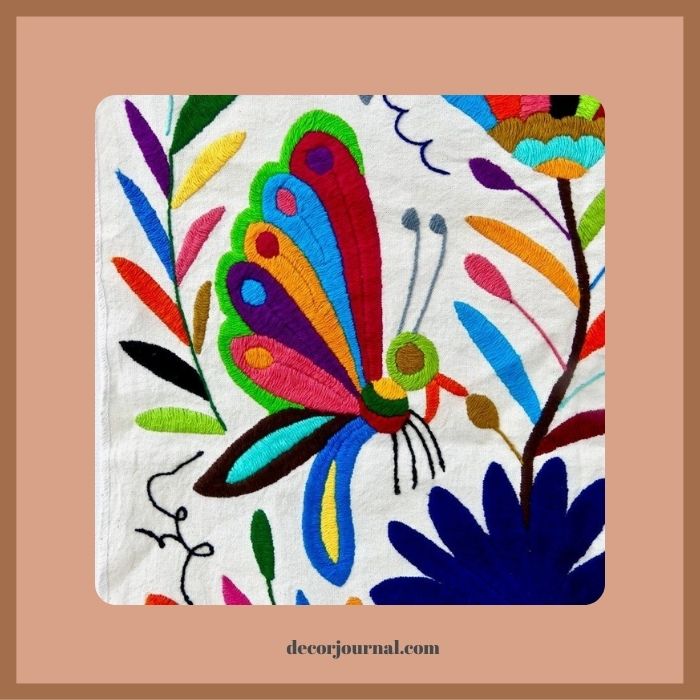
Fun fact: Monarch butterflies are the ultimate jet-setters, traveling up to 3,000 miles—the longest migration of any insect! In Otomi art, these winged wonders flutter in as symbols of transformation, beauty, and fresh beginnings.
Flowers are all about life, beauty, and the cyclical nature of growth.
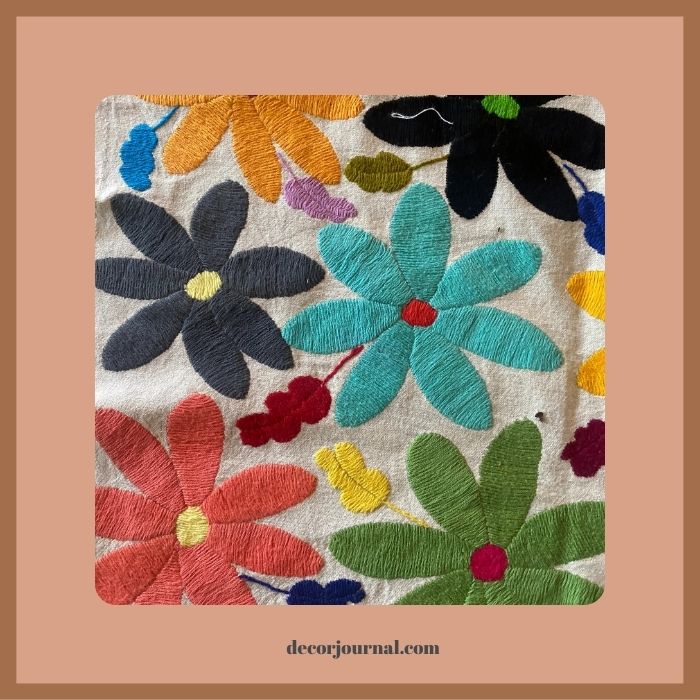
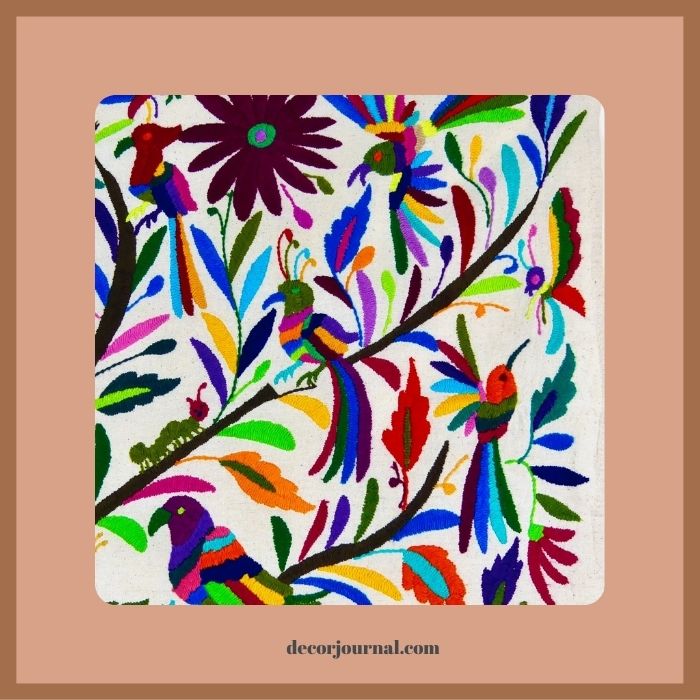
Leaves and vines depict connection, community, and the interwoven nature of life. Reminding us we’re all connected, intertwined in one beautiful existence.
These hybrid creatures represent creativity, storytelling, and a blending of the natural and supernatural worlds.
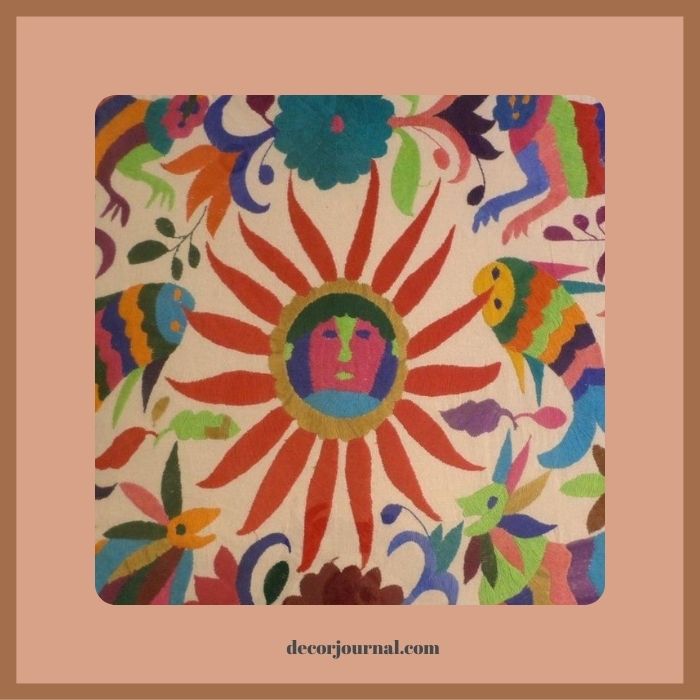
This celestial superstar brings the same magic to Otomi art as it does to our everyday, representing energy, warmth, and the source of life. The moon, on the other hand, embodies femininity, rest, and the rhythm of time.
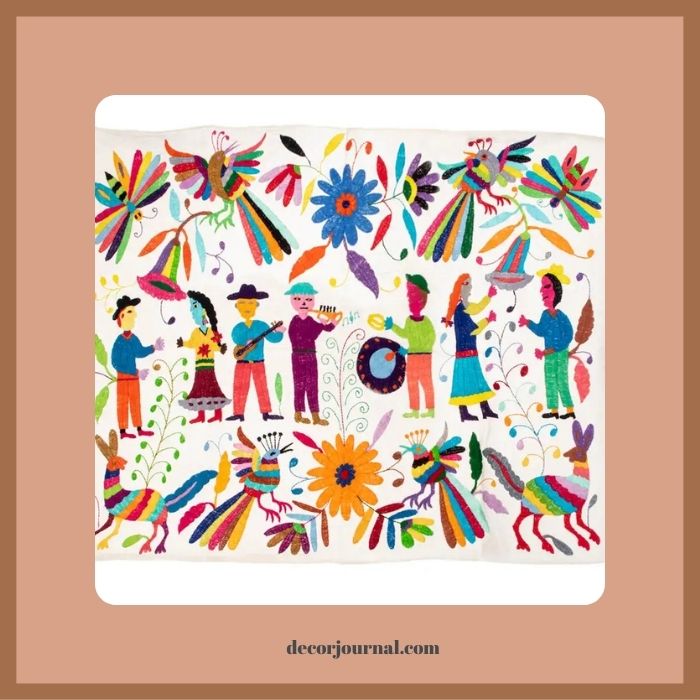
Embrace the party mood with figures dancing or playing instruments—joy, festivities, and that irresistible community spirit.
Why Otomi Prints Have Been Trending in Interior Design Since the 1960s
Otomi patterns with their bright, playful colors elevate the mood and instantly energize a space. Each piece has a deep heritage and connects your decor to genuine craft traditions. The best part is its versatility; from a statement wall to a subtle cushion cover, Otomi patterns work in small doses or bold, all-over looks.
How to Style Otomi Patterns in Your Home
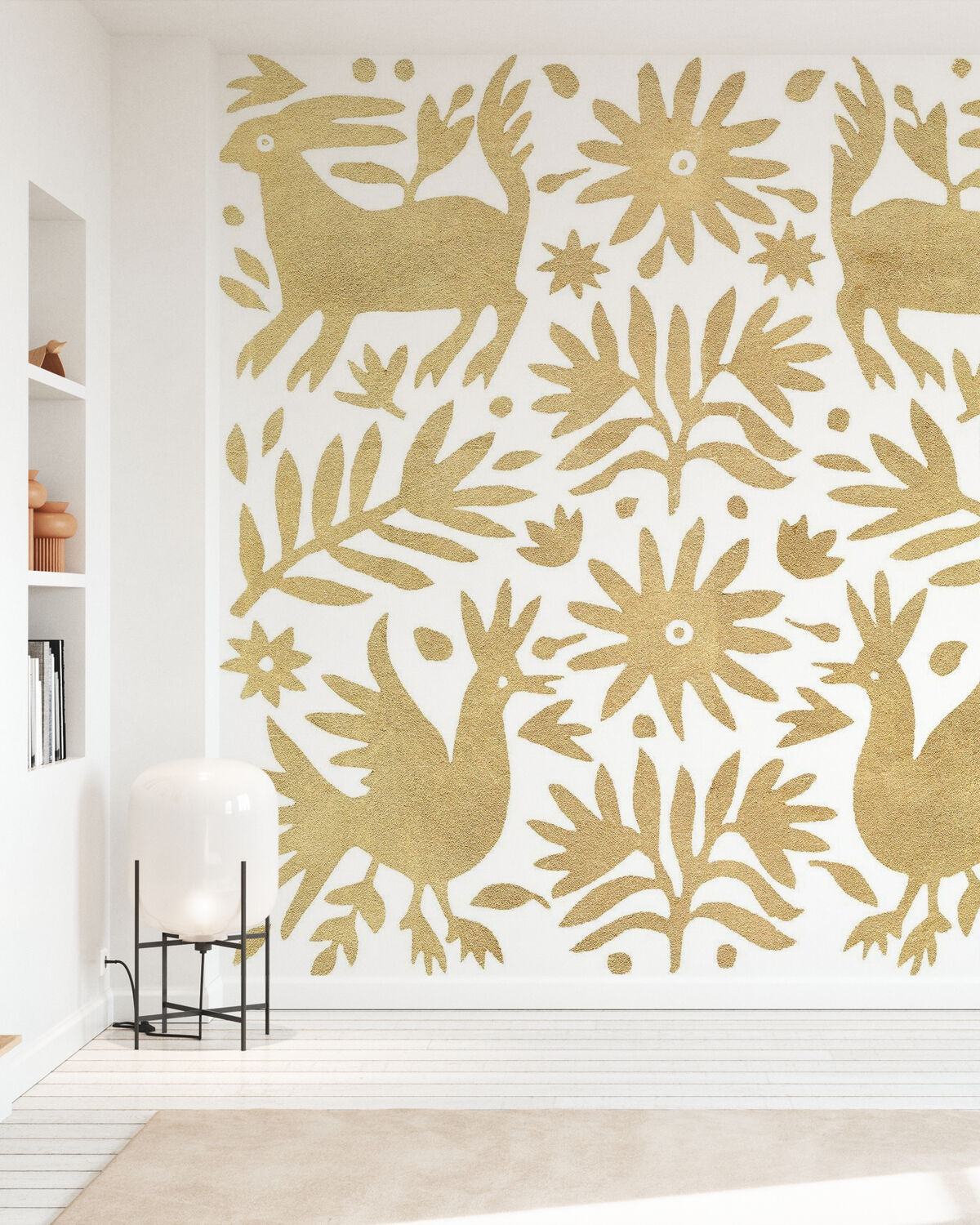
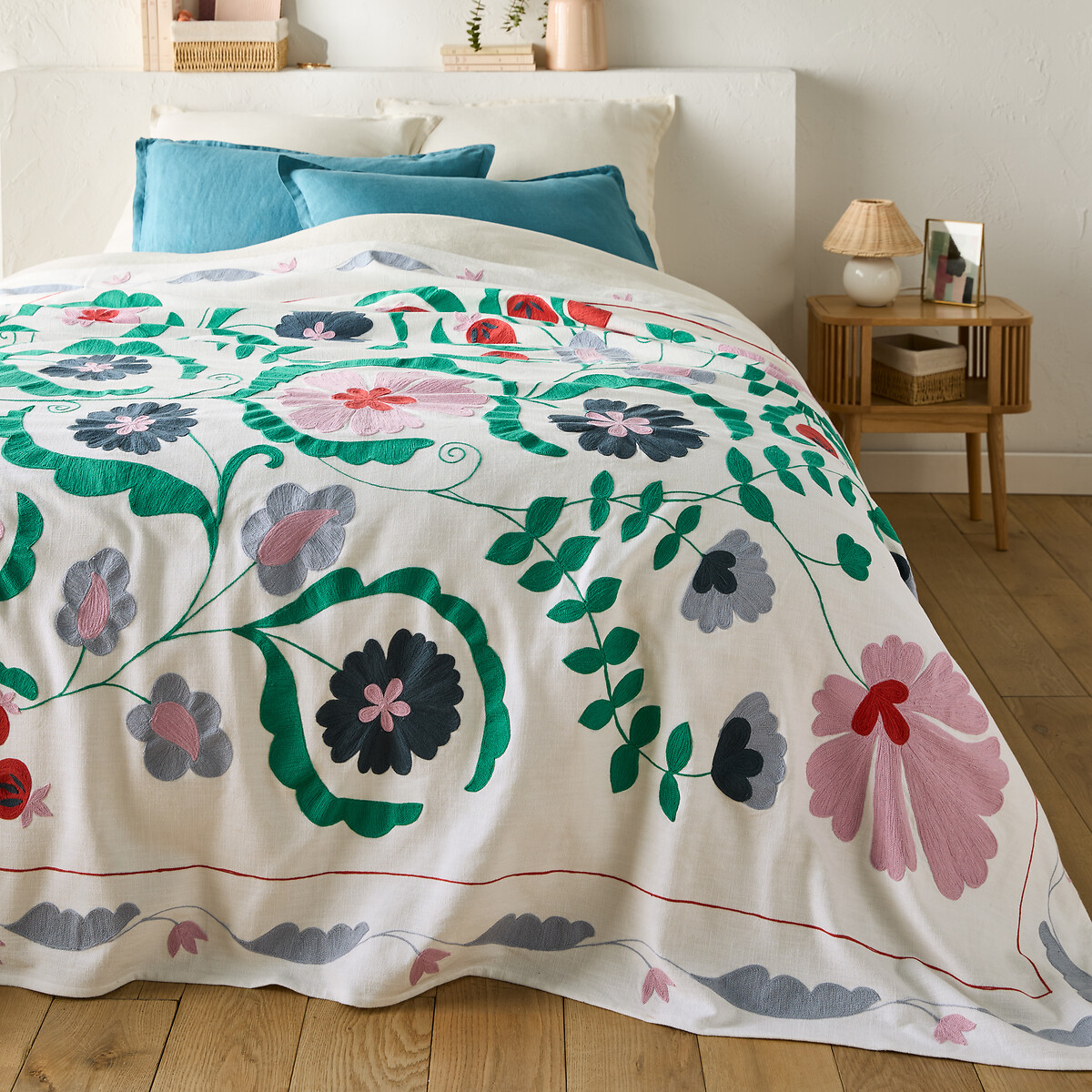
Otomi style patterns have a verywhimsical boho flair to them, but you don’t have to go full hacienda style to try them. Start small by incorporating them in small doses like athrow or a pillow to add a pop of color to a neutral sofa or chair. But if you’re looking for a more dramatic focal point, there are some lovely Otomi-inspired wallpapers on the market that echo the vibe. I always feel that a lot of the bolder Scandinavian wallpaper designs have an Otomi feel to them. For a more eclectic feel, combine with other folk patterns for a layered global look. Ukraine and Lithuania have particularly beautiful designs, as do most of the Baltic countries. These pieces are works of art in their own right and look incredible framed—let them shine and tell their story.
Pro Tip: Keep the Balance
Because Otomi style patterns are visually rich, balance them with solid-colored furniture and minimal accessories. Let the pattern shine without overwhelming the room.
Where To Shop Otomi style Patterns
Whether you’re aiming for sustainably crafted décor, custom-printed DIY fabric, or bold statement pieces, there’s an option out there that fits your style and supports artisans keeping this heritage alive.
| Platform | What You’ll Find | Perfect For |
|---|---|---|
| Axcento | Artisan-made cushion covers | Gifting or home accents |
| Otomi México | Fair-trade décor & embroidery kits | Ethical and cultural craftsmanship |
| More Than Tacos | UK delivery on hand embroidery | Quick access to authentic pieces |
| Spoonflower | Custom Otomi-style printed fabrics & wallpaper | Creative, DIY, or large-scale projects |
| The Eye and the Hand | Framing-quality embroidery panels | Artful wall décor |
| Teterete | XXL embroidered textiles | Statement textiles for home or galleries |
| Etsy | Wide variety across all formats | Budget-friendly or one-of-a-kind finds |
| eBay | Vintage & new Otomi textiles | Collector’s items or fabric pieces |
| Loom Designs | Curation of unique framed Otomi textile artworks. | Collector’s items of framed textile art |
DIY Otomi Style Patterns
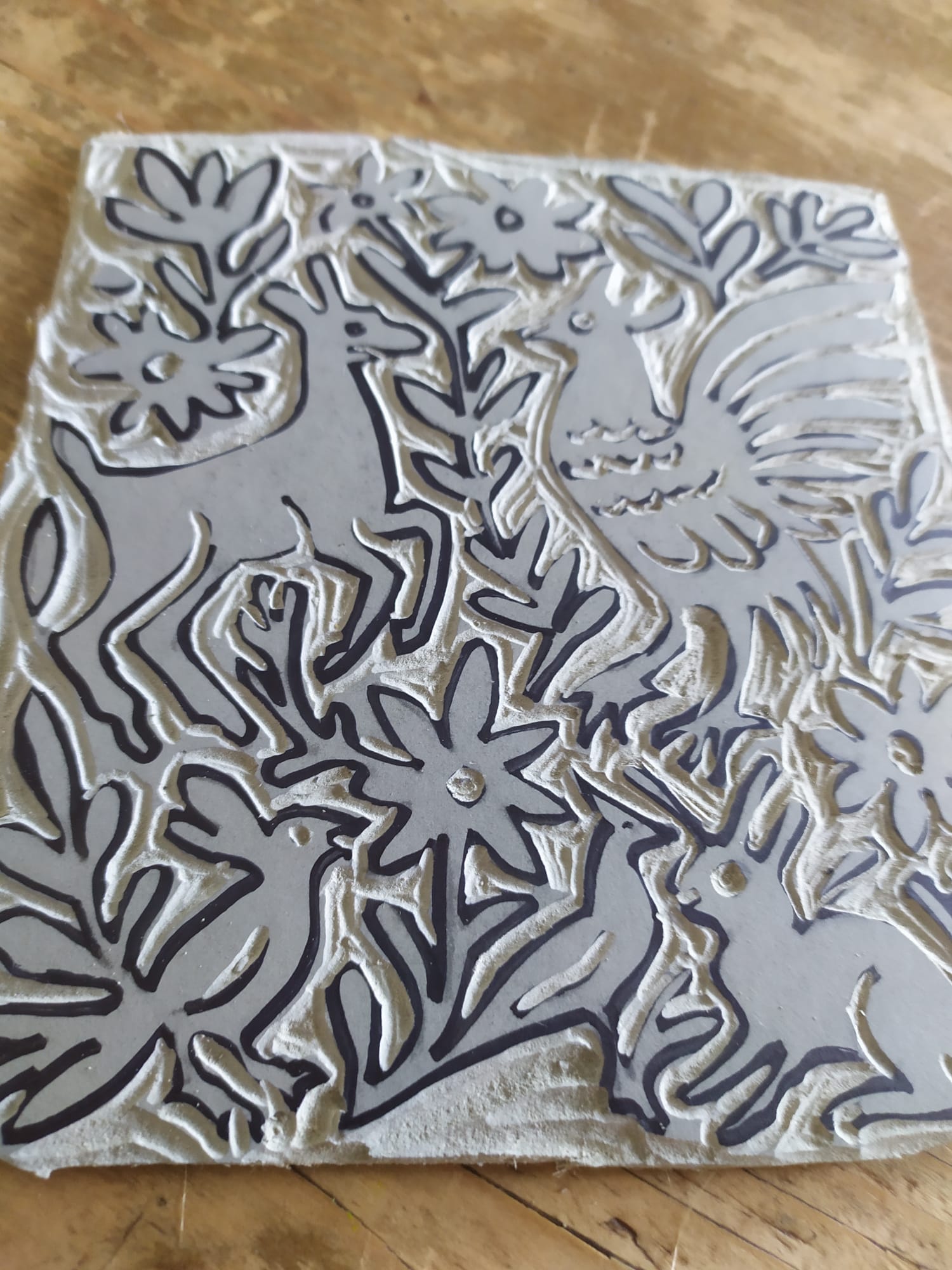
You don’t need to be a master embroiderer to embrace the Otomi style. With their bold shapes and simple forms, these patterns are easy to draw, even for the self-proclaimed “artistically challenged.” Feeling crafty? Try a lino print to create a stunning tablecloth with matching napkins, and bring a touch of Mexican hacienda charm to your dining table. If you’re not ready for the full-on fiesta, start small with a single cushion, equally charming, far less commitment.
As a designer, I’ve seen countless patterns come and go, but Otomi motifs hold a rare kind of permanence. They’re not just decoration, they’re heritage stitched into every curve and color. Whether used in a single statement piece or layered boldly across a space, they bring both warmth and storytelling to a room. Otomi-style patterns remind us that good design isn’t only about aesthetics; it’s about connection between past and present, between culture and craft, and ultimately, between people and the spaces they call home.