Discovering authentic artisan blanket brands has become the ultimate antidote to an era of ultra-fast, mass-produced homeware that lacks soul. Cheap synthetic throws are not only a magnet for unhealthy microplastics, but they also trap heat unnaturally and offer zero architectural character compared to heritage styles. Thankfully, the design world is experiencing a beautiful shift toward slow-made, regional textiles where ancient looms and cultural preservation meet contemporary interior design.
Take a curated journey through four globally renowned heritage blankets. Ahead, we break down their rich histories, fascinating manufacturing secrets, and how to seamlessly style these bold heirloom pieces in modern spaces, plus our go-to sources for sourcing the real deal.
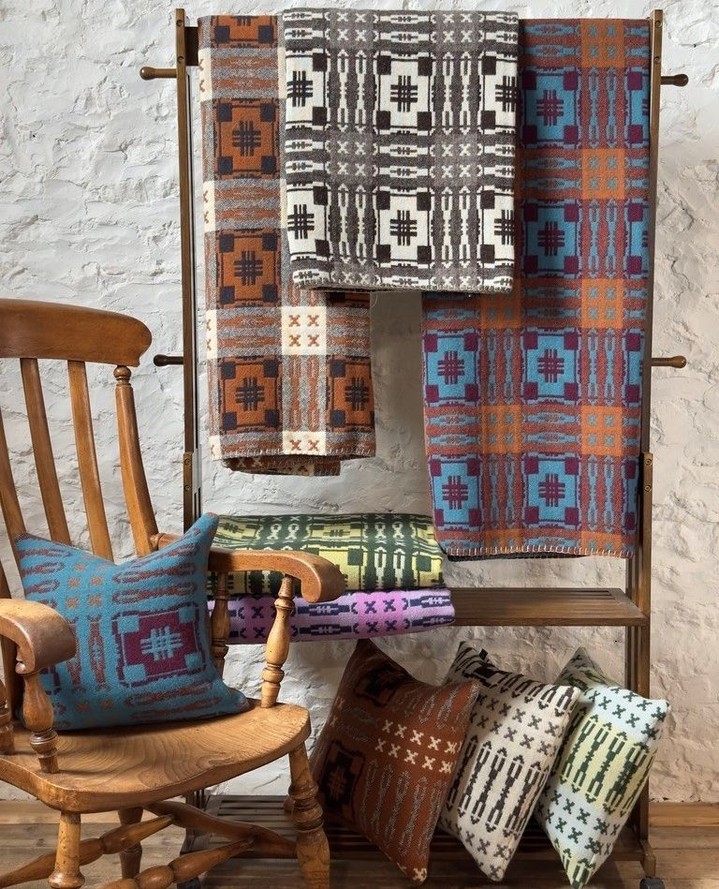
Table of Contents
The Welsh Tapestry Artisan Blanket Brands
Wales, sitting proudly on the rugged west coast of the UK, is renowned for its sweeping landscapes and notoriously cold, damp winters. Historically, Welsh families needed a serious defence against the chill of their little slate cottages, turning the region into a historical powerhouse of heavy, geometric wool weaving. Today, heritage brands like Melin Tregwynt and Dinefwr act as the iconic modern guardians of this craft, keeping traditional looms buzzing while introducing fresh, contemporary colourways to the design world.
A Brief History
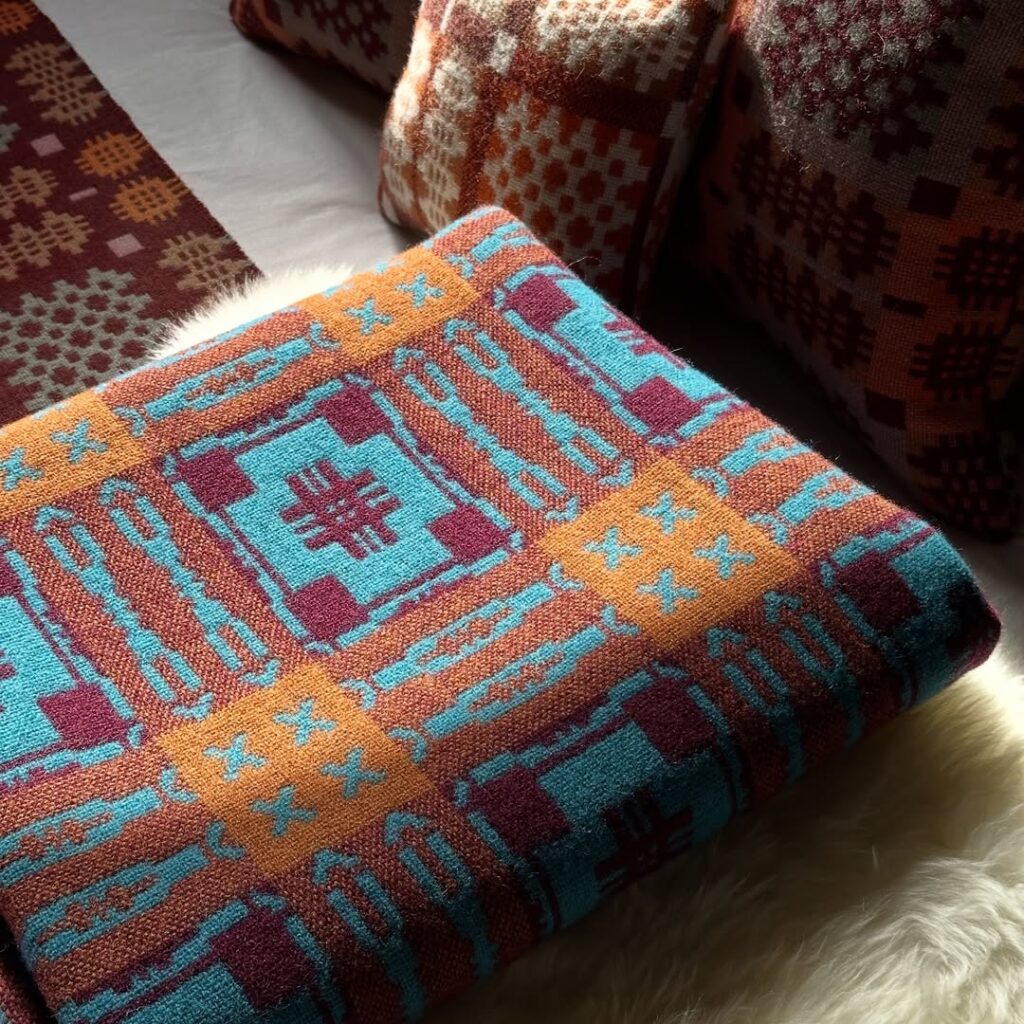
Rooted deep in Welsh folklore and domestic life, these 100% wool blankets were far more than simple bedding; they were a vital cultural tradition. During the Industrial Revolution, production shifted from primitive handlooms to innovative industrial mills, but the cultural value remained. These striking tapestry blankets were considered an essential part of a woman’s dowry, traditionally gifted as wedding presents and proudly handed down through generations as indestructible family heirlooms. The most famous and recognisable of these designs is the Caernarfon (or portcullis) pattern, celebrated for its complex, pixelated geometric grid.
The Manufacturing Process
The magic of an authentic Welsh blanket lies in its unique, heavy structural texture, achieved through a fascinating weaving method:
- 100% Pure Wool: Crafted entirely from dense, high-quality wool yarns that offer natural, breathable insulation against the dampest climates.
- The Double-Weave Technique: Rather than weaving a single layer of cloth, the artisan sets up a highly complex loom mechanism where two distinct layers of fabric are woven simultaneously.
- The Inversion Secret: As the shuttle moves, these two separate layers are intricately integrated and interlocked at the pattern boundaries. This creates a thick, heavily weighted blanket that is entirely reversible, displaying beautifully inverted colourways on the flip side.
Styling Tips
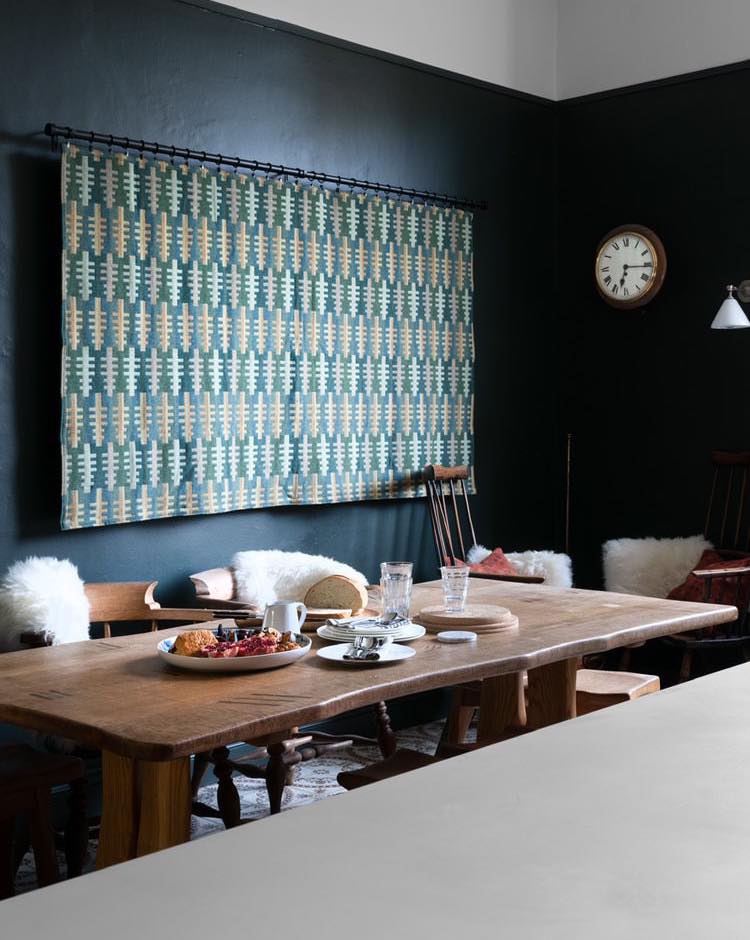
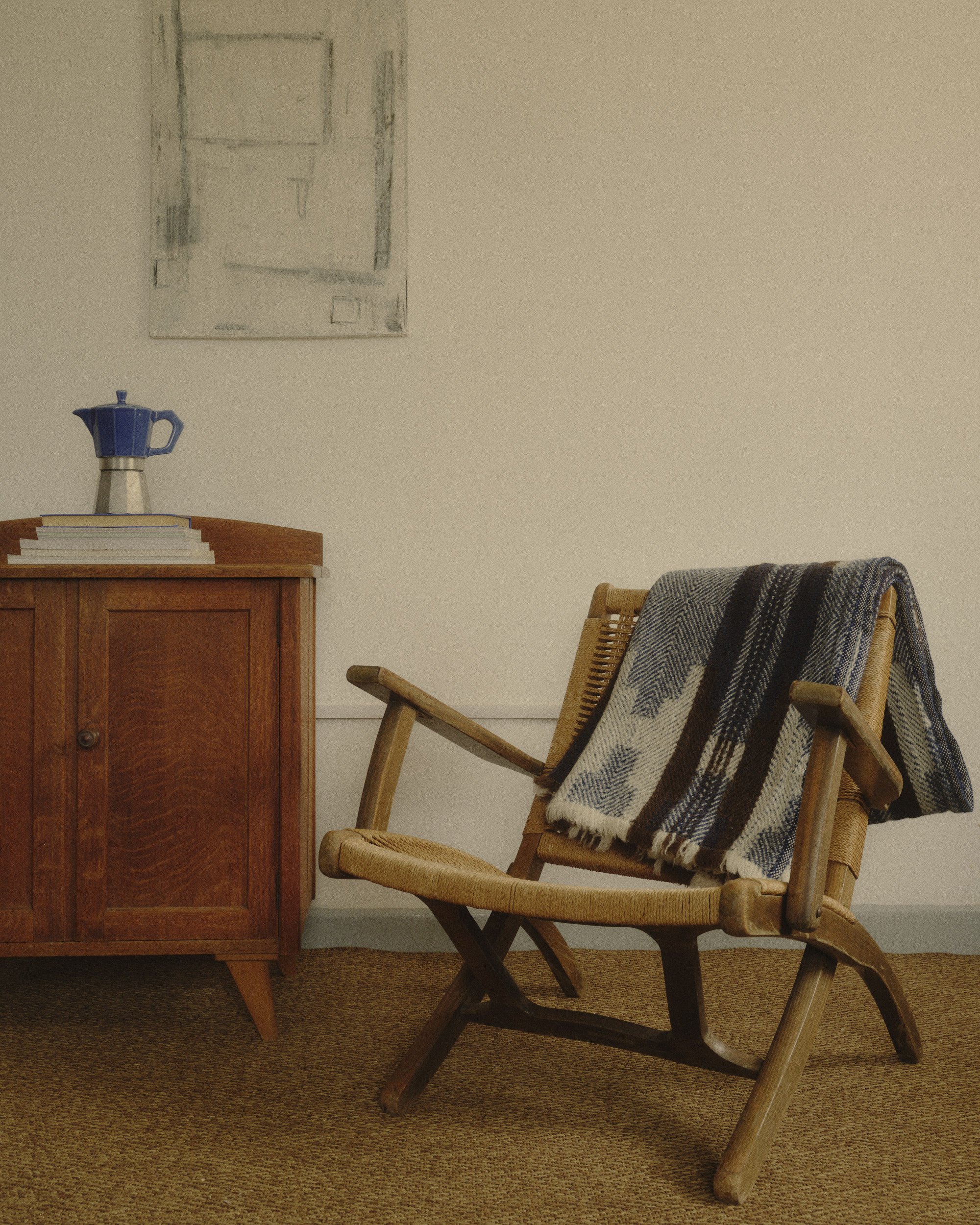
How to style it: Because of their sharp, highly symmetrical geometry, Welsh tapestries are excellent for adding structure and architectural weight to a contemporary room. They look spectacular draped over a crisp mid-century modern armchair or a sleek leather sofa to break up clean minimalist lines. Alternatively, fold one sharply across the base of a bed dressed in simple, solid-colored neutral linen to let the complex geometric grid act as the focal art piece.
Want to think outside the box? Treat it like a true piece of textile art and mount it as a statement wall hanging. Not only does this create a striking architectural focal point, but the dense double-weave wool also acts as a fantastic, natural acoustic layer to soften the sound in rooms with high ceilings or hard flooring.
The Carpathian Masterpiece: The Ukrainian Lizhnyk
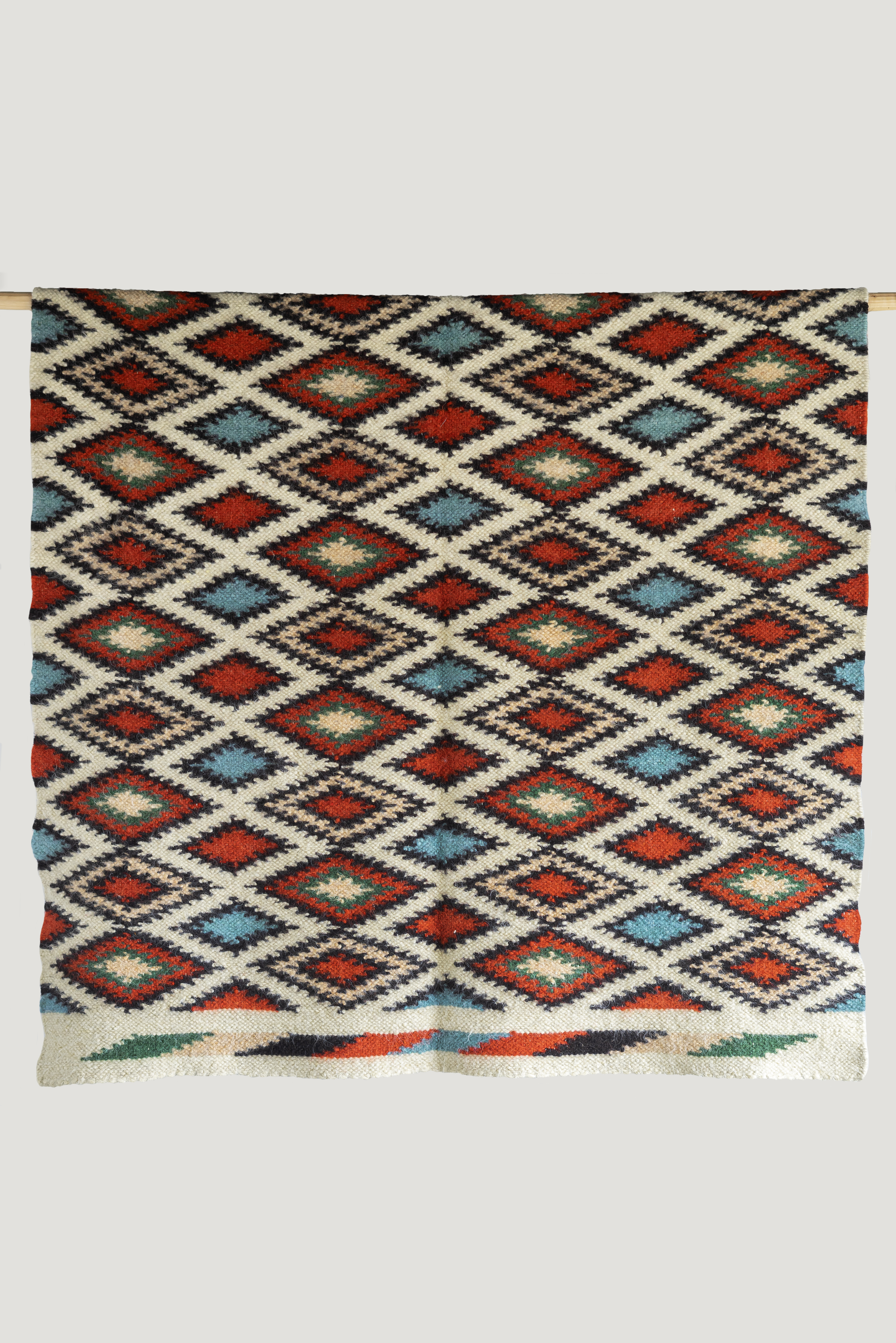
The Ukrainian Lizhnyk is a masterclass in raw texture, a heavy wool blanket that effortlessly bridges the gap between rugged folk craft and high-end, organic abstract art. The name itself is derived from the Ukrainian word “lezhaty,” which beautifully translates to “to lie down.” Much like the Welsh tapestries, these iconic textiles were born entirely out of necessity, engineered by the native Hutsul people to shelter from the notoriously brutal, freezing winters high in the Carpathian Mountains of western Ukraine.
A Brief History
The origins of these hefty, distinctive blankets stretch back to the 17th century and likely even earlier, serving as bed coverings, rugs, and vital insulation for mountain homes. However, the modern lizhnyk we know today owes its design to a brilliant turning point in the 1920s. A talented young Hutsul woman revolutionized the craft by refining the traditional wooden loom and adapting the weaving techniques. Her innovations successfully transformed the historically narrow, long blankets into the wider, more practical proportions that fit perfectly on contemporary beds and sofas today.
The Manufacturing Process
The magic of a true Lizhnyk lies in its completely natural, labor-intensive production process, which relies on the raw power of nature rather than modern machinery.
- Locally Sourced Wool: The blankets are spun from 100% raw wool gathered from local Carpathian mountain sheep, which is then manually washed, carded, and dyed using natural elements.
- Hand-Loomed Foundations: Artisans weave the thick yarn entirely by hand on historic split-wood looms.
- The Valylo Secret: Once taken off the loom, the freshly woven blanket is tossed into a valylo, a massive, natural, river-powered wooden water torrent. For hours, the immense force of the rushing mountain river water naturally churns, shrinks, thickens, and felts the wool fibers.
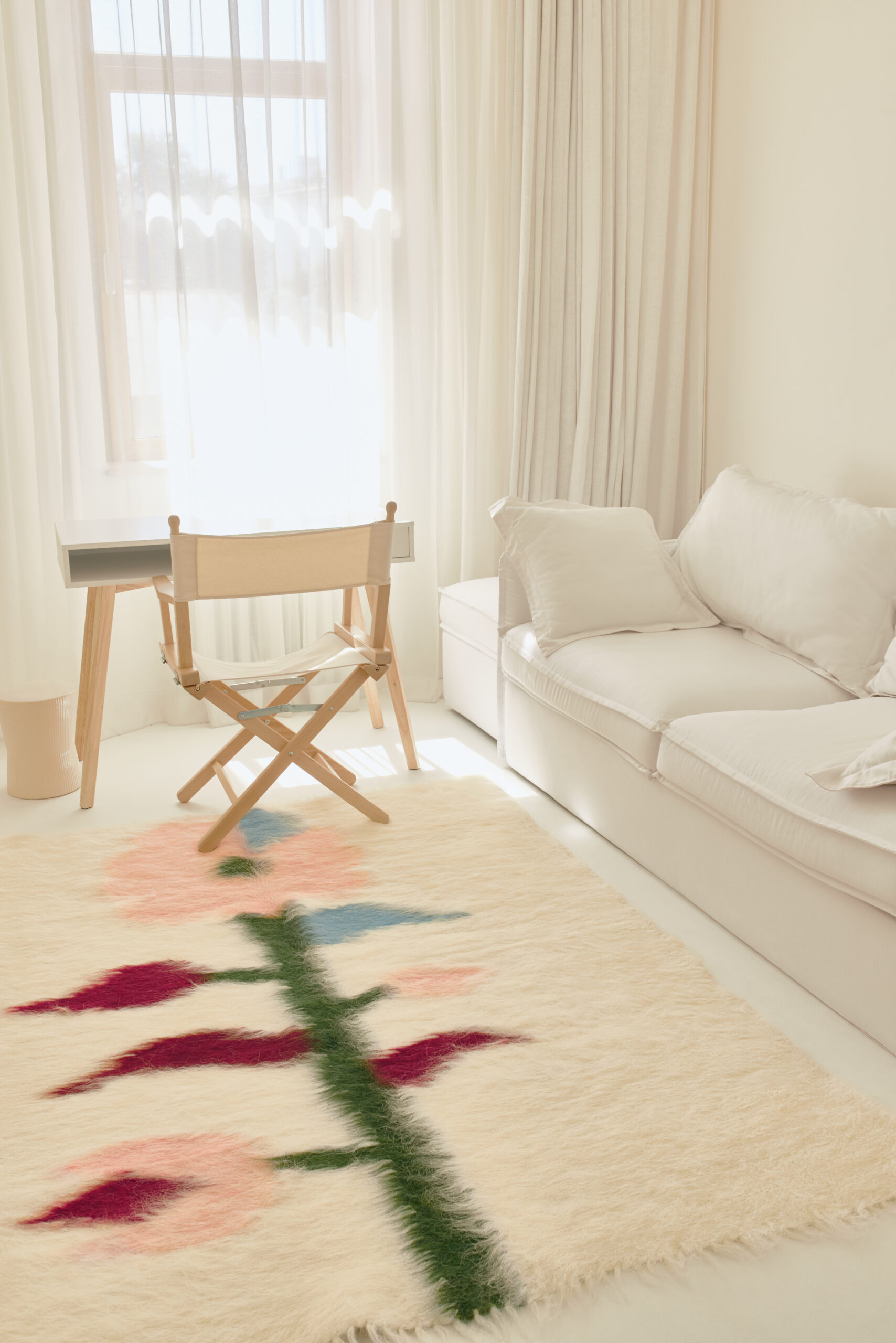
- The Fluffy Finish: After its river bath, the dense blanket is dried and meticulously combed out by hand to create its signature thick, incredibly fluffy, cloud-like texture.
Styling Tips
How to style it: Consider the Lizhnyk the ultimate “texture bomb” for a space. It fits seamlessly into modern Japandi, Scandinavian, or minimalist homes that run the risk of feeling too sterile. The golden rule here is to drape it completely organically, never perfectly folded over a sleek leather sofa or a raw concrete bench. This intentional imperfection creates a striking contrast of soft, organic warmth against hard, cool materials.
Due to its incredible thickness and heavy structural weight, the Lizhnyk is an exceptionally versatile textile that can easily double as a statement area rug. Alternatively, treat it as large-scale textile art; hanging one of these striking graphic pieces on a wall looks incredibly high-end while offering brilliant natural thermal and acoustic insulation.
Where to source it: My absolute go-to brand is the Ukrainian company Gushka Wool. They do a beautiful job of preserving traditional Carpathian patterns while simultaneously collaborating on contemporary, minimalist designs that look right at home in a modern interior.
The Bulgarian Folklore Edit: The Bulgarian Shevitza
Introduction
Engineered to withstand the notoriously harsh Balkan winters, Bulgarian Shevitza wool blankets are deeply symbolic pieces that carry centuries of regional pride. At the center of this textile preservation is Rodopska Takan, a heritage manufacturer actively keeping ancient manufacturing traditions and historical sheep breeding alive in the rugged Rhodope mountain region. By championing the raw value of natural fibers, they are single-handedly supporting the revival of the Karakachan sheep, a rare, indigenous Bulgarian breed that came dangerously close to extinction only a few years ago.
A Brief History
The term Shevitza originally refers to the vibrant, intricate folkloric embroidery traditionally found on Bulgarian folk costumes. Each geometric motif carries deep spiritual meaning, acting as a coded language of pagan symbols meant to bring protection, bounty, and fertility to the wearer. While these heavy wool blankets do not feature literal surface embroidery, the exact same ancient protective patterns are structurally engineered into their woven designs, allowing them to share the exact same cultural DNA.
The Manufacturing Process
A genuine Bulgarian mountain blanket is built for extreme longevity, combining raw natural elements with robust industrial history:
- Karakachan Mountain Wool: Crafted from exceptionally dense, premium wool sourced from local mountain shepherds, giving the blanket its legendary weight and insulation.
- Spring-Water Processing: The raw wool is washed and processed using pure, mineral-rich mountain spring waters, which naturally cleanses the fibers without stripping away their resilient structure.
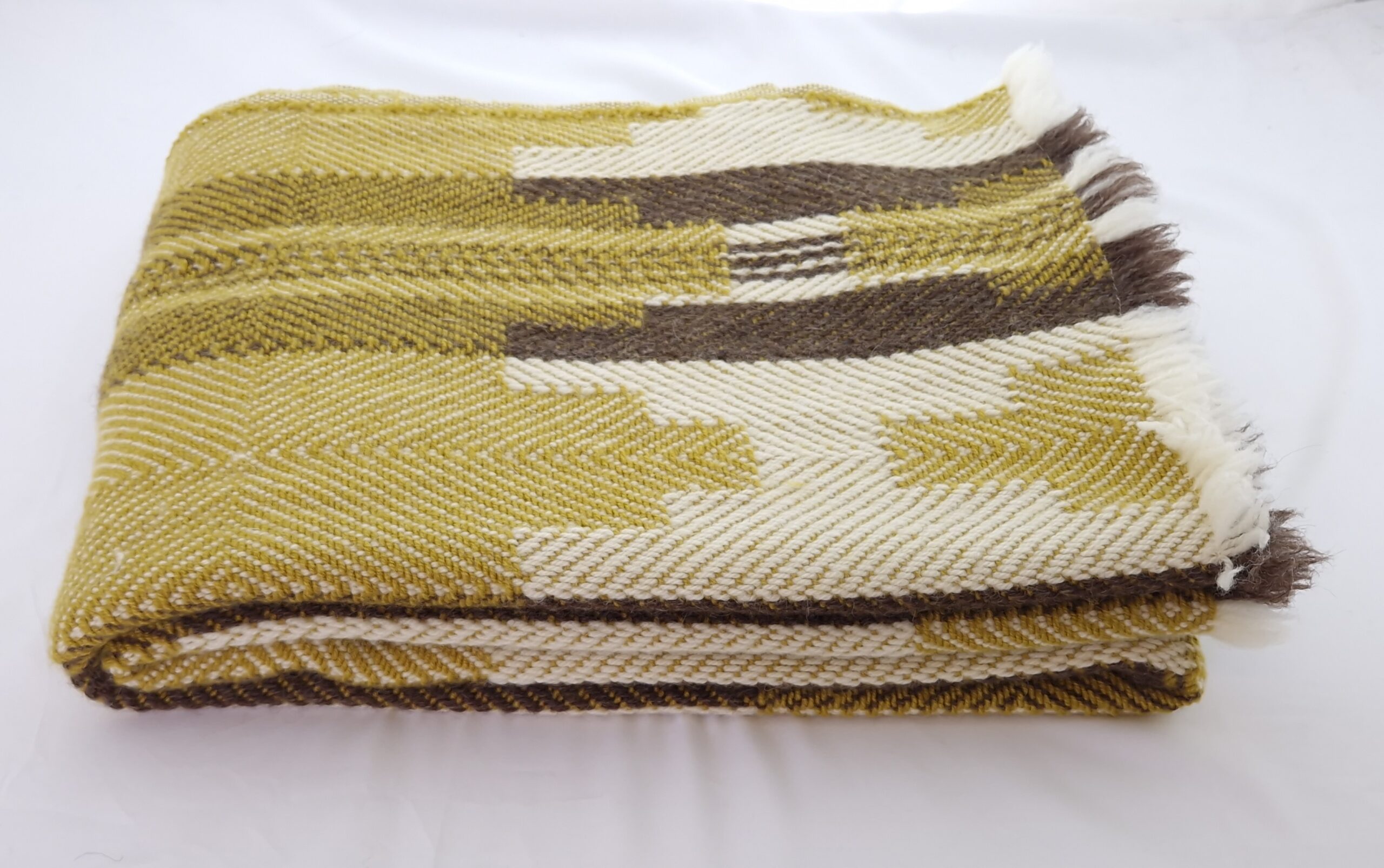
- Heritage Loom Weaving: Rather than being printed or stamped on top, the complex geometric patterns are structurally woven straight into the heavy wool fibers on industrial heritage looms, making the intricate folklore designs an indestructible, permanent part of the blanket’s physical foundation.
Styling Tips
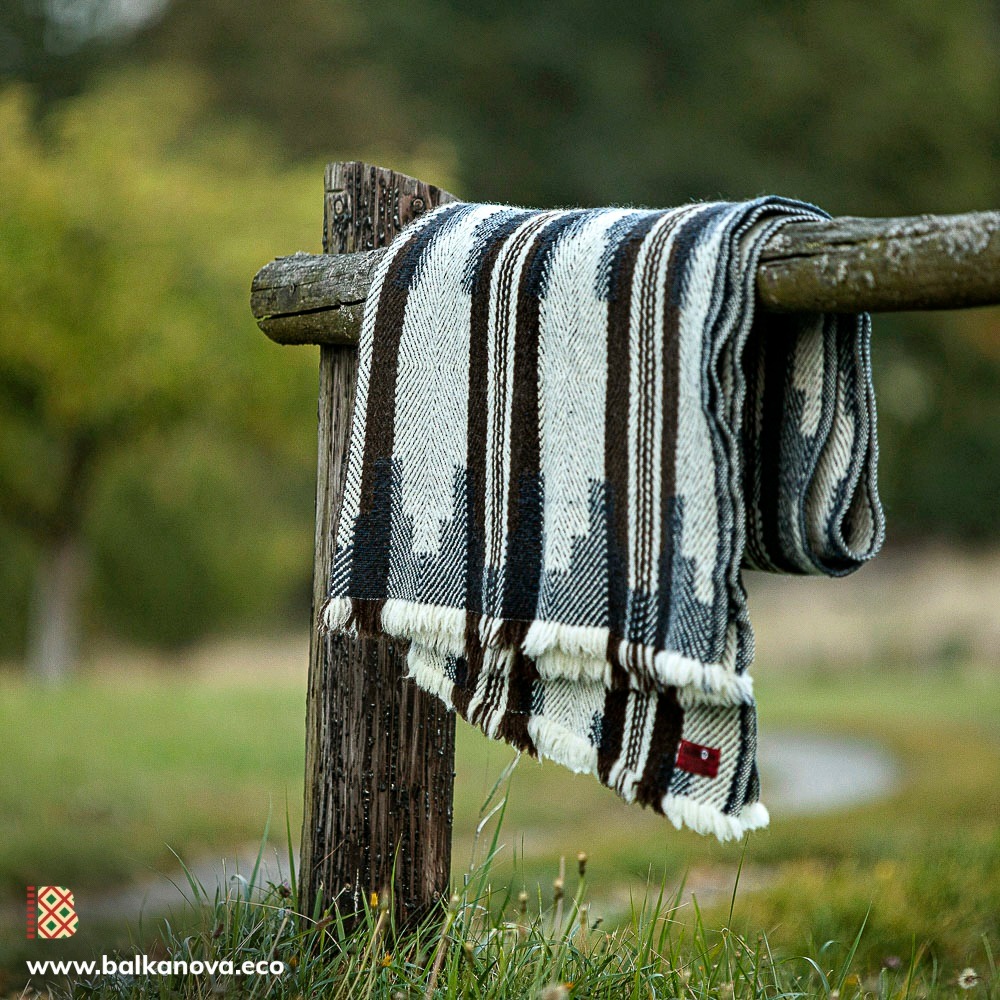
How to style it: With their profound mix of ancestral storytelling and grounded heritage energy, these blankets are ideal for anchoring contemporary, rustic, or Japandi interiors. Because the red and black geometry is so striking, let the blanket act as the primary art piece in the room. Display it draped over a neutral sofa, chair, or timber bench where the surrounding palette remains minimal and monochromatic, allowing the rich Bulgarian folklore motifs to truly take center stage.
Where to Source It
While the historic heritage looms of Rodopska Takan in Bulgaria are the master creators behind these incredible textiles, you don’t have to book a flight to the Rhodope Mountains to bring one home. Authentic, ethically sourced Shevitza blankets can be purchased online through a couple of brilliant specialist curators:
- Balkanova: Based physically in the heart of Prague, Czech Republic, this dedicated Bulgarian heritage boutique has spent years importing and preserving authentic Balkan woollens, rugs, and traditional hand-woven kilims. Their online shop is an absolute treasure trove for genuine Rodopska Takan pieces.
- My Moka Home: For UK-based readers looking to bypass international customs, this beautifully curated shop specialises in sourcing heavy, rustic, 100% pure wool Bulgarian throws. They offer a fantastic bridge between traditional Eastern European blanket-making partners and contemporary Western interiors.
The Irish Heritage Fleck: Donegal Tweed
Introduction
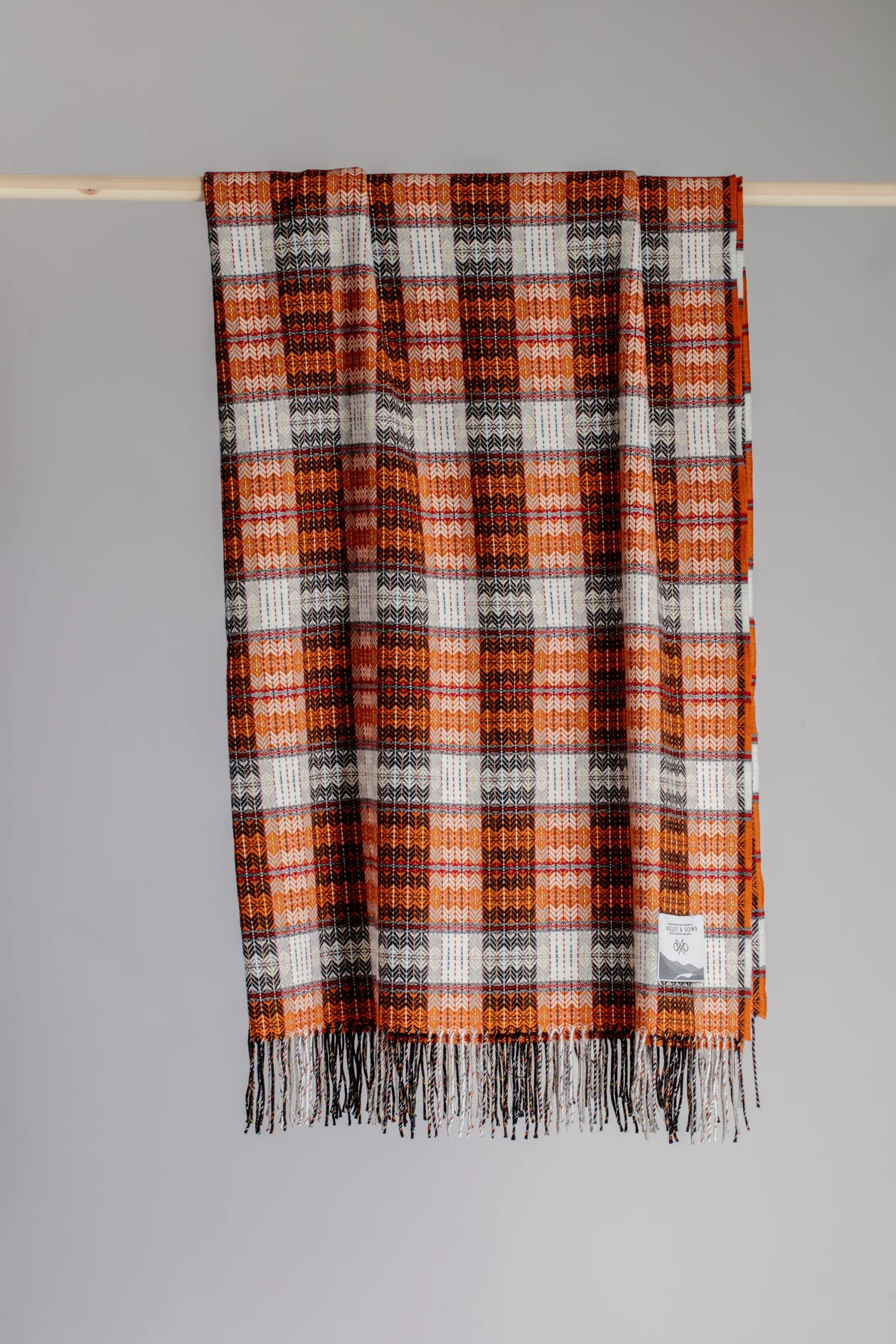
Donegal Tweed is quite simply the champagne of tweed blankets. In fact, its rich heritage is so fiercely guarded that the region’s premier producers, Magee 1866, Studio Donegal, Molloy & Sons, and McNutt of Donegal have united under the Donegal Tweed Association to campaign for official European PGI (Protected Geographical Indication) status. This ensures that, much like true Champagne must come from France, a textile can only bear the “Donegal Tweed” name if it is genuinely manufactured in County Donegal, Ireland. Born to shield locals from the harsh, biting Atlantic winds, these blankets possess a substantial, authentic weight that stands in stark contrast to soft, flimsy factory-made throws.
A Brief History
The origins of Donegal tweed stretch back centuries as a crucial cottage industry. Local farmers and fishermen’s families would gather wool from mountain sheep, dye the raw fibers using native mosses, gorse, and wild heather, and weave the yarn on hand-operated wooden looms in their own homes to supplement their income. This hyper-local craft evolved over generations, morphing from a survival necessity into a globally coveted symbol of classic, understated Irish luxury.
The Manufacturing Process & Key Characteristics
The unmistakable look and feel of an authentic Donegal tweed blanket come down to a meticulous spinning and weaving tradition:
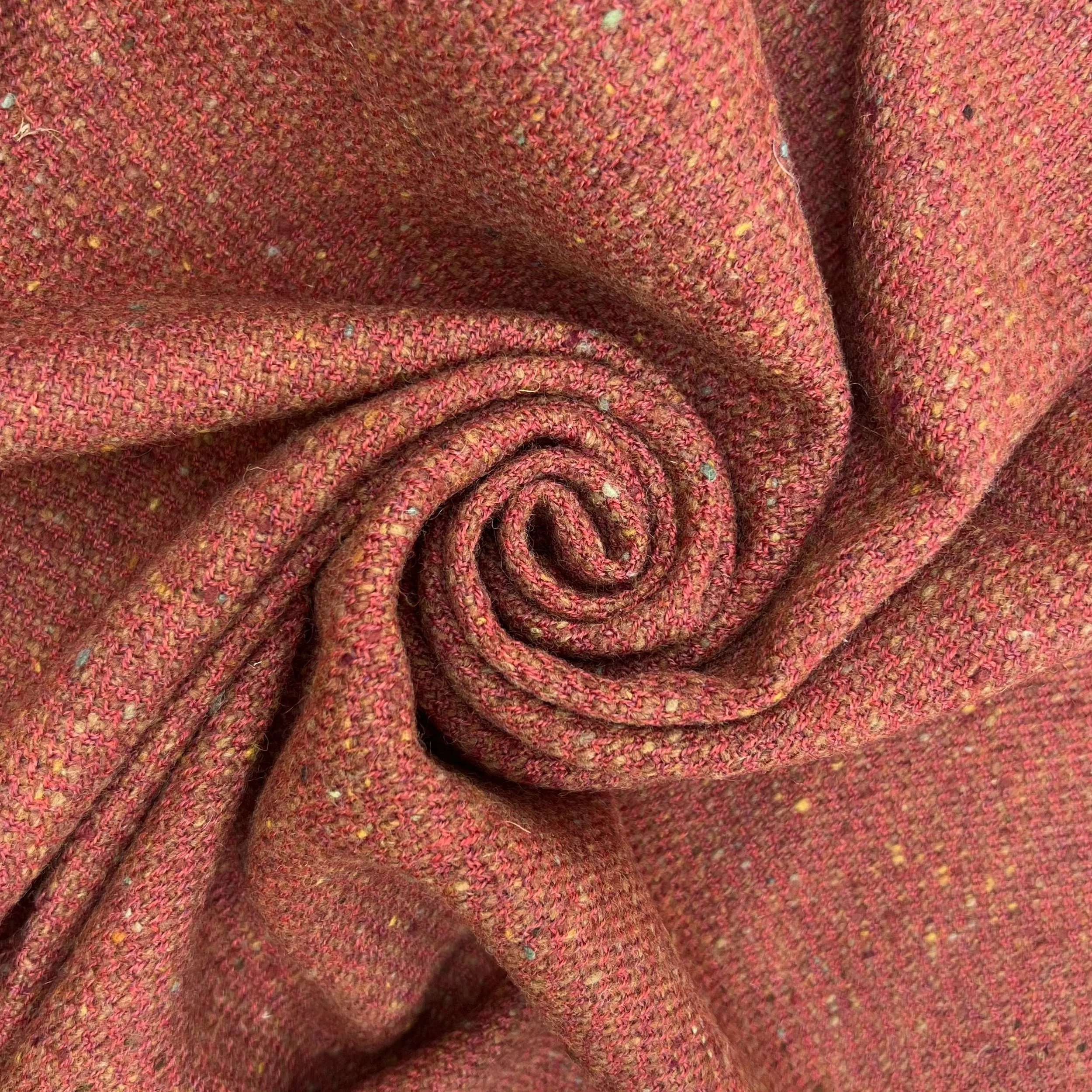
- The Iconic “Donegal Fleck”: This is the absolute hallmark of the textile. When you look closely at the yarn, the base thread is interwoven with tiny, intentional knots of contrasting colors known as “neps.” A charcoal-grey or deep navy blanket might feature microscopic pops of bright yellow, rich crimson, and heather purple, mimicking the wild Irish landscape.
- Pure New Wool and Merino Blends: Woven using 100% pure new wool or premium, high-grade Merino blends, these blankets offer exceptional, breathable temperature regulation and an incredibly durable, structure-holding weight.
- Architectural Weaves: Artisans typically utilize classic, structured patterns like the iconic Herringbone (distinct V-shaped chevrons), traditional Twill, or plaid grids. This pairing of a highly structured geometric weave with messy, organic flecks of color creates the ultimate balance of refined luxury and rustic texture.
- The Fringed Finish: A premium Irish heritage throw is traditionally completed with substantial, twisted, or loose fringed borders, giving the heavy fabric a sense of casual, lived-in luxury.
Styling Tips
How to style it: Because Donegal tweed is produced in an expansive array of colourways and traditional patterns, it is an incredibly versatile textile for the home. It pairs seamlessly with almost any interior aesthetic. In ultra-contemporary or minimalist spaces, a brightly flecked tweed throw injects a sophisticated splash of colour without overwhelming the room’s clean lines. Conversely, in more rustic, traditional, or neutral settings, it anchors the space with a welcome layer of grounded, heritage texture. For the ultimate cosy vignette, drape it loosely over the arm of a leather reading chair, layer it casually across the back of a contemporary sofa, or use it to bring tailored warmth to the foot of a bed.
Conclusion: The New Heritage Era
Investing in an authentic, European artisan blanket brands is far more than a simple interior styling choice. It is a conscious, quiet protest against a disposable, fast-homeware culture. By choosing a heavy Welsh double-cloth tapestry, a cloud-like Hutsul Lizhnyk, a richly flecked Donegal tweed, or a symbolic Bulgarian Shevitza throw, you aren’t just decorating; you are anchoring your home with a piece of living history.
These blankets carry the physical weight of ancient looms, the stories of regional preservation, and an organic, tactile character that factory-made synthetics simply cannot replicate. They are the future heirlooms of the modern home.
Which of these European textures resonates most with your interior style? Are you team raw Carpathian wool or structured Irish herringbone? Let us know in the comments below!