
Ticking fabric has a rich, centuries-old history rooted in pure utility. Originally engineered as a dense, tightly woven material akin to heavy denim, its primary purpose was to case mattresses, acting as a barrier to stop sharp straw or feather quills from poking through and giving sleepers a nasty midnight spike. In fact, the word “ticking” stems from the Greek theka, meaning “case” or “covering”. Because of its legendary durability, this rugged textile quickly moved beyond the bedroom, becoming the default choice for heavy-duty army tents and the utilitarian aprons worn by butchers and brewers. Originally woven from raw linen and later from sturdy cotton, the fabric eventually evolved, adopting decorative weave structures, multi-coloured stripes, and even delicate floral motifs.
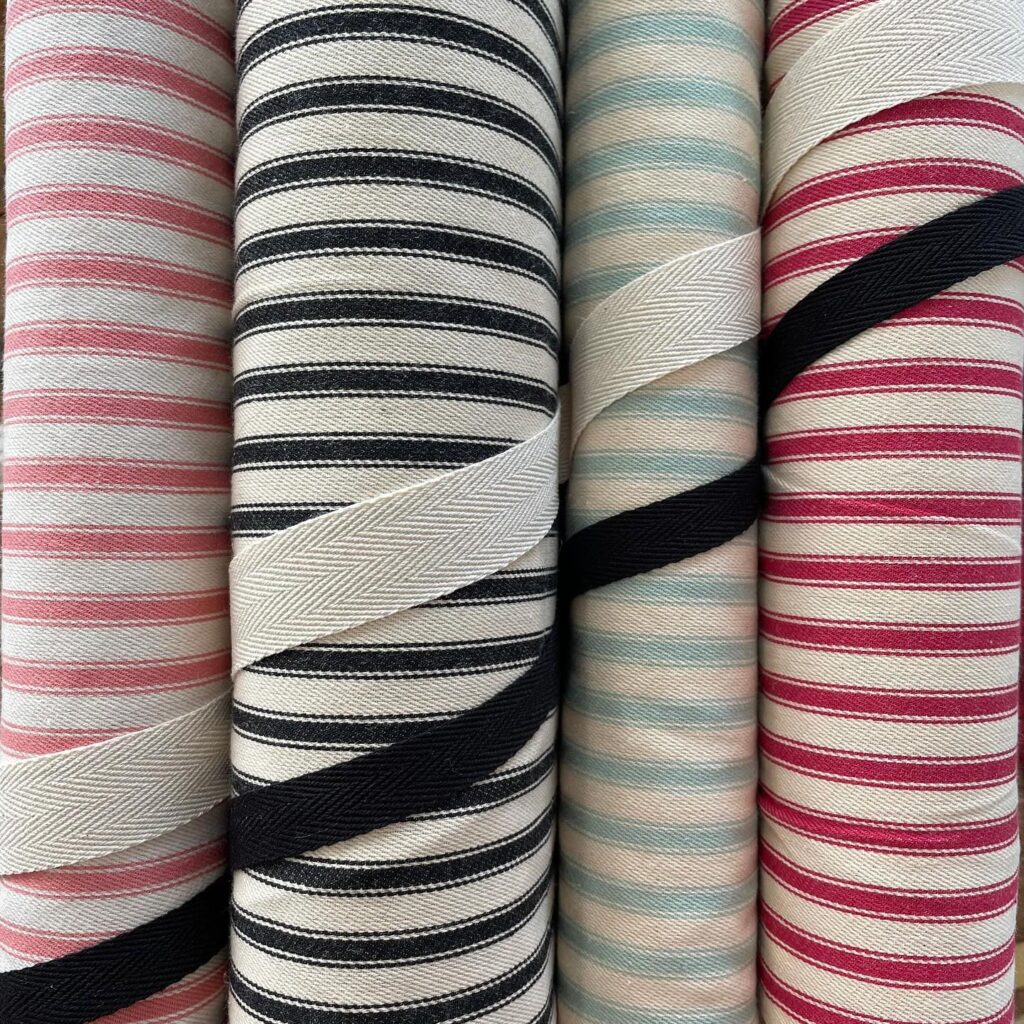
By the 1940s, however, this humble utility cloth took on a glamorous new lease of life thanks to the legendary interior designer Dorothy “Sister” Parish. When decorating her first home as a frugal new bride in 1933, she ingeniously weaponised affordable ticking fabric to create high-end style on a strict budget. Her creative eye for low-cost, high-impact materials eventually catapulted her to the top of the design world, even leading her to redecorate the Kennedy residences. As the design world rushed to emulate her signature look, what was once a hidden mattress covering officially became one of the most celebrated, intentional design elements in heritage interiors.
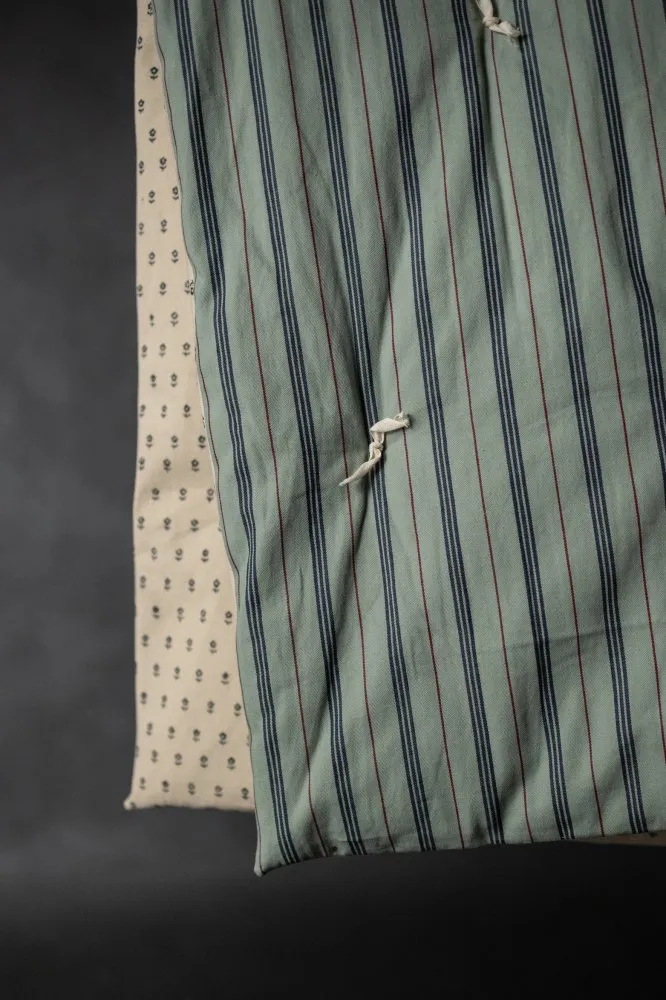
Beyond its rich history, the real magic of ticking fabric lies in its effortless “historic manor house utility wing” aesthetic, all at a mere fraction of the cost of high-end showroom linen. To put it into perspective, designer linen can easily command up to £150 per metre, whereas you can pick up a metre of genuine, heavy-duty ticking fabric for as little as £12. In this post, we’re going to explore the best ways to style this hard-working textile and dive into some curated mood boards to inspire your next project. If you are aiming for high-end, bespoke style on a realistic budget, you are exactly where you need to be.
Table of Contents
The Classic Country House Kitchen: Designing with Utilitarian Ticking Fabric
Kitchens lend themselves beautifully to the understated charm of ticking fabric. There is an inherently practical, domestic softness to this textile that only improves with age, offering a relaxed, broken-in feel that makes it the ideal choice for a hard-working, high-traffic culinary space.
Where & How to Use It:
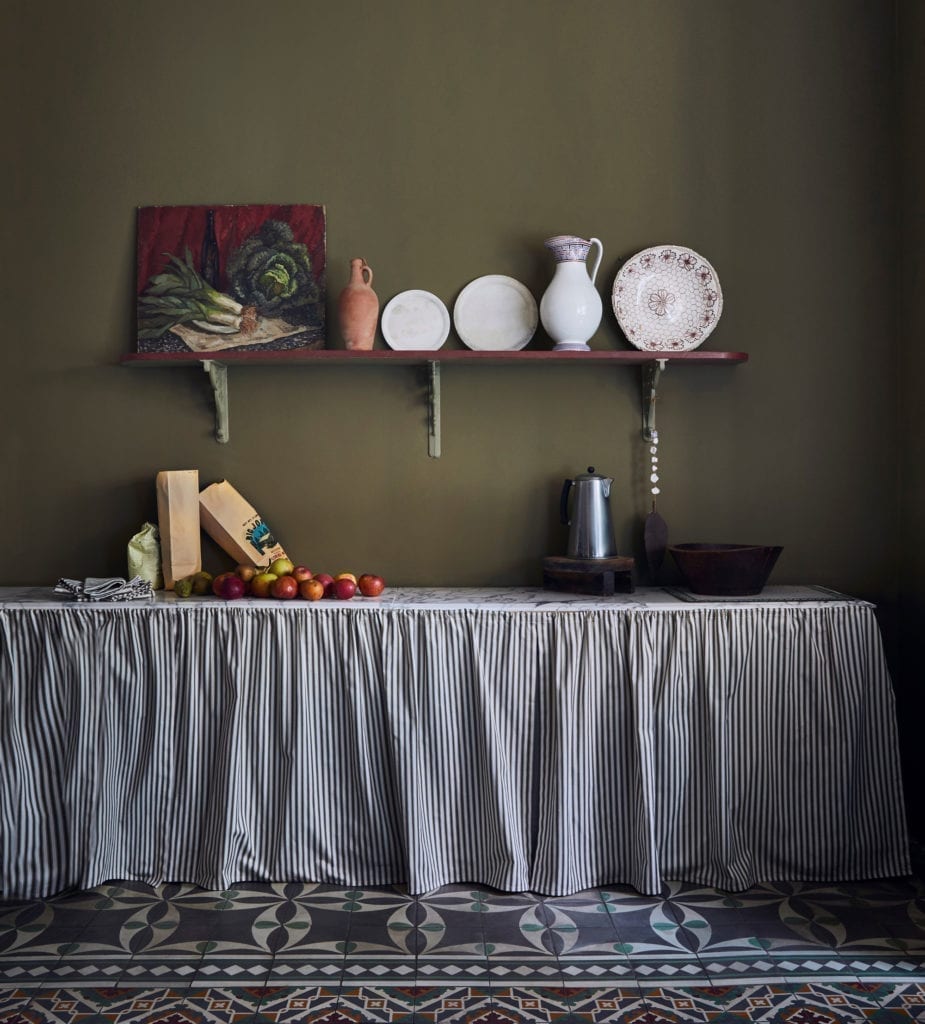
1. The Heritage Sink Skirt
Instead of traditional timber cabinet doors beneath a Belfast or laboratory sink, hang a gathered ticking fabric skirt from a simple, unlacquered brass rod. It introduces a beautiful, tactile softness to the rugged surfaces of a kitchen, concealing modern appliances while channelling an authentic, historic butler’s pantry vibe.
2. Tufted Seat Pads & Banquette Cushions
Elevate rustic wooden dining chairs or a built-in breakfast banquette with custom tie-on seat cushions. Because ticking fabric is so structurally dense, it holds its shape beautifully. Opt for traditional hand-tufted details with self-fabric ties to add depth, comfort, and vintage visual interest.
3. Tailored Roman Blinds
The inherent thickness and tight weave of authentic mattress ticking make it an exceptional choice for window dressings. It provides excellent privacy and light filtration, holding a crisp, tailored fold that makes Roman blinds look expensive and bespoke.
4. Hard-working Everyday Linens
Embrace the utilitarian roots of the textile by creating homemade oven gloves, heavy-duty tea towels, and casual table runners. Ticking fabric is incredibly resilient, meaning these everyday pieces will effortlessly withstand the washing machine, looking even more beautiful, soft, and broken-in with age.
The Tailored Bedroom & Laundry
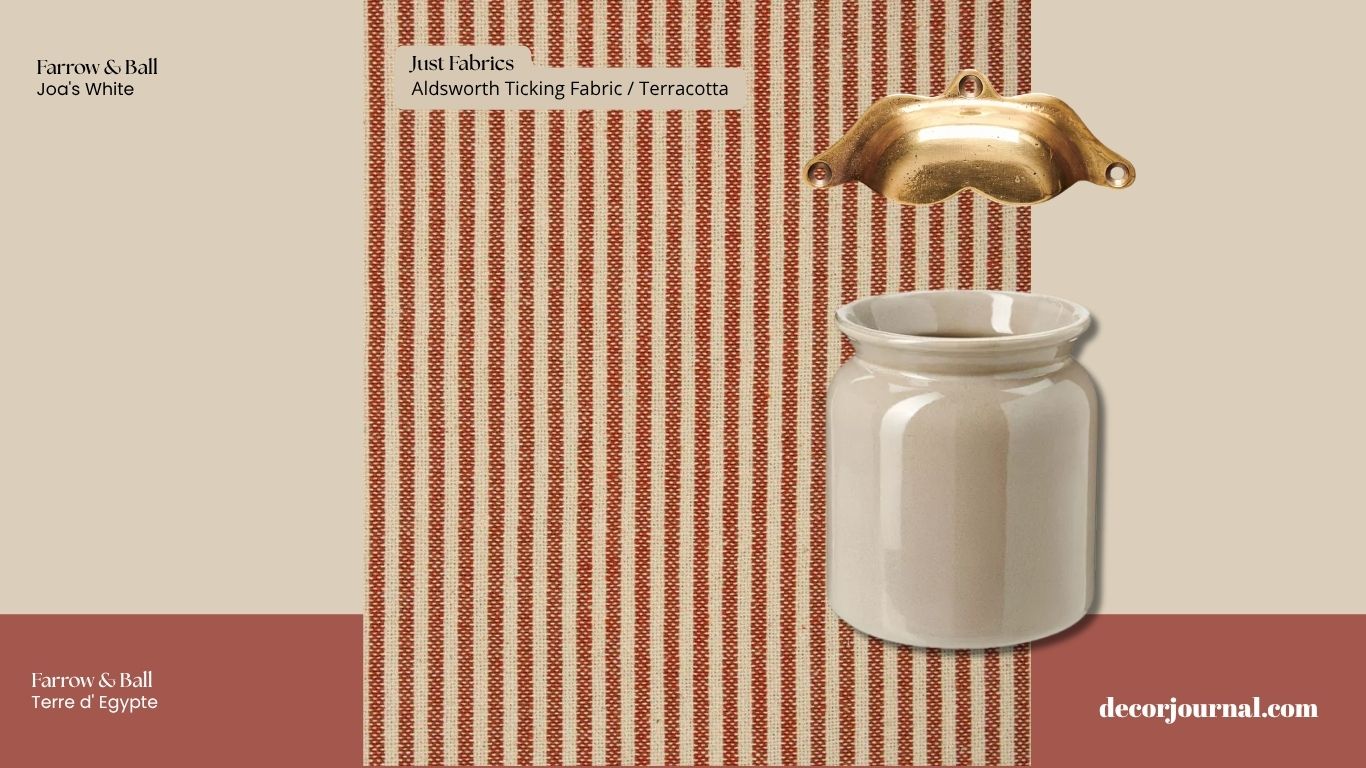
While ticking fabric brings a soft, rustic utility to the kitchen, it takes on a different persona when introduced to the bedroom and laundry spaces. Here, the vibe shifts to something incredibly crisp, clean, and structurally sharp. Because of its rigid, linear pattern and dense weave, ticking naturally lends itself to tailored, high-end upholstery and crisp window treatments. It is the ultimate tool for creating an orderly, boutique-hotel aesthetic without the luxury price tag.
Where & How to Use It:
1. Tailored Roman Blinds
Because of its exceptionally dense weave, ticking fabric makes incredible window dressings. It naturally filters light beautifully and holds a sharp, crisp line, ensuring your Roman blinds maintain a perfectly tailored fold every time they are drawn.
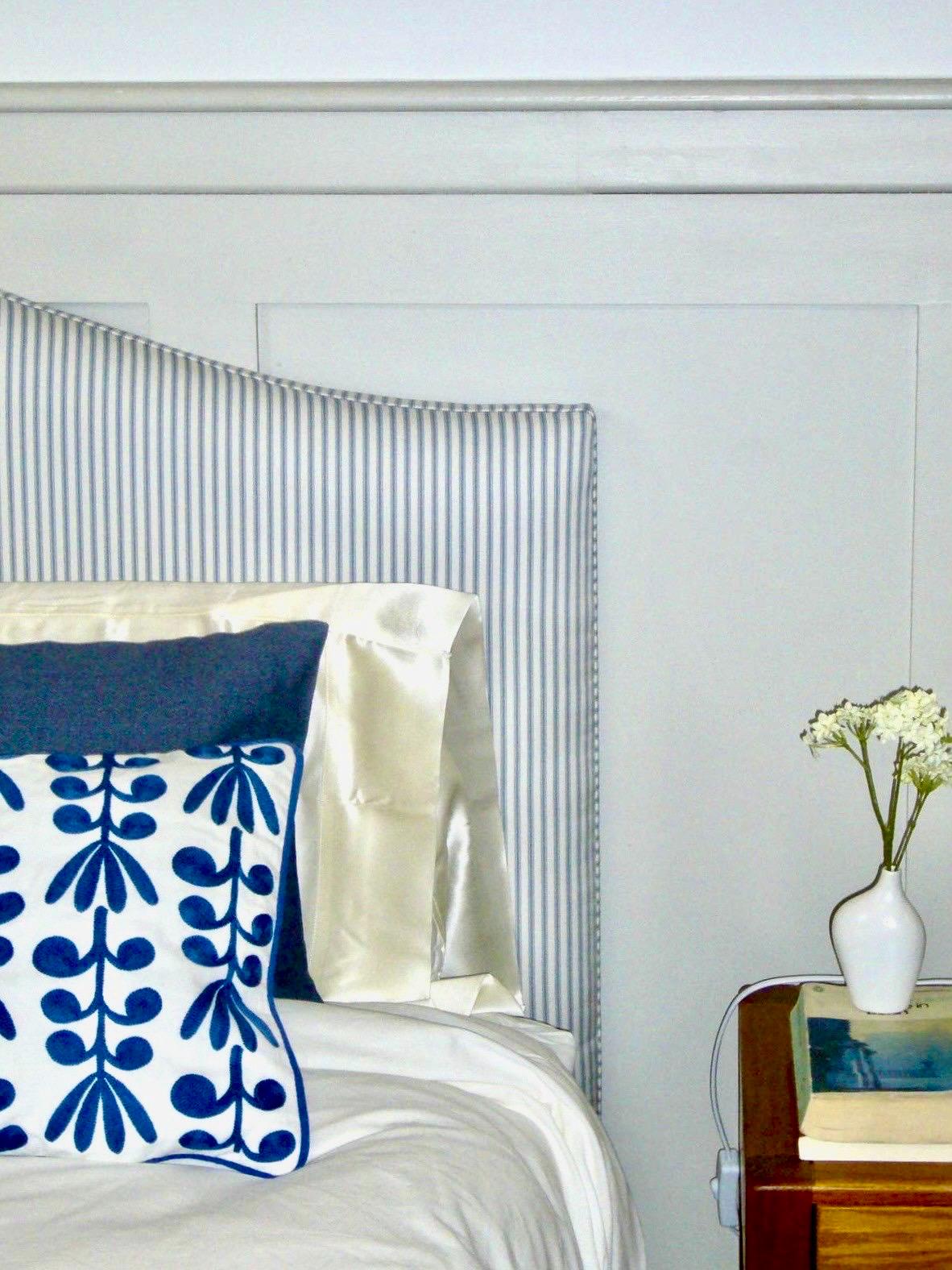
2. The Statement Upholstered Headboard
Transform a standard bedroom staple into a design feature. Wrapping a simple DIY plywood headboard in ticking fabric gives the bed an instant, high-end hotel look. The vertical lines add visual height to the room, creating a tailored focal point.
3. The Custom Bed Valance
(Or a dust skirt, for my American friends!) A gathered or sharp box-pleat bed valance crafted from ticking fabric is the ultimate way to elevate a divan base. It effortlessly hides modern bed frames while introducing that quintessential, layered country house aesthetic.
4. The Hard-working Ottoman
Upholstering a storage ottoman or footstool in this rugged textile is as practical as it is beautiful. Because ticking fabric was originally engineered to withstand heavy friction, it can easily handle the daily wear and tear of a busy bedroom or dressing space.
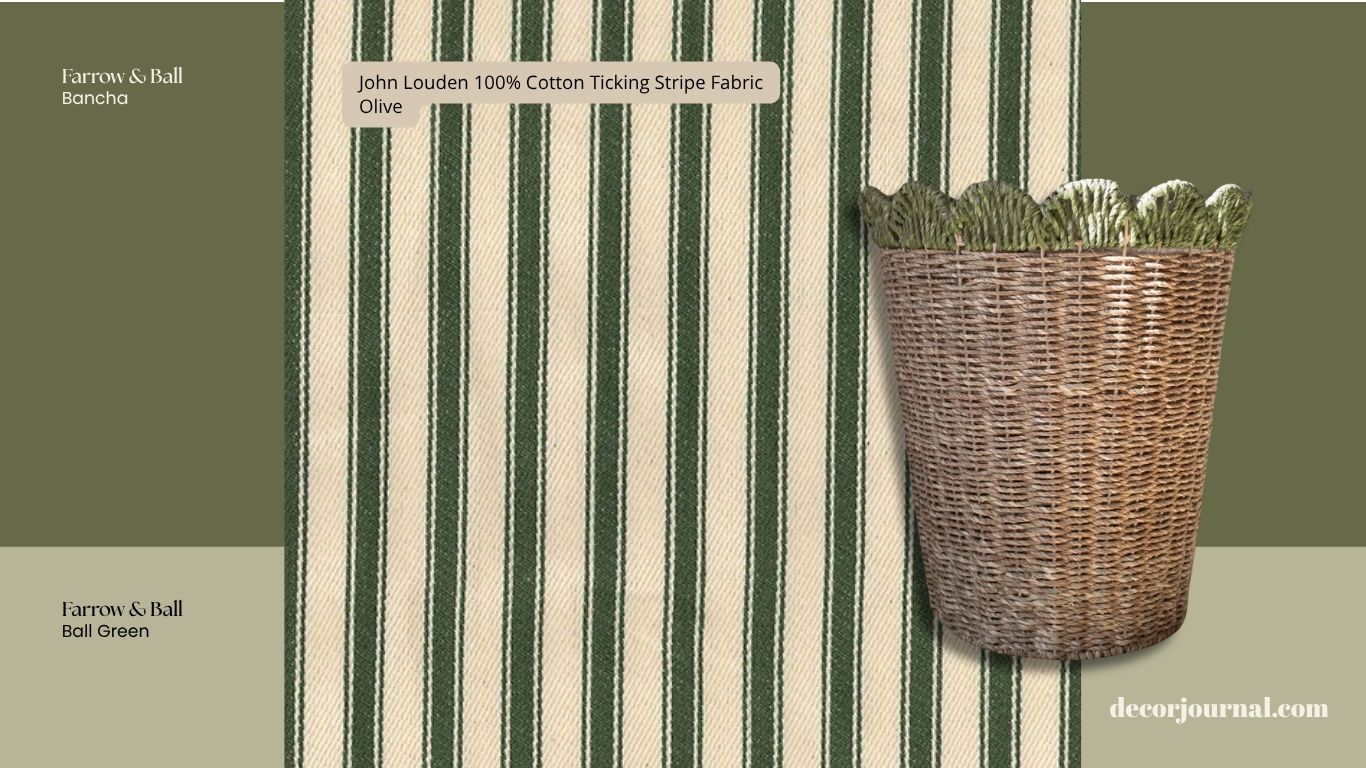
5. Utilitarian Laundry Totes & Basket Liners
Bring elevated order to your utility spaces. Use this sturdy fabric to line rustic wicker log baskets, or sew massive, heavy-duty laundry sacks designed to hang from solid brass wall hooks. It turns everyday chores into a visual pleasure.
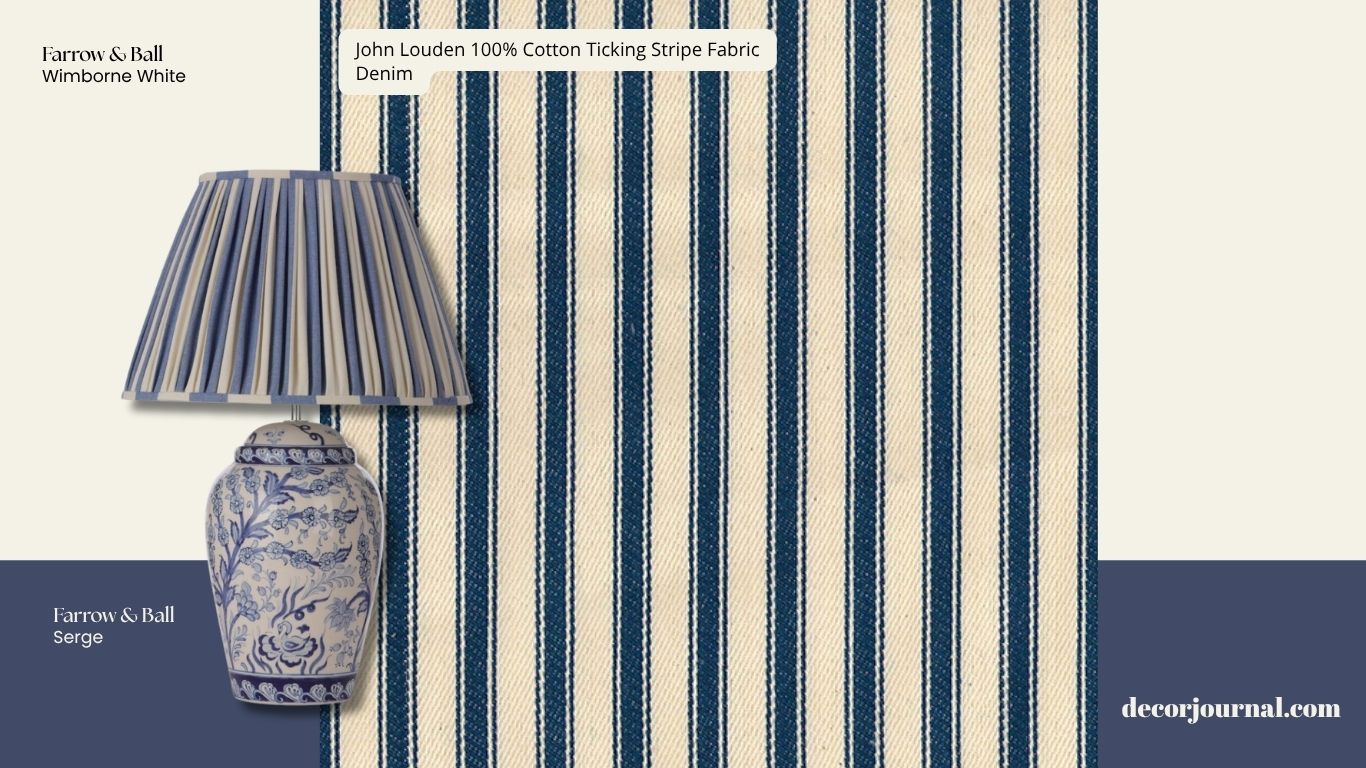
6. The Statement Bespoke Lampshade
If you want to inject a quick burst of heritage charm into a room, wrapping a bespoke style lampshade in ticking fabric is a design insider secret. Whether you choose a crisp, tightly pulled drum shade or a romantic, gathered empire style, the vertical lines of the textile interact beautifully with the frame’s shape. When the lamp is switched on, the dense weave diffuses a beautifully soft, warm ambient glow through the cotton, while the pattern adds an instant layer of character to a bedside table, desk, or reading nook.
The Layered Living Room
Living rooms are, first and foremost, sanctuaries, spaces designed for us to retreat, luxuriate, and unwind after a demanding day. However, because they play host to the highest volume of daily foot traffic, their fabrics are relentlessly put to the test.
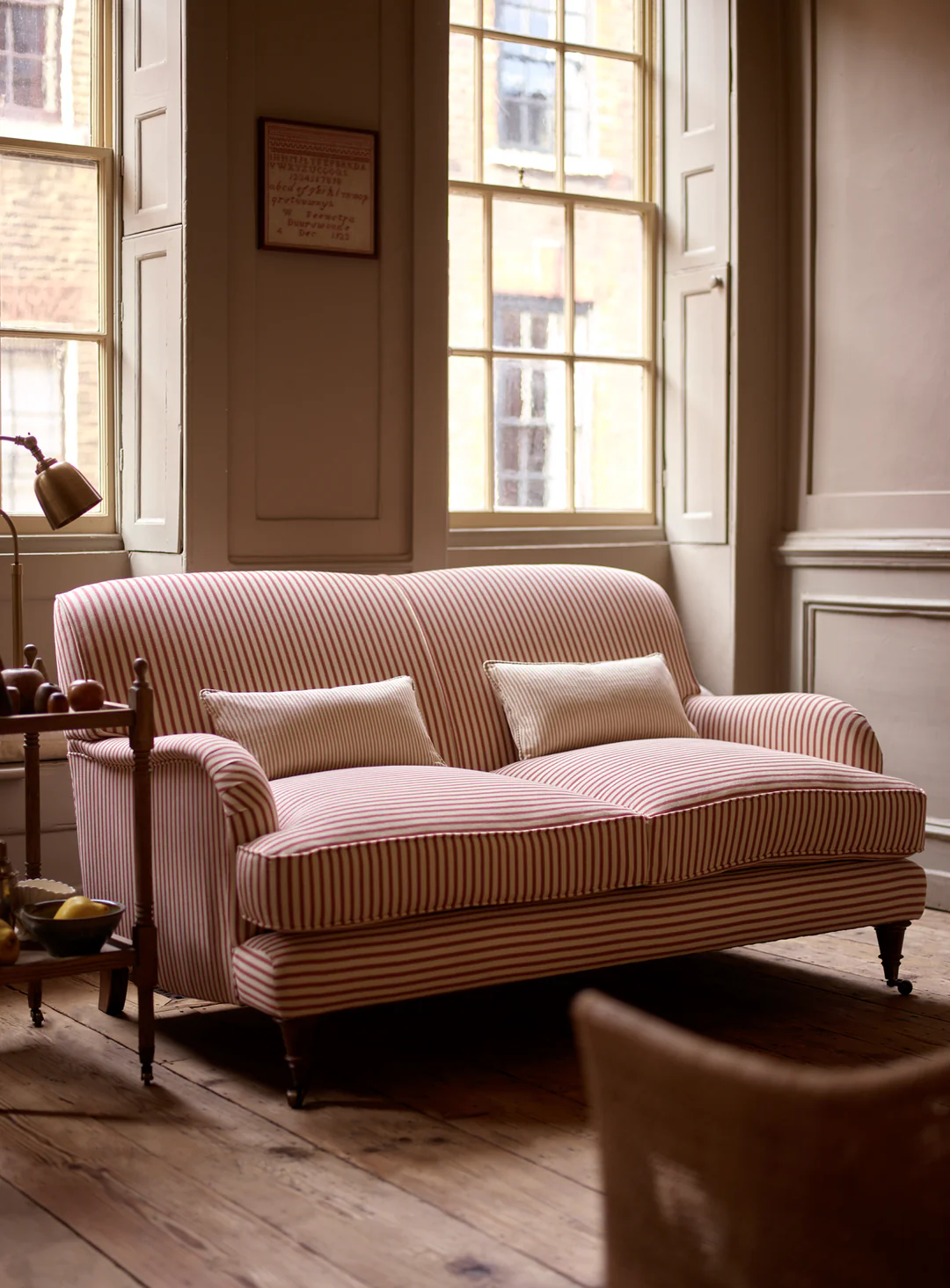
Enter mattress ticking. This hard-wearing textile is an exceptional choice for high-use upholstery, whether you are recovering a statement accent armchair or enveloping an entire family sofa. By wrapping structured, formal furniture frames in this traditionally humble utility fabric, you play a clever design game of contrast. It immediately softens the formality of a living room, delivering an inviting, relaxed elegance that only grows more beautiful with the passage of time.
Where & How to Use It:
1. The Statement Armchair
Upholstering a classic vintage French armchair or a traditional tufted Chesterfield in a simple ticking stripe completely modernises its silhouette while honouring its heritage. The structured lines of the stripe dance beautifully across the deep buttons and curves of classic frame designs, transforming a heavy antique into a fresh, light focal point.
2. Tailored Cushions (With a Twist)
If you aren’t ready to commit to a fully upholstered piece of furniture, introducing ticking stripe cushions to your sofa is the ultimate way to experiment. For a relaxed look, opt for oversized cushions with a soft, ruffled flange edge. If you prefer a more tailored aesthetic, sew them with a contrasting solid border to make the stripes pop. Ticking pairs effortlessly with heavy slubby linens, block prints, and rich velvets.
3. The Designer Secret: Piping Details
For a subtle nod to the trend, use ticking stripes as the contrasting, bias-cut piped edging on plain linen or rich velvet throw cushions. This tiny detail is incredibly inexpensive to execute but instantly elevates a simple cushion, giving it a high-end, custom-maker look.
4. Thermal Portière (Draft) Curtains
Keep winter chills at bay by hanging a heavy, interlined ticking stripe curtain, traditionally known as a ‘portière’, over a draughty wooden front door or a hallway archway. The dense fabric is exceptionally functional for blocking drafts, while the vertical stripes draw the eye upward, making cosy entryways and hallways feel significantly taller.
The Secret Sourcing Guide
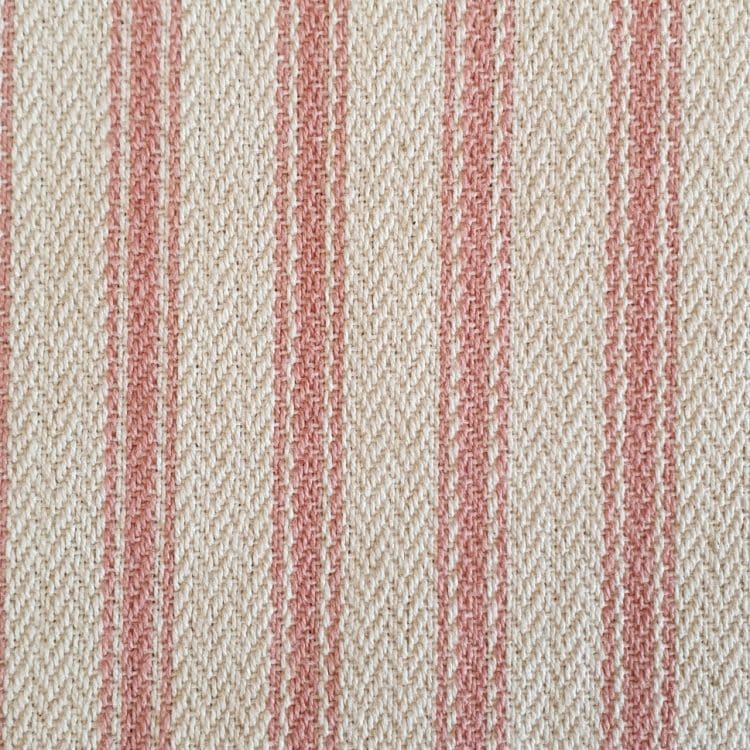
Traditionally, mattress ticking is a remarkably robust, economical fabric. Historically engineered to keep feather quills from poking through, it is generally woven in a heavy cotton (often a sturdy 12 oz herringbone or twill weave) to ensure maximum durability.
If you want to keep your project strictly low-budget, avoid purchasing from high-end designer upholstery showrooms. Instead, look to traditional textile merchants, local deadstock warehouses, or utilitarian haberdasheries to find classic, brand-new ticking fabric for pennies on the pound.
For the True Romantics: Sourcing Antique Gems
However, if you are a design romantic like me and want to source the real deal, I have discovered a spectacular secret: Ticking Depot.
They meticulously hunt down antique European mattress covers, then clean and restore them so they are ready to breathe new life into modern interiors. Walking through their collection is like stepping into a textile museum. From the classic woven jacquards of Spain to the bold, colourful stripes of the Nordic countries, their pieces boast a beautifully characterful patina that you simply cannot replicate with brand-new fabric.
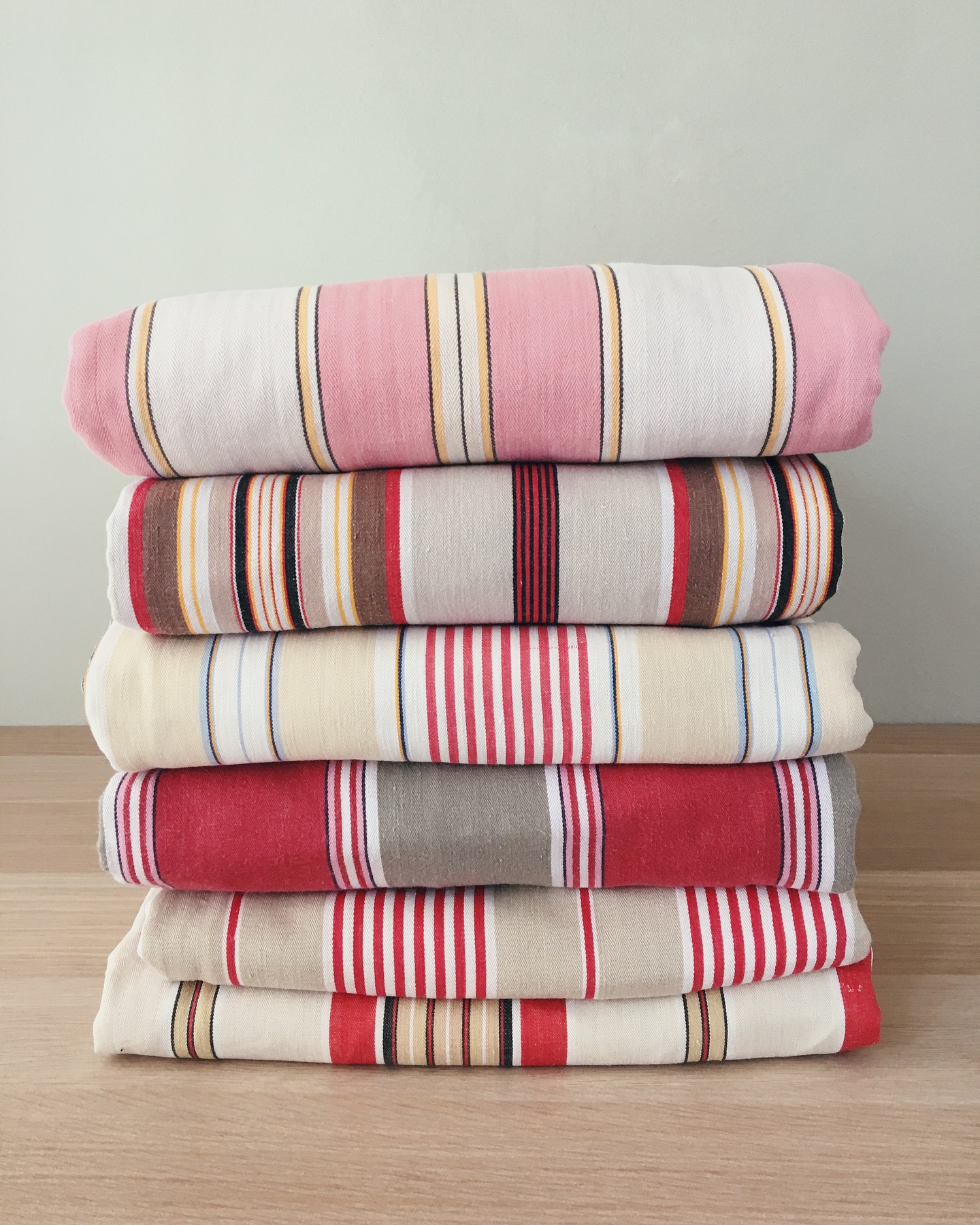
While prices for these historic textiles naturally vary depending on the rarity of the weave, they are remarkably reasonable considering you are receiving an authentic, one-of-a-kind piece of design history. If you want a home filled with soul and storytelling, this is exactly where to find it.
The Final Thread: Embracing the Charm of Ticking
The magic of ticking fabric lies in its quiet confidence. It doesn’t need to shout to be noticed; its beauty is found in its structural simplicity, its utilitarian heritage, and its remarkable ability to ground a room. Whether you drape it over a drafty doorway, wrap it around a custom headboard, or hunt down an authentic, patinated treasure from Ticking Depot, this humble textile has a unique way of making a home feel both deeply lived-in and effortlessly refined.
Decorating a beautiful, soulful home doesn’t require a designer budget. It simply requires a little bit of imagination, a nod to the past, and the willingness to play the contrast game. So, grab a few metres of your favourite stripe, fire up the sewing machine, and start weaving a little bit of timeless, tailored character into your own spaces.
Happy decorating!