
Curved furniture with its gentle, soft shapes is defining interior design in 2026. In a world that is constantly changing and where uncertainty is at an all-time high, home is where we crave calm. Curves play a quiet but powerful role in that shift with their rounded shapes. They signal ease, comfort, and flow, creating spaces that feel welcoming rather than rigid. Walk into a room full of curves, and your body relaxes before your brain catches up. Shoulders drop. The space feels softer, safer, and easier to be in. That reaction isn’t a coincidence; it’s psychology.
Let’s explore how curves bring warmth and liveability into the home and how to incorporate and style them in a way that feels both intentional and timeless.
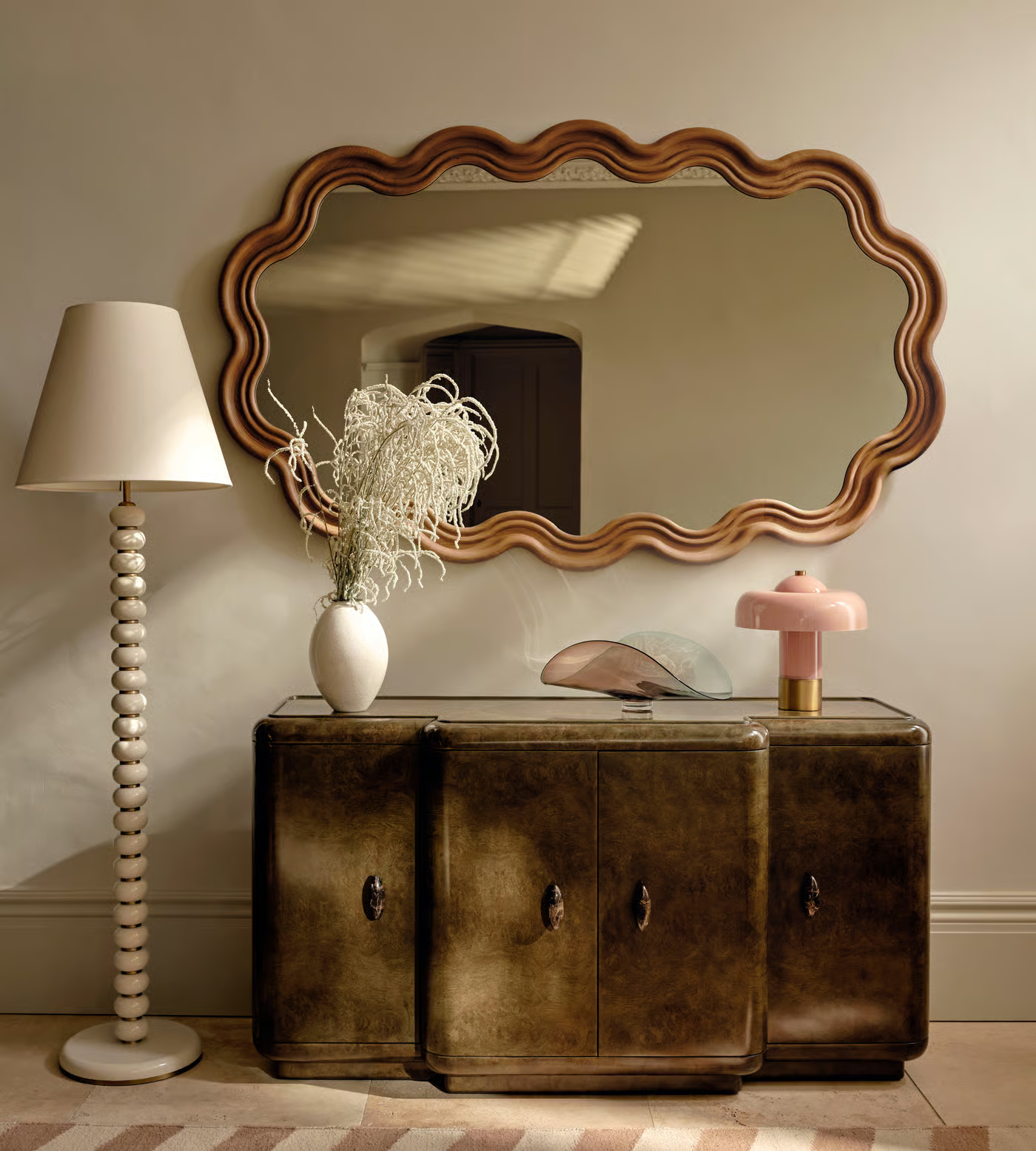
Table of Contents
Why Curves Feel So Good: The Science Behind the Softness
As a designer, and admittedly not the most linear thinker, I’ve always trusted my instincts and long felt drawn to softer lines and rounded forms. After tumbling happily down a research rabbit hole (as one does), it turns out science agrees with me.
Neuroscientist Dr Moshe Bar, alongside researcher Maital Neta, found that humans consistently prefer curved forms over sharp, angular ones. Their studies suggest that sharp edges can subconsciously activate the brain’s threat-detection centres, while curves tend to bypass that response entirely. And it doesn’t stop there. Research by Oshin Vartanian shows that curvilinear forms actually stimulate areas of the brain associated with reward and emotional pleasure. Psychologist Helmut Leder has further expanded on this work, demonstrating that rounded shapes are simply easier for the brain to process, creating a sense of visual ease and emotional comfort.
Curves echo the organic shapes we see throughout nature and the human body, which may be why we instinctively associate them with safety, softness, and connection.
All of this goes a long way in explaining why curved sofas feel more inviting, arched mirrors and rounded furniture soften a room, and spaces with curves tend to make us want to linger just a little longer. Curves resonate on a deeply human level, and that’s exactly what makes them so powerful in the spaces we call home.
Where to Use Curves in Your Home
Curves really are the gift that keeps on giving. Beyond their well-documented psychological benefits, they deliver serious visual impact and everyday practicality. Much like nature itself, curved forms guide movement, soften transitions, and create spaces that feel instinctively right. When comfort and connection are the priority, curves quietly lead the way, with no sharp corners to knock into and no rigidity to work around.
A beautifully curved sofa naturally encourages conversation (and, let’s be honest, offers a welcome distraction from our phones), rounded tables make circulation effortless, and sculptural pieces earn their place by functioning as art you can actually live with. The secret lies in thoughtful, well-considered choices and design that supports how we move, sit, and gather while feeling effortless, enduring, and endlessly lovable.
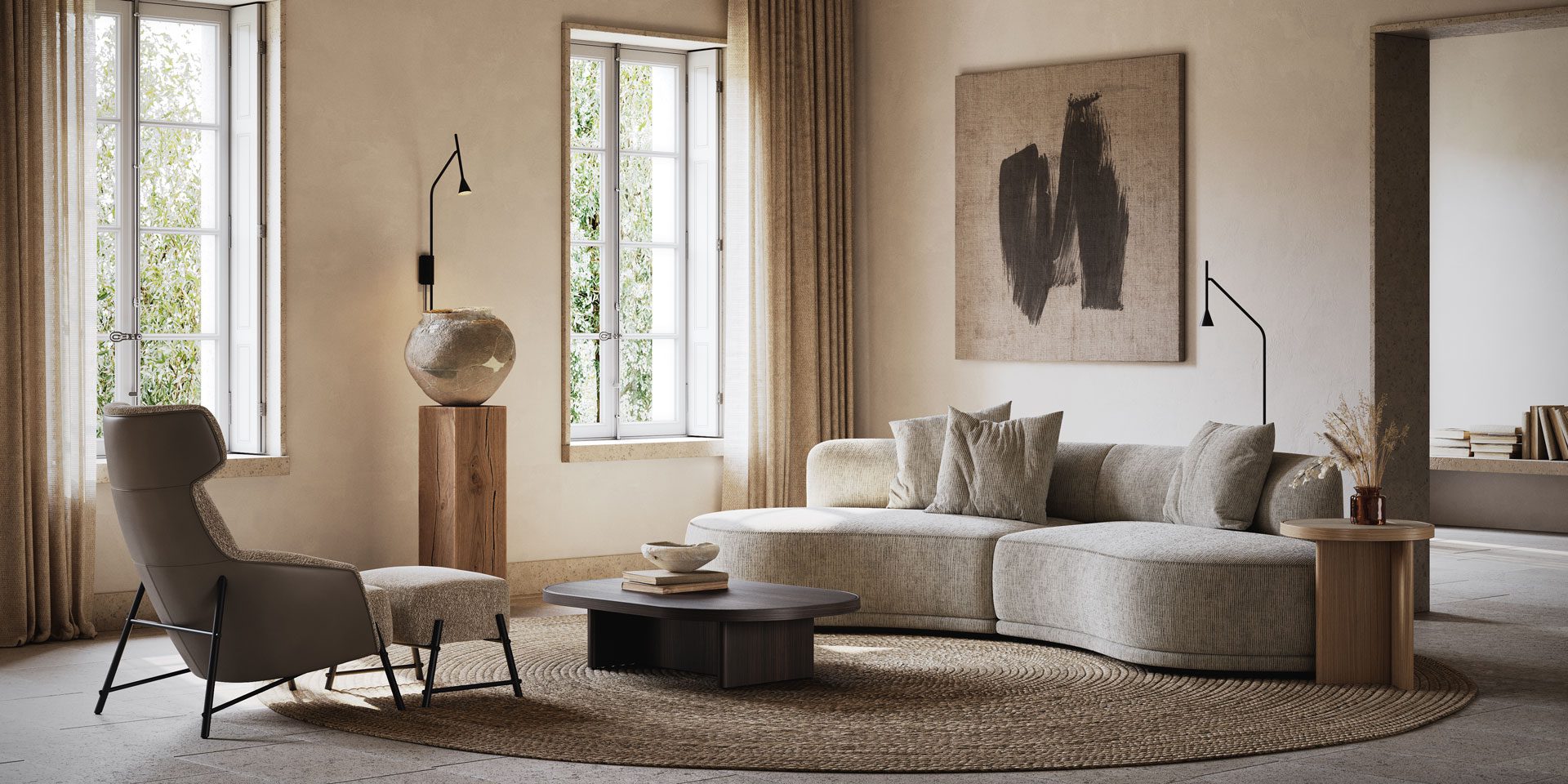
Curved Sofas and Seating
After many years of language teaching and experimenting with more seating arrangements than I care to admit, I can confidently say that curved seating naturally encourages conversation and meaningful connection across all age groups. Where and how you introduce it into your home will depend on a number of factors, but if you’re considering making the shift, here’s a curated list of ideas to help you do it beautifully and with intention.
1. Living Room (Main Seating Zone)
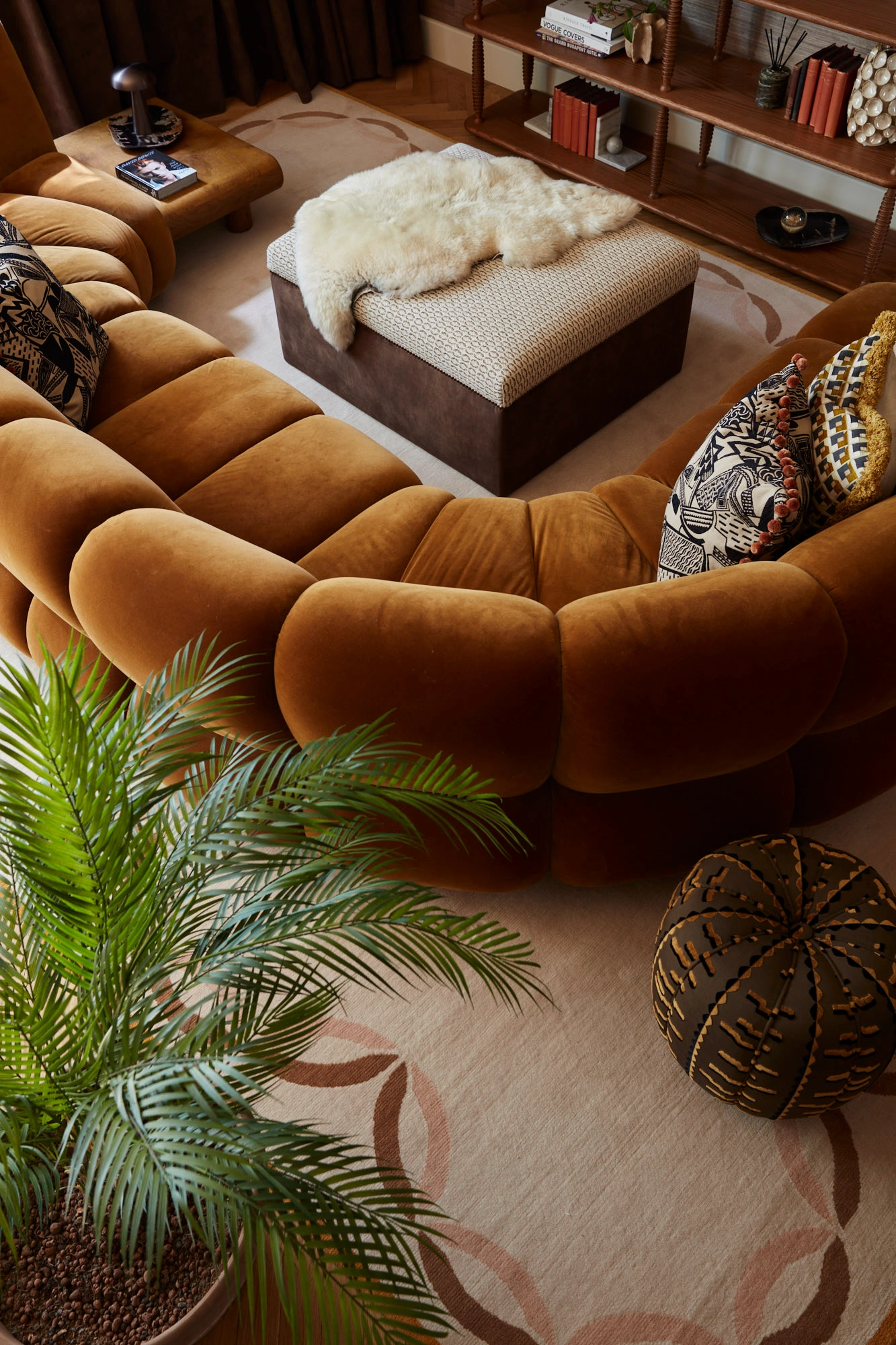
Possibly the most obvious, and arguably the perfect home for a curved sofa. Its gentle lines soften the space instantly, creating a natural focal point that feels both inviting and intentional.
Why it works:
- Encourages eye contact and easy conversation
- Breaks up hard angles from walls and TV units
- Works beautifully with a round coffee table
Styling tip: Pair with layered lighting (floor lamp + table lamp) for a cozy, inviting vibe.
2. Open-Plan Living/Dining Spaces
When a room has multiple functions, a curved sofa can act as a gentle boundary between zones without blocking sightlines and creating smoother traffic flow.
Why it works:
- Creates intuitive flow without harsh dividers
- Visually anchors a seating area in an open layout
- Helps guide movement through the space
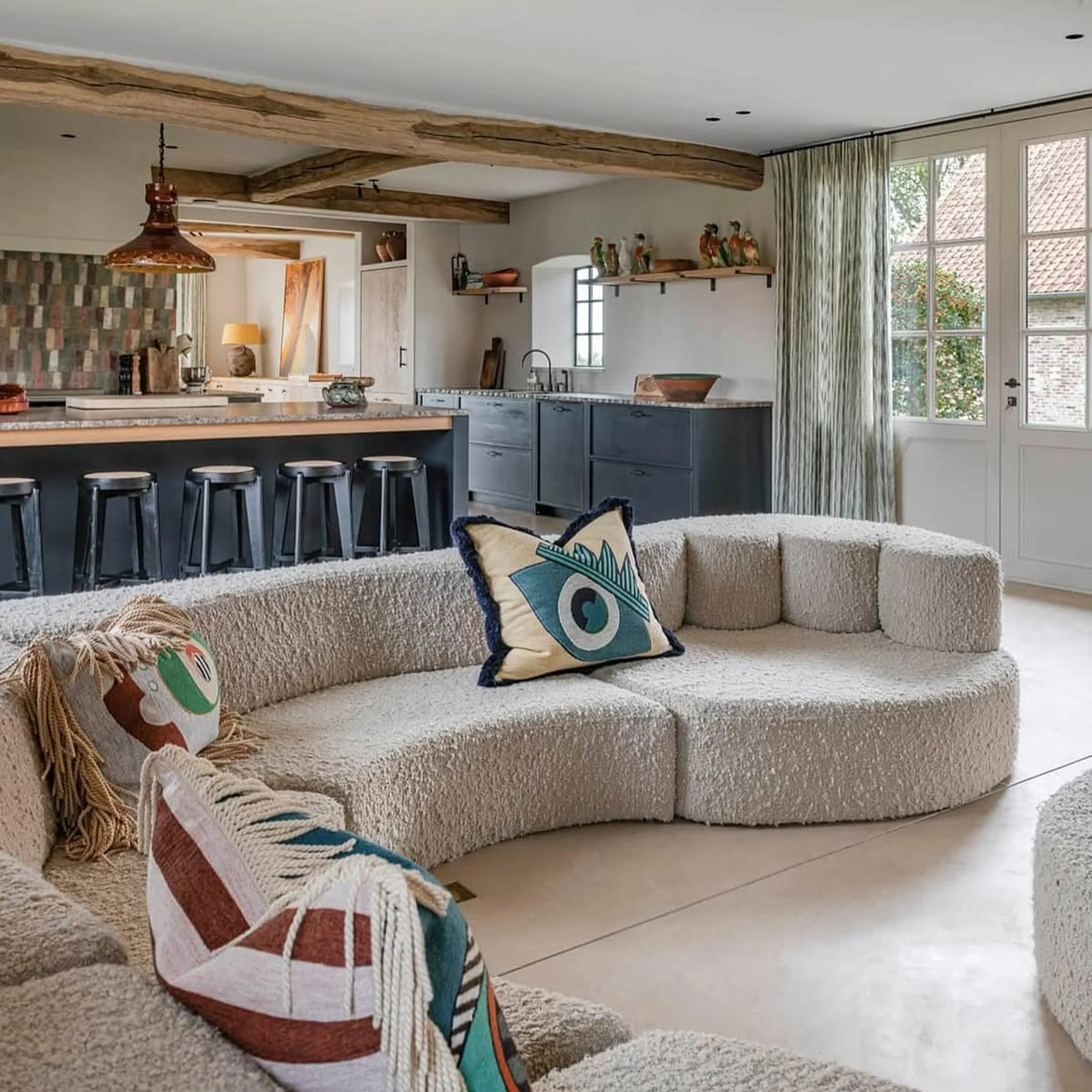
Styling tip: Float the sofa away from walls and use rugs to define each zone.
3. Family Room / Media Room
Soft seating equals soft vibes,ideal for lounging, game nights, or movie marathons.
Why it works:
- Creates an enveloping, cocoon-like feel
- Perfect for cozying up together
- With kids or pets, curves reduce sharp collisions.
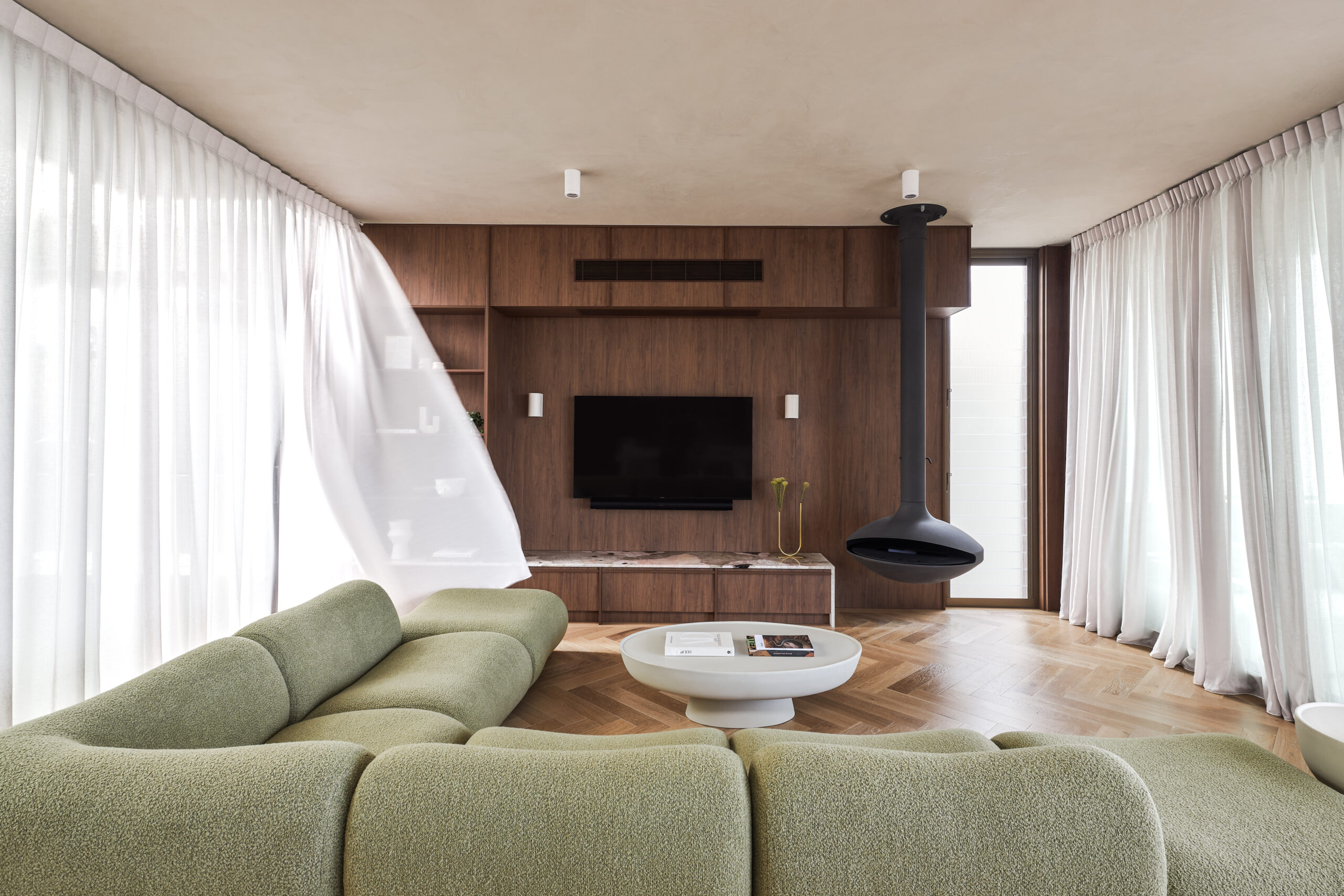
Styling tip: Add modular ottomans for flexible seating, that way, the curve adapts to your needs.
Best Rooms for Curved Chairs
4. Reading Nook or Library Corner
Curved accent chairs instantly make a corner feel thought through, like a space designed for lingering with a book or a cup of tea.
Why it works:
- Embraces you physically and visually
- Encourages stillness and focus
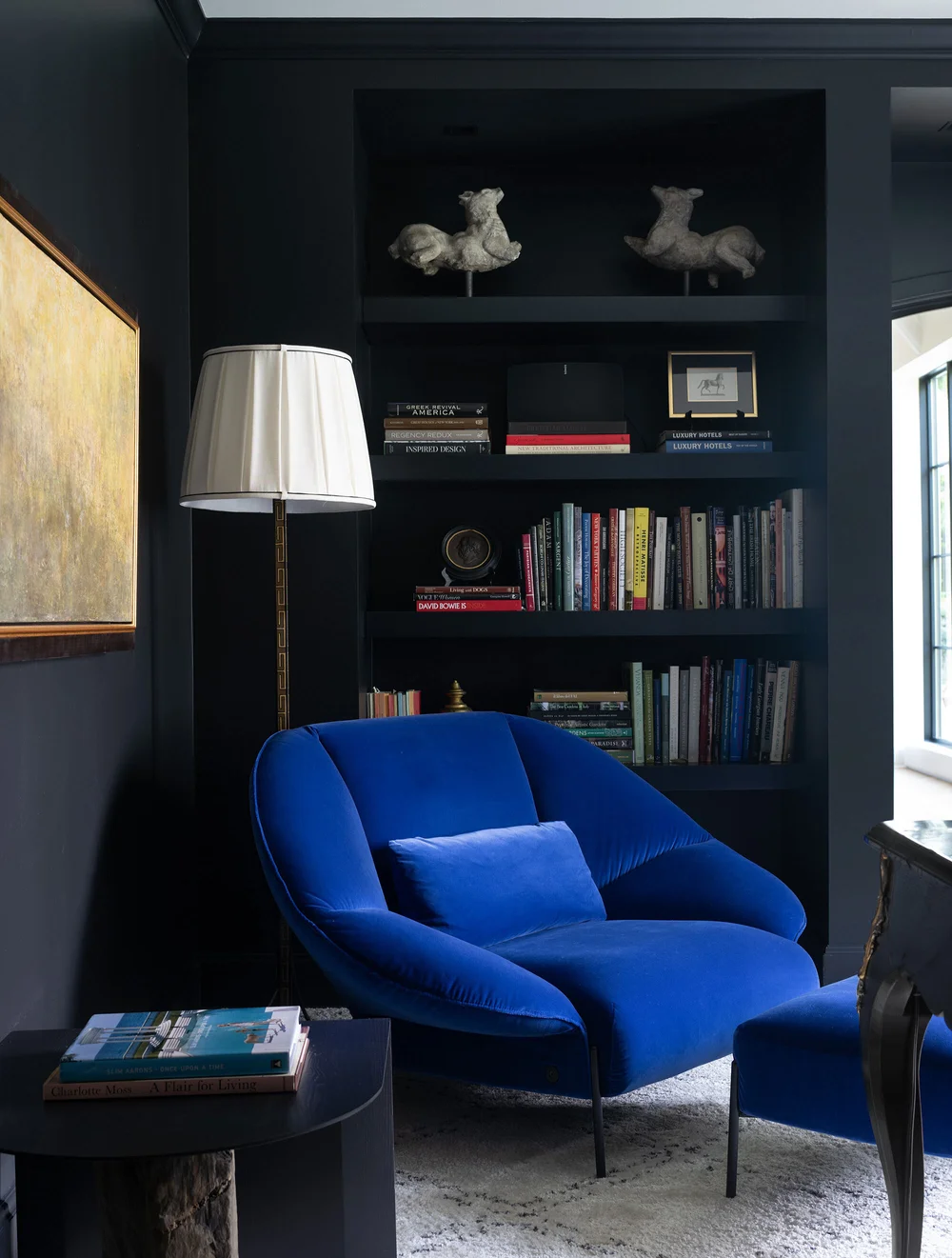
Styling tip: Add a slim side table and a floor lamp for the ultimate comfy spot.
5. Bedroom Seating Area
Whether at the foot of the bed or in a window corner, a curved chair adds a soft pause to a private space and in my case, a dumping ground for clothes that have another days wear (not even designers are perfect).
Why it works:
- Makes the room feel curated instead of just functional
- The soft line contrasts beautifully with angular bed frames.
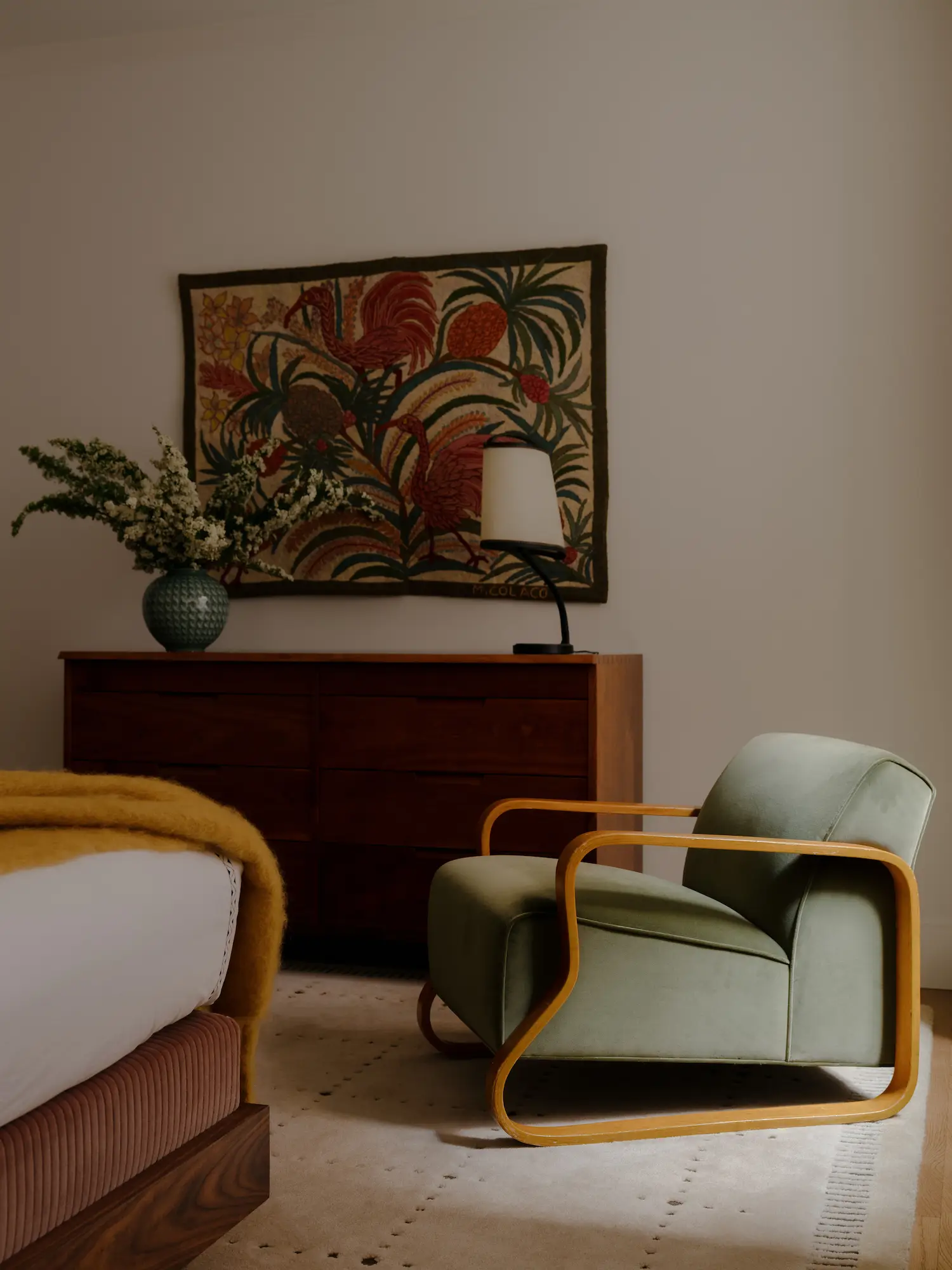
Styling tip: Choose plush upholstery to enhance the intimate feel.
6. Office or Study
A curved chair adds personality and comfort, especially in creative or client-facing workspaces.
Why it works:
- Makes a workspace feel less “officey”
- Helps balance straight desk lines with softer seating
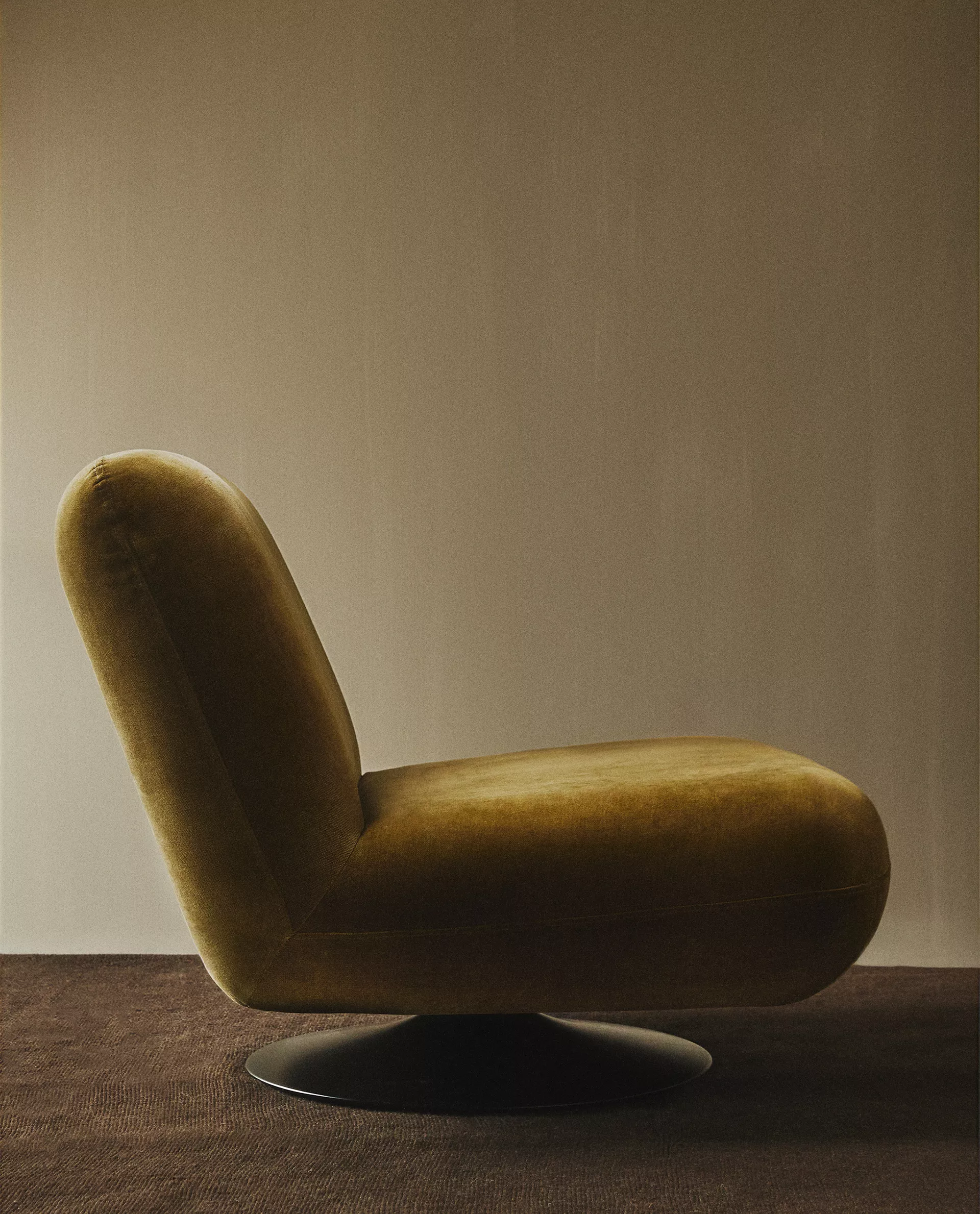
Styling tip: Pair with a sculptural floor lamp to keep your work nook chic and functional.
Best Rooms for Curved Banquettes
7. Kitchen Nook / Breakfast Corner
A curved banquette transforms everyday meals into something special and optimises space better than linear bench seating.
Why it works:
- Fits snugly into corners and curves around tables
- Makes small dining areas feel warm and inviting
- Encourages lingering over coffee or conversation
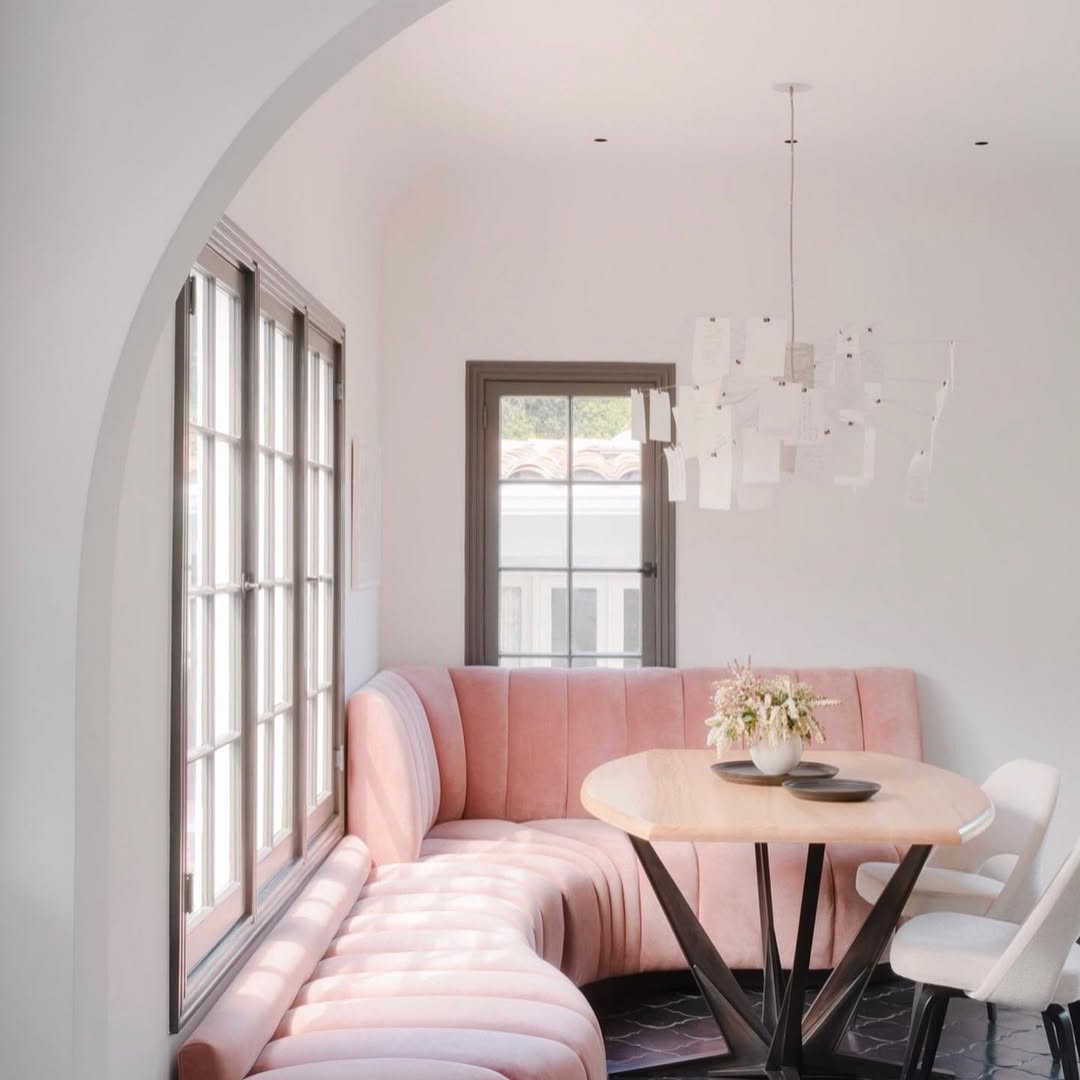
Styling tip: Use cushions and layered textiles to enhance comfort and colour.
Dining Room (Casual & Formal)
In more formal eating spaces, a curved banquette can be the hero piece that elevates the whole room.
Why it works:
- Softens the geometry of the table and chairs
- Creates an intimate dining experience
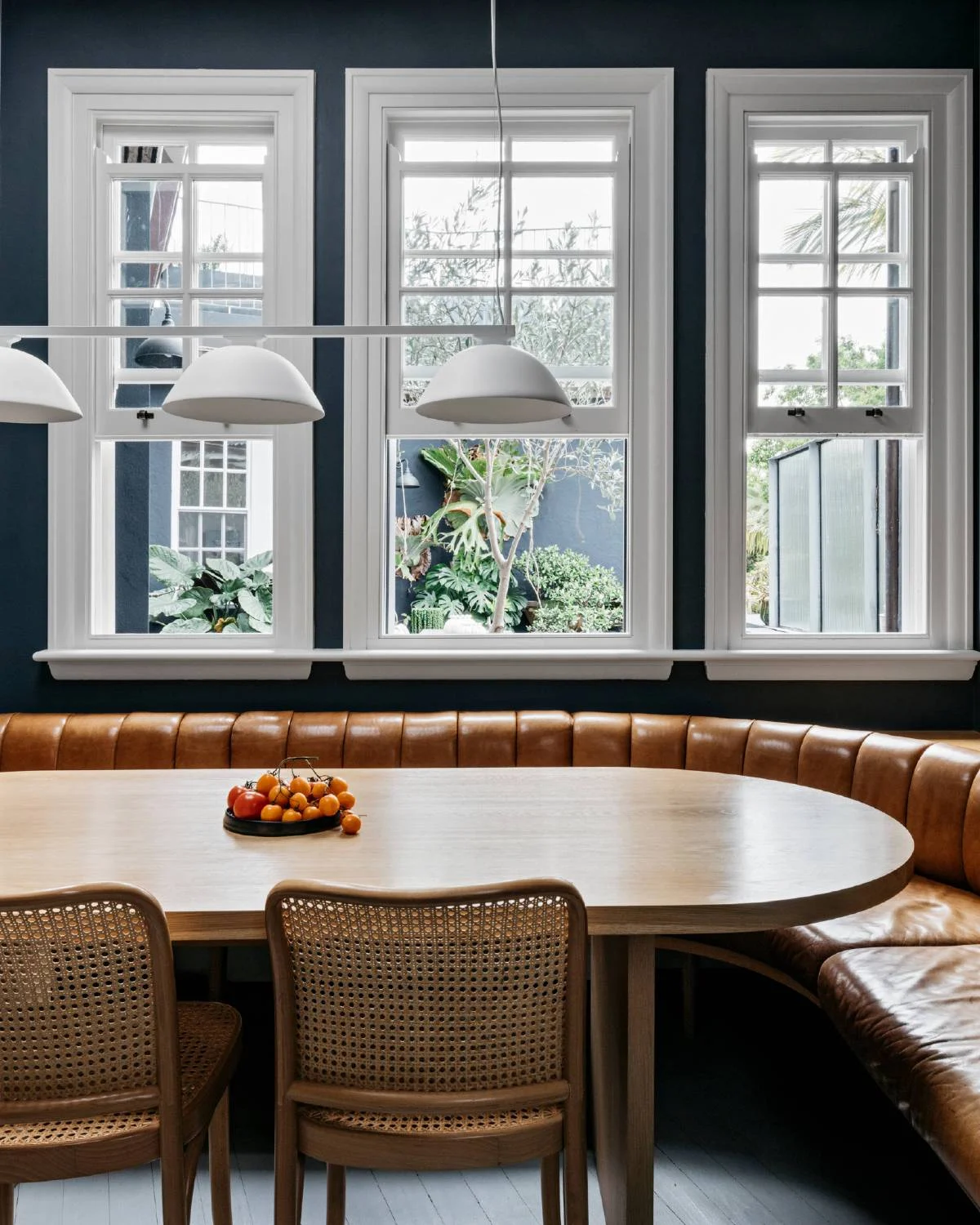
Styling tip: Balance with sleek dining chairs on the opposite side to keep the look intentional and elegant.
Pro Tips for All Curved Seating
Scale & Proportion
Make sure the curve feels proportional to the room—not so small that it disappears and not so large that it dominates.
Balance Angles
Use curved pieces to complement straight architecture; they soften without sacrificing style.
Pair with Round Elements
Curved sofas pair best with round coffee tables, rugs, and mirrors to echo the shape and create visual harmony.
Traffic Flow
Curves naturally guide movement; place them in areas where you want people to move fluidly from one zone to another.
Rounded Tables and Soft-Edged Furniture
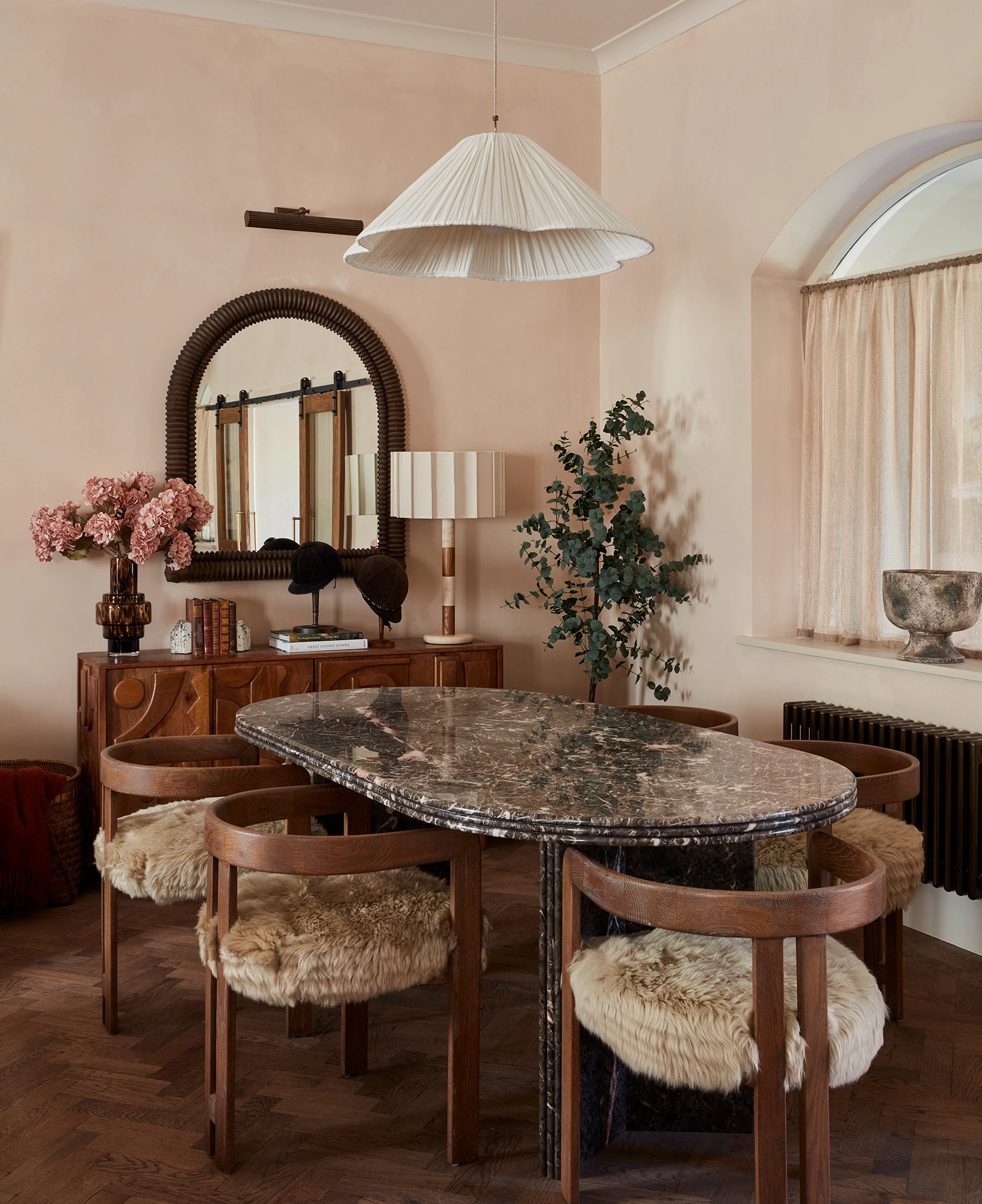
Curved furniture, with its beautifully softened edges, is ideal for high-traffic areas, allowing movement to flow naturally without the hazard of sharp, unforgiving corners. There’s an effortless elegance to rounded coffee and side tables that instantly elevates a space. I’m constantly coveting the stunning round marble dining tables in my local café; family coffees there always feel a little more special, and I’m convinced the magic lies, in part, in the table’s welcoming shape. Whether crafted in stone, wood, or lacquer, these sculptural forms add depth, sophistication, and a quiet sense of luxury to any interior.
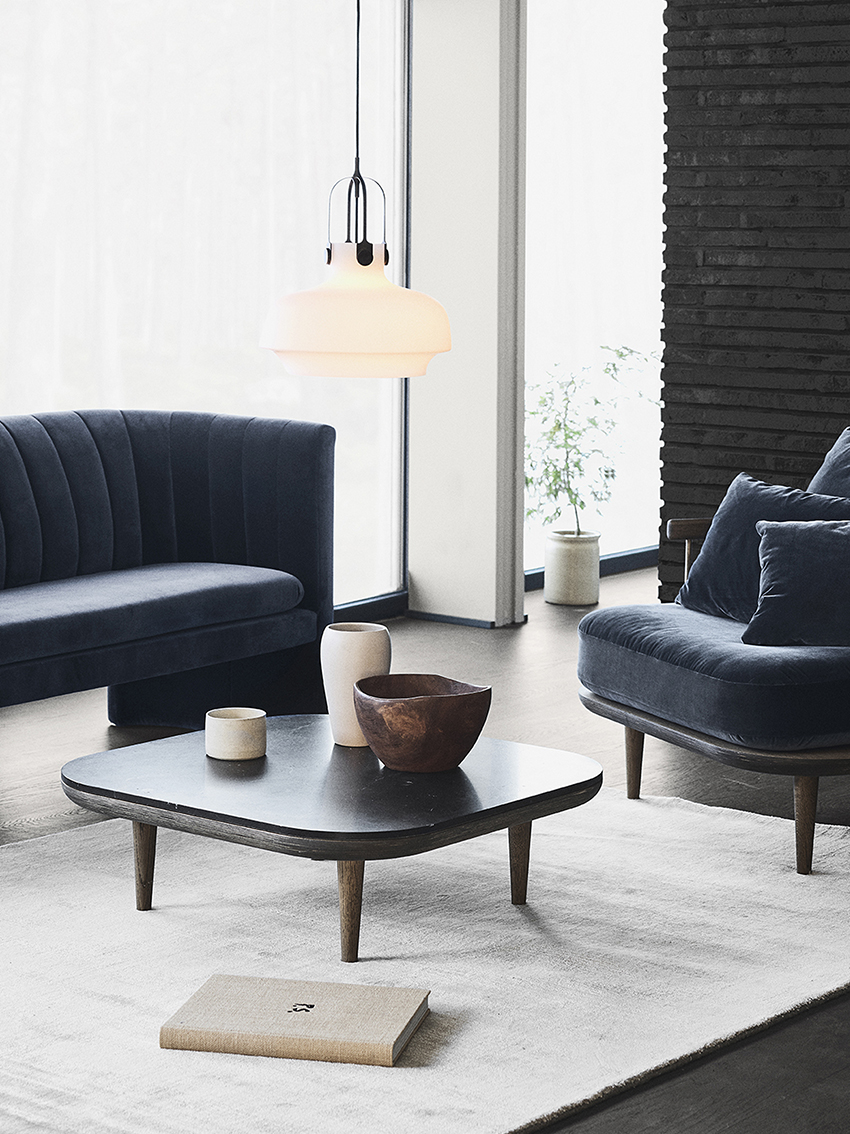
Sculptural Lighting with Curved Forms
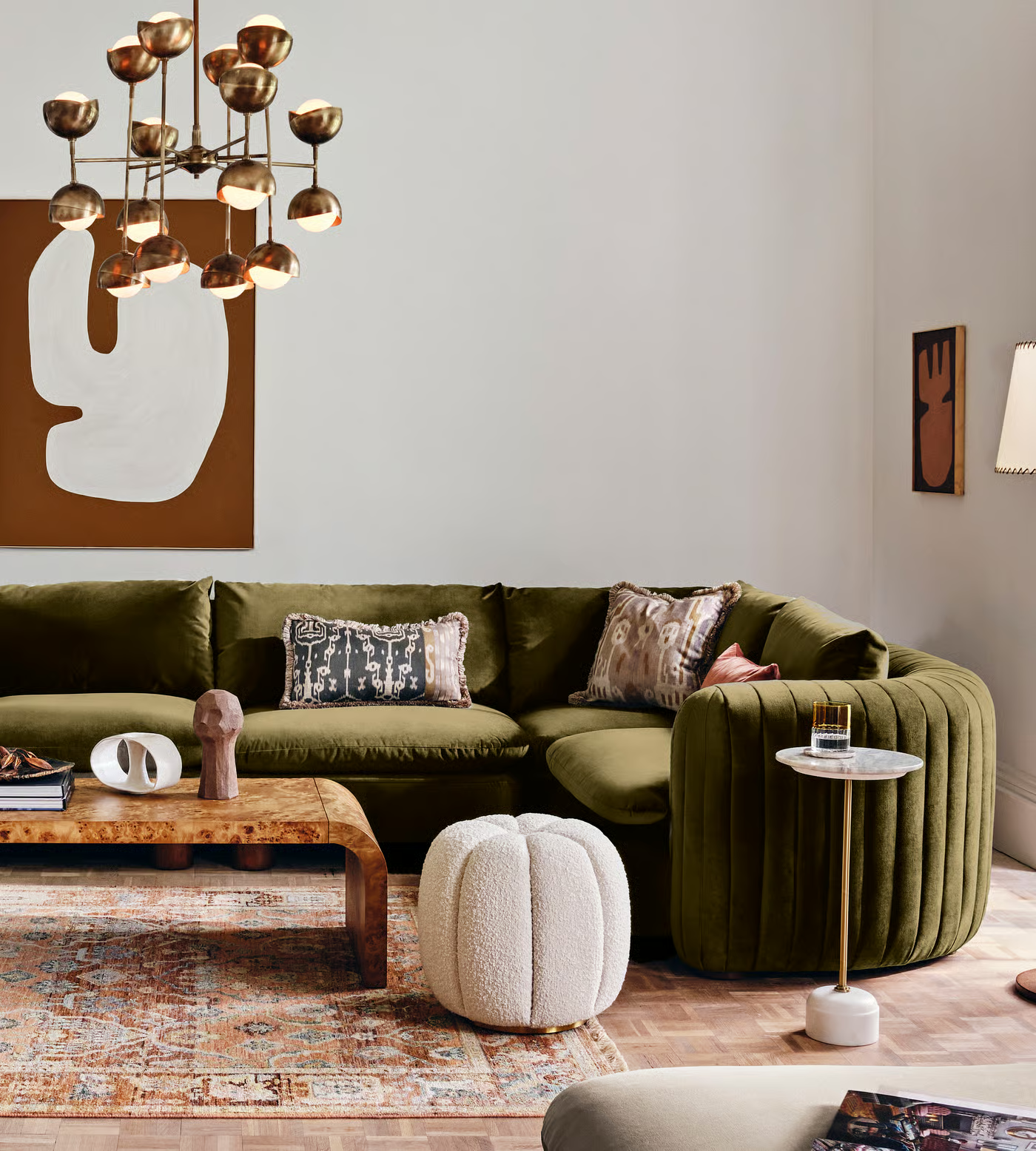
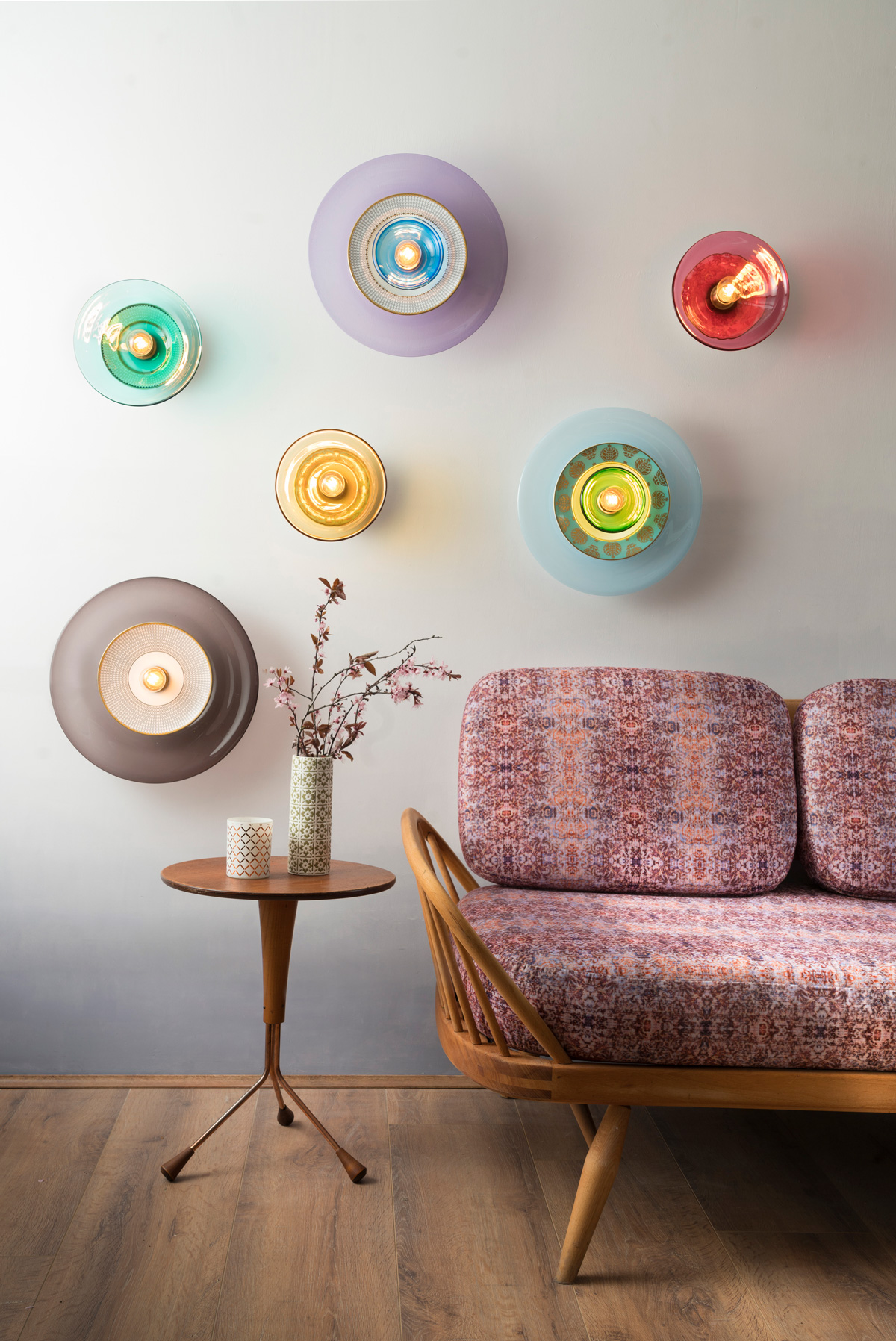
One of the loveliest ways to echo architectural curves is through lighting. Curved pendants, floor lamps, and sconces introduce movement and visual softness while quietly elevating the overall design. They don’t just illuminate a space; they act as sculptural accents, doubling as functional art that adds character, balance, and a gentle sense of rhythm to a room.
In my own home, I have very high, sloped ceilings with strong, linear architectural lines, which could easily feel a little severe. I’ve always softened them with oversized, simple paper globe pendants. Their gentle, rounded form brings warmth and calm to the space, proving that sometimes the simplest curved shapes can have the most transformative effect.
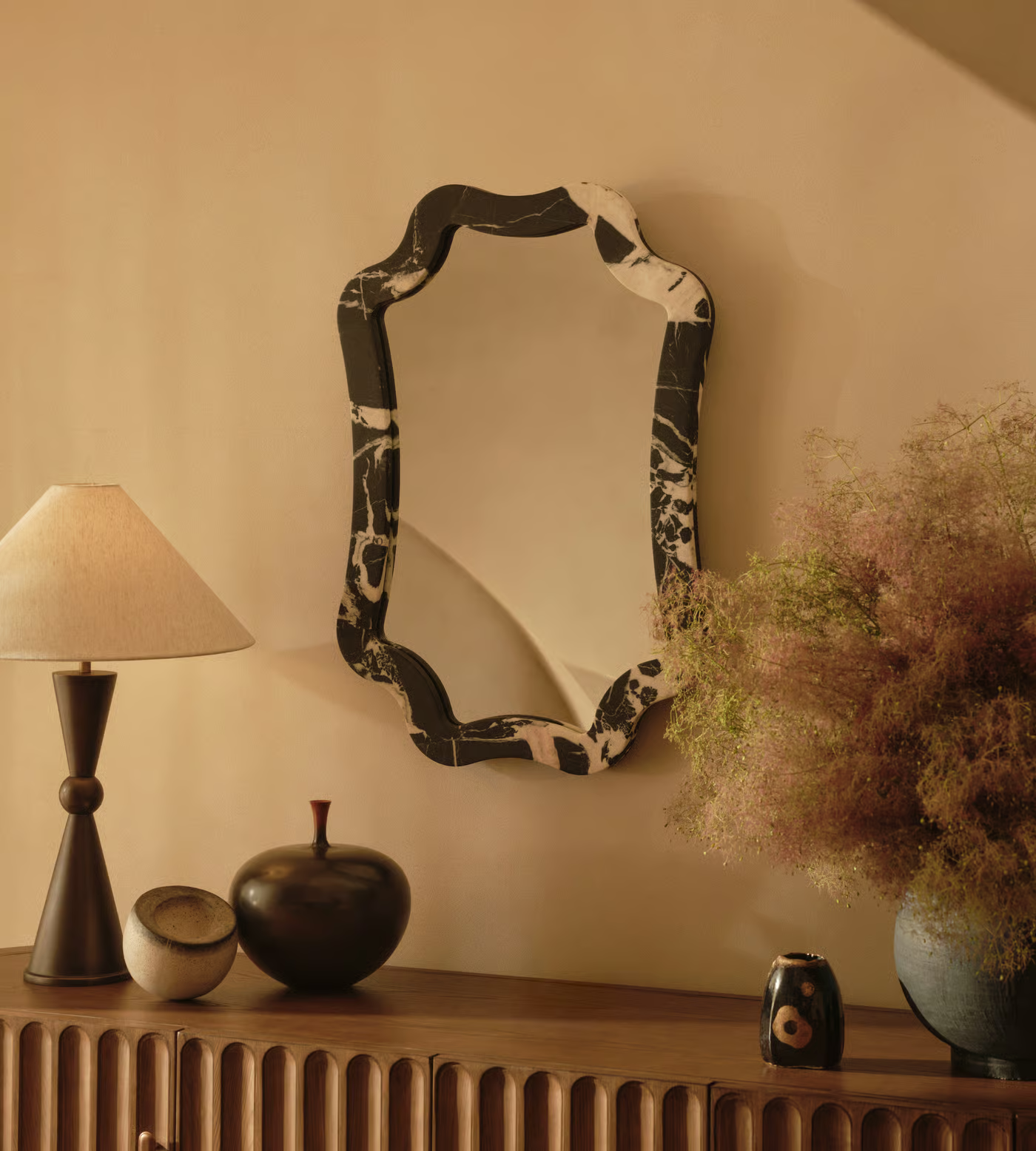
Arched Mirrors and Organic Accessories
If your home isn’t blessed with beautiful architectural arches, curved mirrors, vases, and decorative accents are the next best thing. Accessories are the easiest (and often most fun) way to experiment with curves in your space. Trust me, once you start introducing them, you’ll wonder how you ever lived without them.
How to Balance Curves with Clean Lines
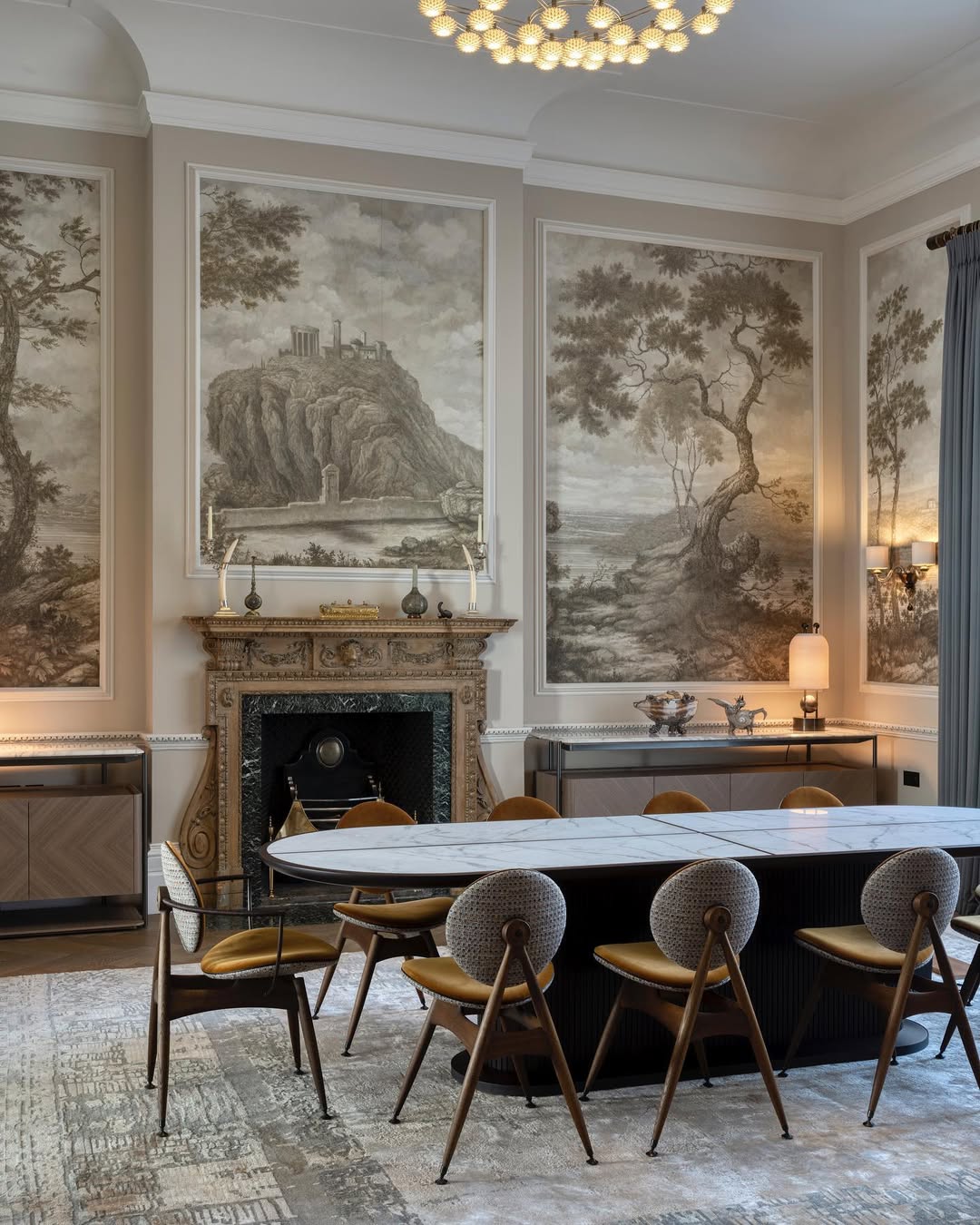
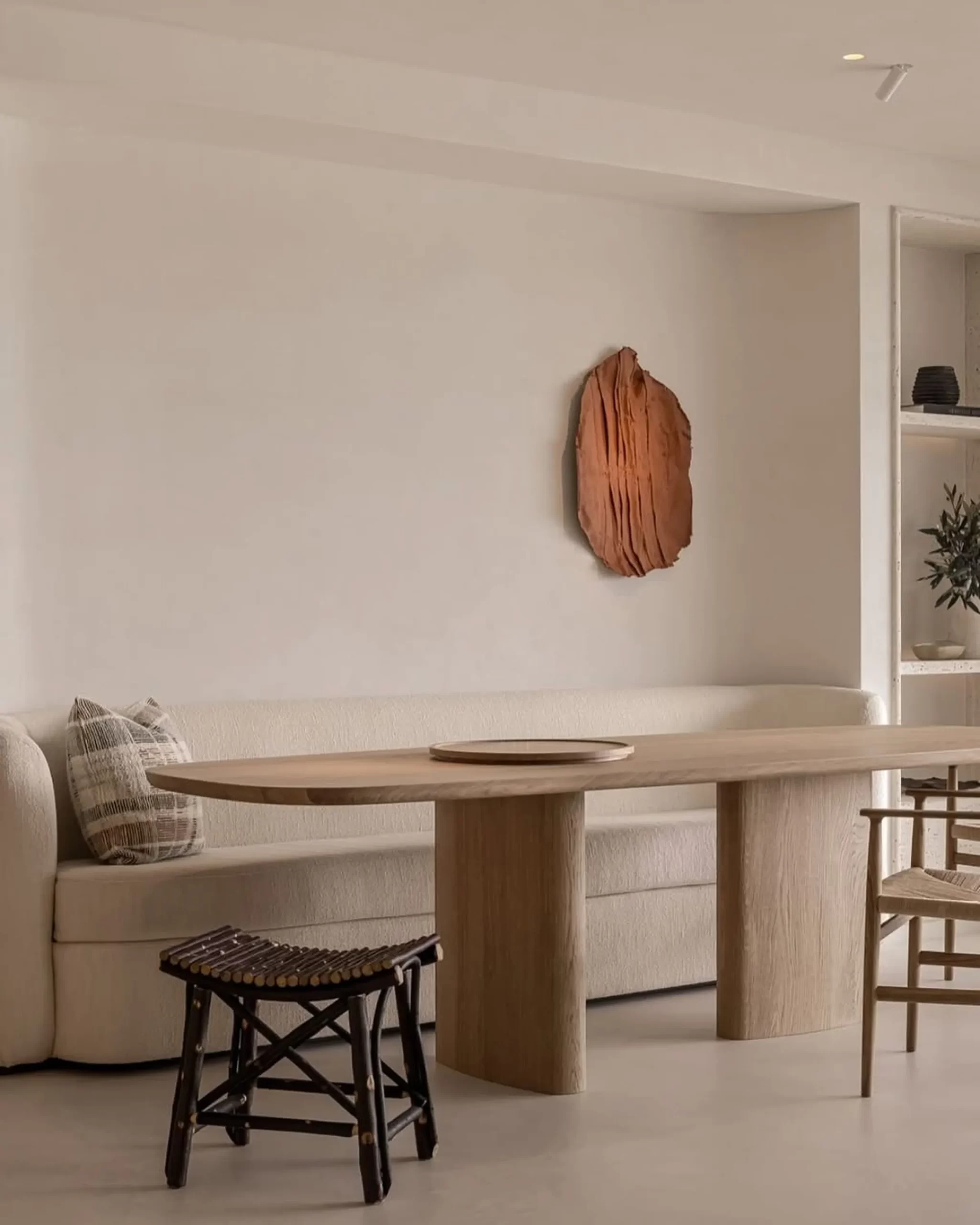
Contrast is essential when creating a balanced, beautifully curated interior. Pairing curved furniture with tailored upholstery or clean, straight-lined cabinetry introduces visual rhythm and keeps the space feeling refined rather than overly softened. It’s all about tension and harmony working together; we’re personality, poise, and just the right amount of charm.
Common Mistakes When Using Curves in Interiors
As with any design element, curves work best when used with a little restraint and a lot of thought. Overloading a space with too many rounded pieces can quickly blur the structure of a room, leaving it feeling more floppy than fabulous. It’s also very easy to fall in love with trend-driven shapes without stopping to consider scale; that dreamy sculptural sofa might look divine online but can completely overwhelm a room if the proportions aren’t right. And perhaps most importantly, curves should always respect the architecture they live within. Ignoring proportion, circulation, and the natural flow of a space can turn something beautifully considered into something awkwardly forced. When curves are chosen thoughtfully, they enhance a room; when they’re not, they tend to fight it.
Are Curves a Trend or a Timeless Design Choice?
Curves are far from being a modern trend. They’ve been shaping design history for millennia. Take a trip to Southern Spain, and you’ll see their influence woven throughout the breathtaking Moorish architecture, or look to the enduring Roman arches scattered across Europe. Furniture design has long embraced curves too, from the graceful cabriole legs that defined 18th-century Queen Anne and Chippendale pieces to the organic, nature-inspired lines celebrated during the Art Nouveau movement. Time and time again, curves re-emerge not as a passing fashion but as an essential design language, a beautiful reminder of our deep connection to nature within thoughtfully considered interiors.
Curves have a wonderful habit of cycling back into relevance because they speak to something instinctively human. Design trends often move between minimal, linear precision and softer, more expressive forms, and when life begins to feel overly structured or stark, we naturally gravitate back toward shapes that feel comforting and organic. What separates a timeless curved piece from one that quickly feels dated is restraint and proportion. Classic curved designs tend to favor balanced silhouettes, quality craftsmanship, and materials that age beautifully, rather than exaggerated or novelty-driven shapes that shout for attention. When curves are thoughtfully executed, they feel enduring and quietly elegant, never trendy for the sake of it, but effortlessly relevant in any era.
How to Incorporate Curves Without Dating Your Space
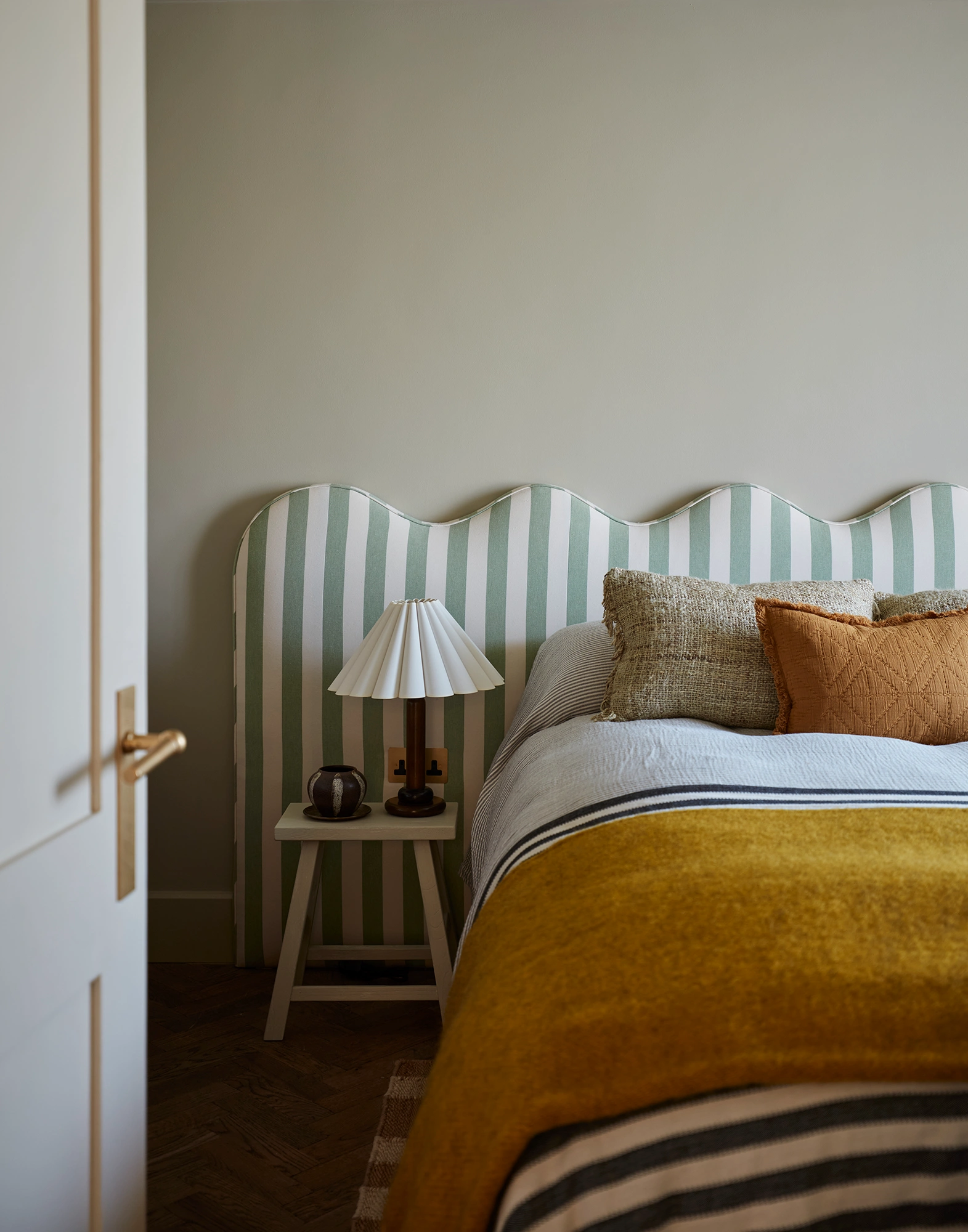
If you want to embrace curves without risking your space feeling dated, the secret lies in thoughtful restraint. Investing in timeless silhouettes rather than novelty shapes ensures your pieces remain elegant long after trends have moved on. Curved furniture pairs beautifully with neutral palettes and natural materials, allowing the shape itself to shine while keeping the overall look calm, grounded, and sophisticated. Most importantly, curves should enhance a space rather than dominate it. When used as part of a balanced design story, they add softness, movement, and personality without overwhelming the room.
Closing Thoughts
Curves are more than a passing aesthetic; they’re a design language rooted in comfort, elegance, and longevity. As we move into 2026, there’s a noticeable shift away from chasing fleeting trends and toward creating homes that genuinely feel good to live in—spaces that support how we relax, gather, and connect. Curved forms play a beautiful role in that evolution, bringing softness, movement, and a sense of calm to interiors. Ultimately, great design has never been about following fashion blindly; it’s about balance. When softness meets structure, style meets practicality, and beauty meets comfort, that’s when a space truly stands the test of time.