
When it comes to sustainable design and heirloom aesthetics, I’m all in, which is exactly how Lithuanian linen ended up at the top of my textile wish list (and yes, I do actually keep one). My introduction to it wasn’t through a search for linen but rather a long-standing design crush on Chantier, a Lithuanian-based bespoke lampshade studio.
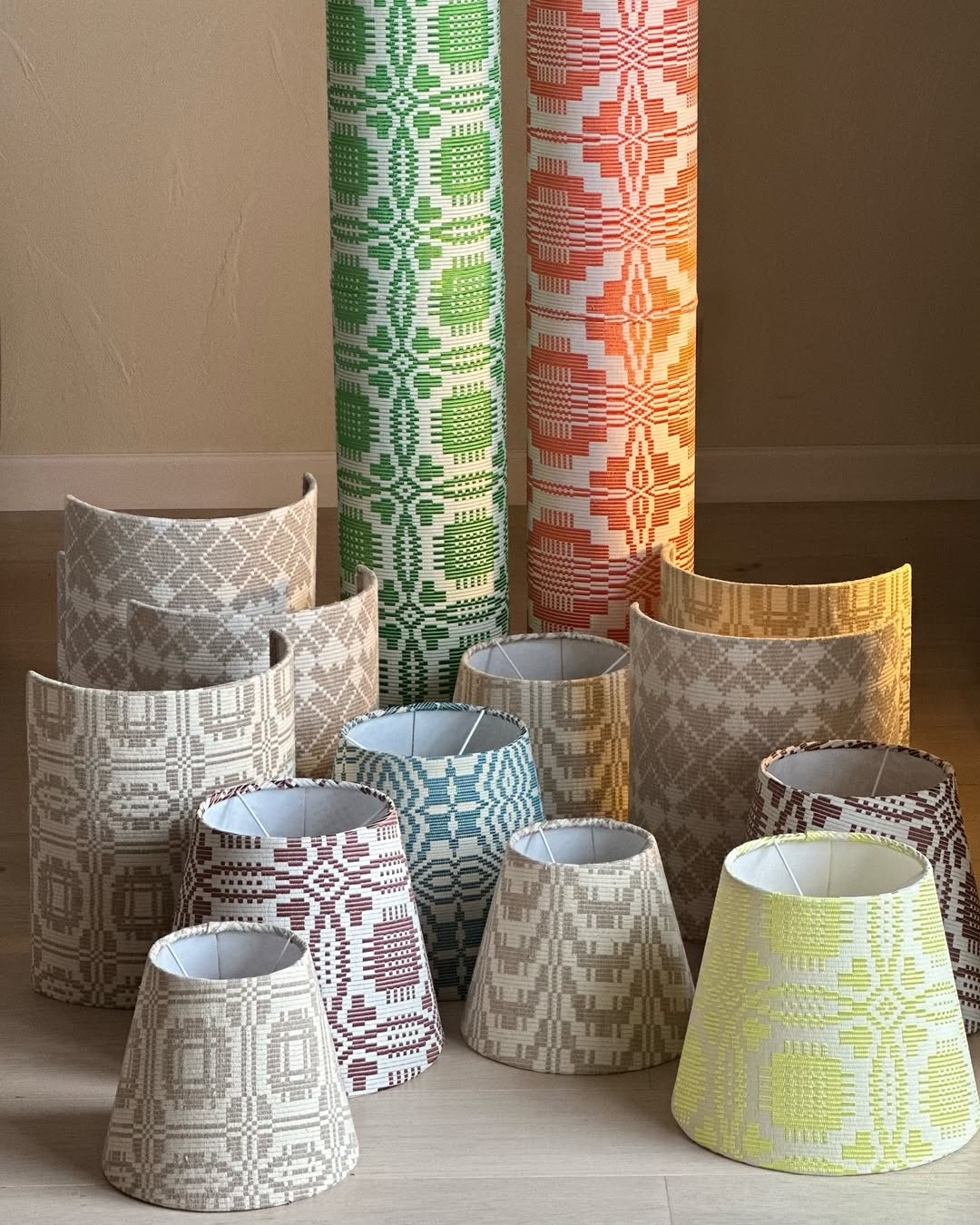
The studio’s founder, Neringa, recently released a series of shades crafted from Dimai. ‘This isn’t your standard breezy linen; it’s a complex, heavy-duty overshot weave rooted in the soul of artisanal hand-looming. I have it on good authority from Neringa herself that these authentic Dimai fabrics are becoming incredibly hard to come by; they are rare finds even within Lithuania. It was actually this search for the elusive Dimai that led me straight into the world of Lithuanian linen. While I couldn’t get my hands on the specific overshot weave, I realized that the broader linen tradition in the region is just as potent. The craftsmanship, the weight, and the history are all there.
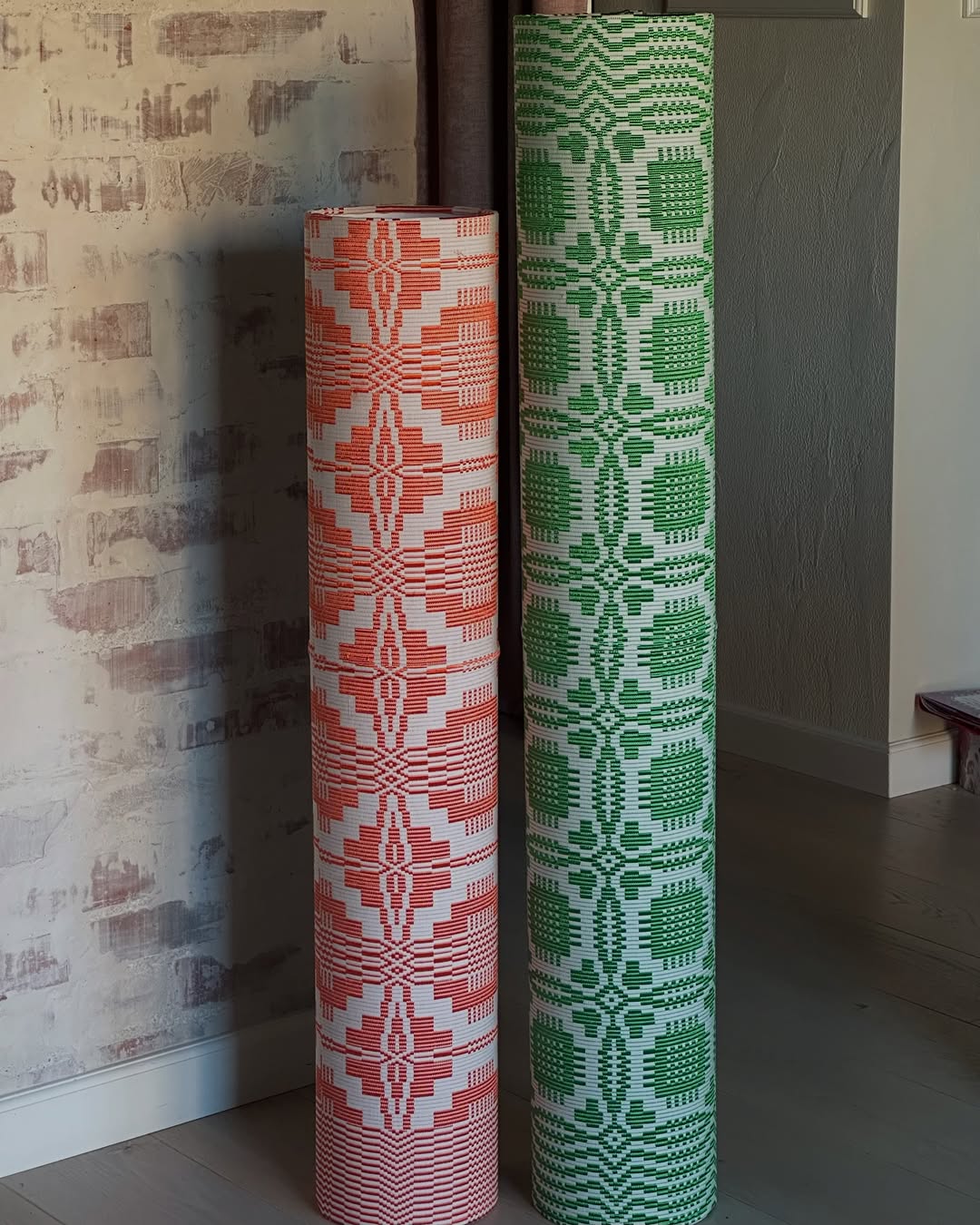
Looking at the structural, geometric patterns, I was immediately struck by how much they echo the weight and heritage of traditional Welsh blankets. It’s a reminder that true craftsmanship has a shared DNA that transcends borders. In an era defined by fast furniture and synthetics, there is something grounding about returning to ‘white gold‘ textiles that carry a story in every thread.
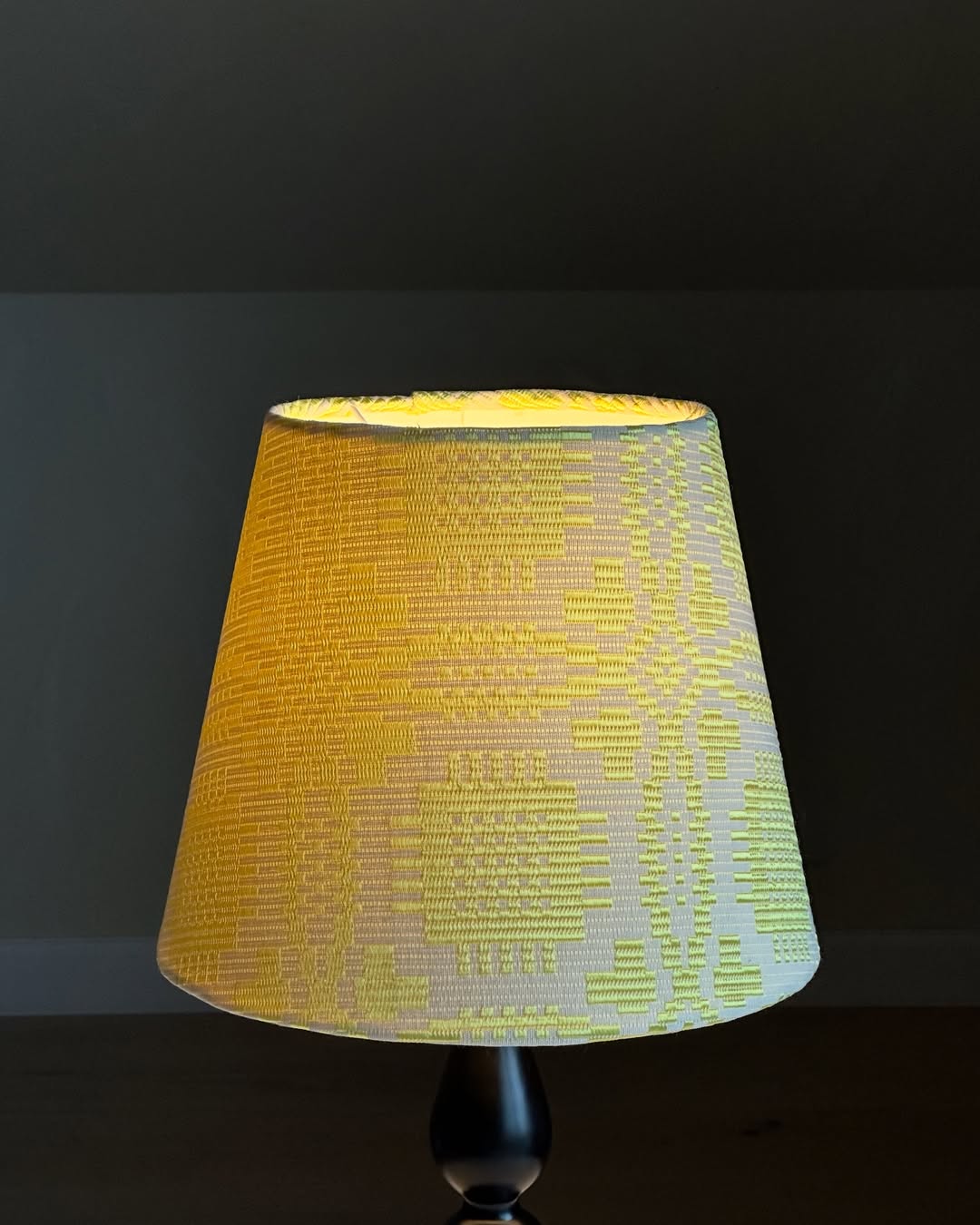
Table of Contents
From the Elusive Dimai Weave to the Timeless Legacy of Lithuanian Linen
In Lithuania, flax isn’t just a crop; it is “white gold.” This isn’t a modern marketing term; it’s a title earned over centuries. As far back as the 14th century, Lithuanian linen yarns were already a coveted export to Western Europe, but their true value was always found at home.
These textiles were never just “domestic necessities.” While they graced every surface, from the heavy spreads on a bed to the towels in the kitchen, they were also the silent witnesses to life’s most profound milestones. In a beautiful display of heritage retention, a person’s skill at the loom defined their contribution to the community. At a traditional wedding, it was common for a skilled weaver to gift 20 to 30 hand-woven towels as a mark of honor. Even in the solemnity of funerals, these sashes and “dimai” spreads were used to drape the ceremony rooms, weaving the comfort of the home into the rituals of goodbye.
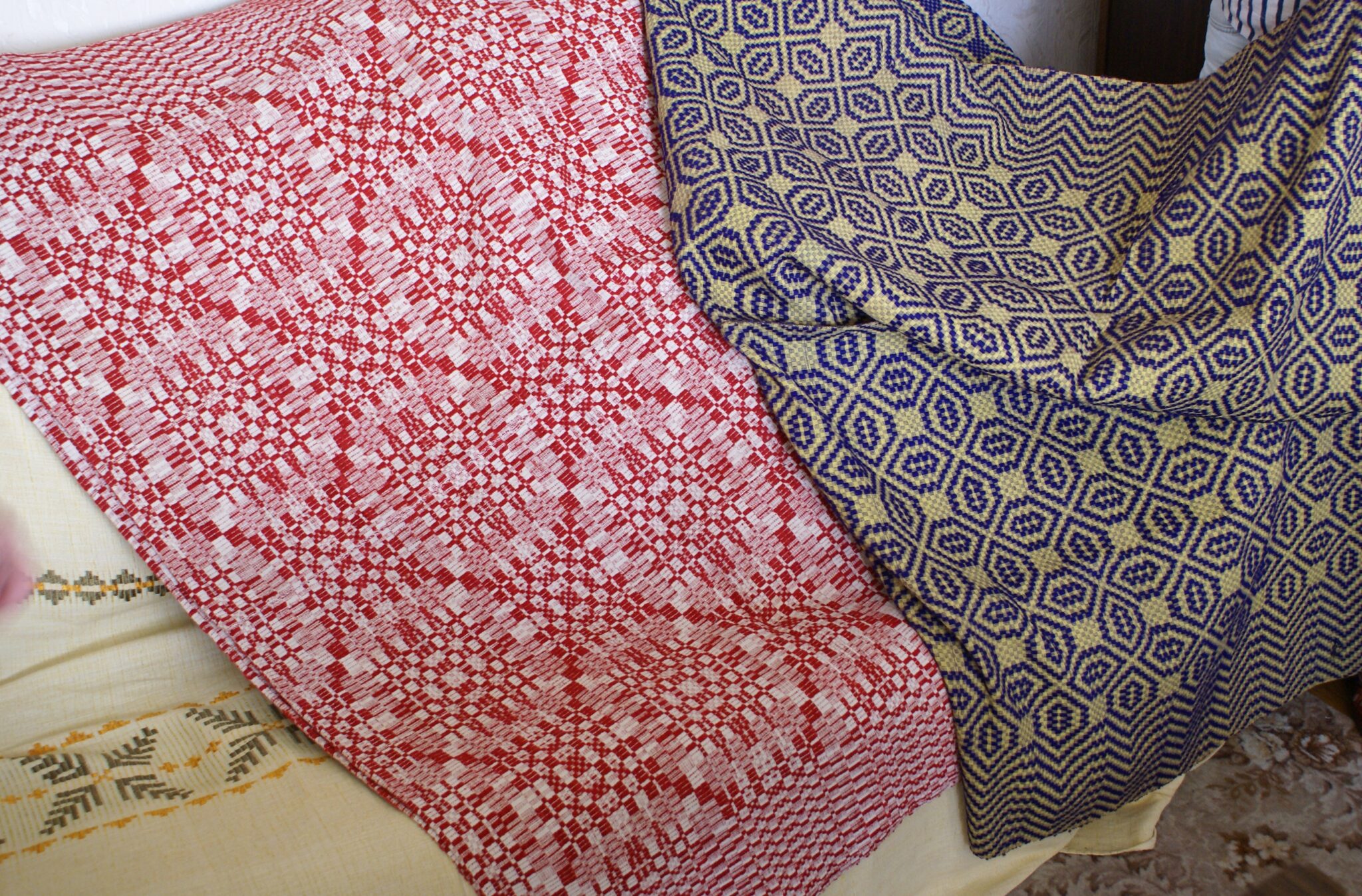
Most of the “dimai” patterns we see today have been woven by rural masters since at least the 1860s. When you hold a piece of this fabric, you aren’t just holding linen; you’re holding a craft that has survived industrialization and remained remarkably unchanged for over 150 years. It’s a testament to the idea that some things simply don’t need to be “improved” by modern technology.
The Art of the Dimai Weave: A Rare Soul in Lithuanian Linen Traditions
Like many other woven heritage textiles, Dimai is a masterclass in geometric storytelling. Most patterns are built from a rhythmic arrangement of squares and rectangles, often framed by ornamental borders that echo the central design. These aren’t just shapes; they are symbols woven into the fabric’s DNA. Look closely, and you’ll find crosses (representing the sun and life) and the star (a symbol of hope and regeneration), alongside motifs inspired by nature, like oak leaves, clover, and “cat’s feet.”
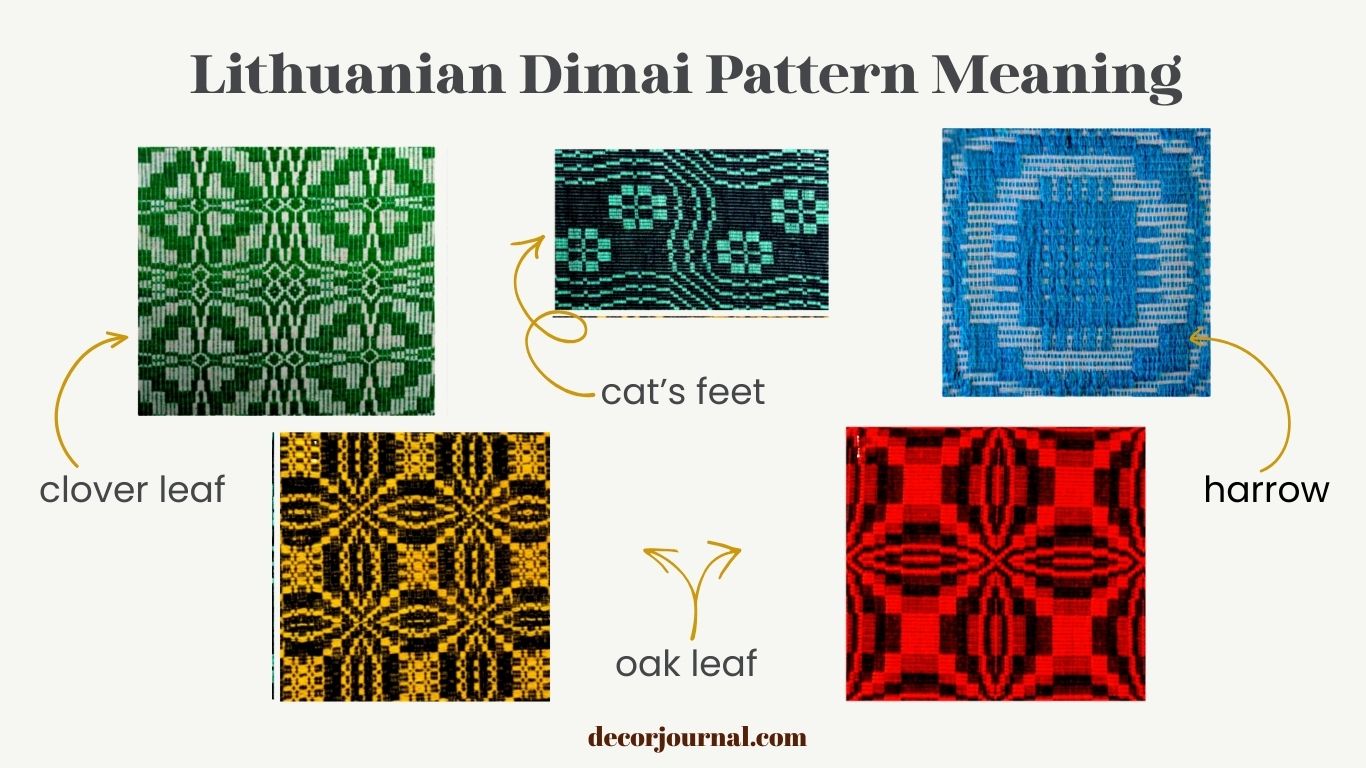
While the tradition occasionally embraces the vibrant yellow, green, and red of the national flag, it is most famous for its sophisticated two-tone palette. Over 90% of these fabrics pair a single bold color against a crisp white or black background to make the pattern pop. It is this high-contrast geometry that gives the linen its architectural edge, allowing a 19th-century craft to feel remarkably at home in a contemporary interior.
The Gold Standard: Why Lithuanian Linen is in a League of Its Own
Lithuanian linen is world-renowned for a reason. In the textile industry, it’s considered the “gold standard,” carrying the same weight and reputation as Egyptian cotton or Japanese denim.
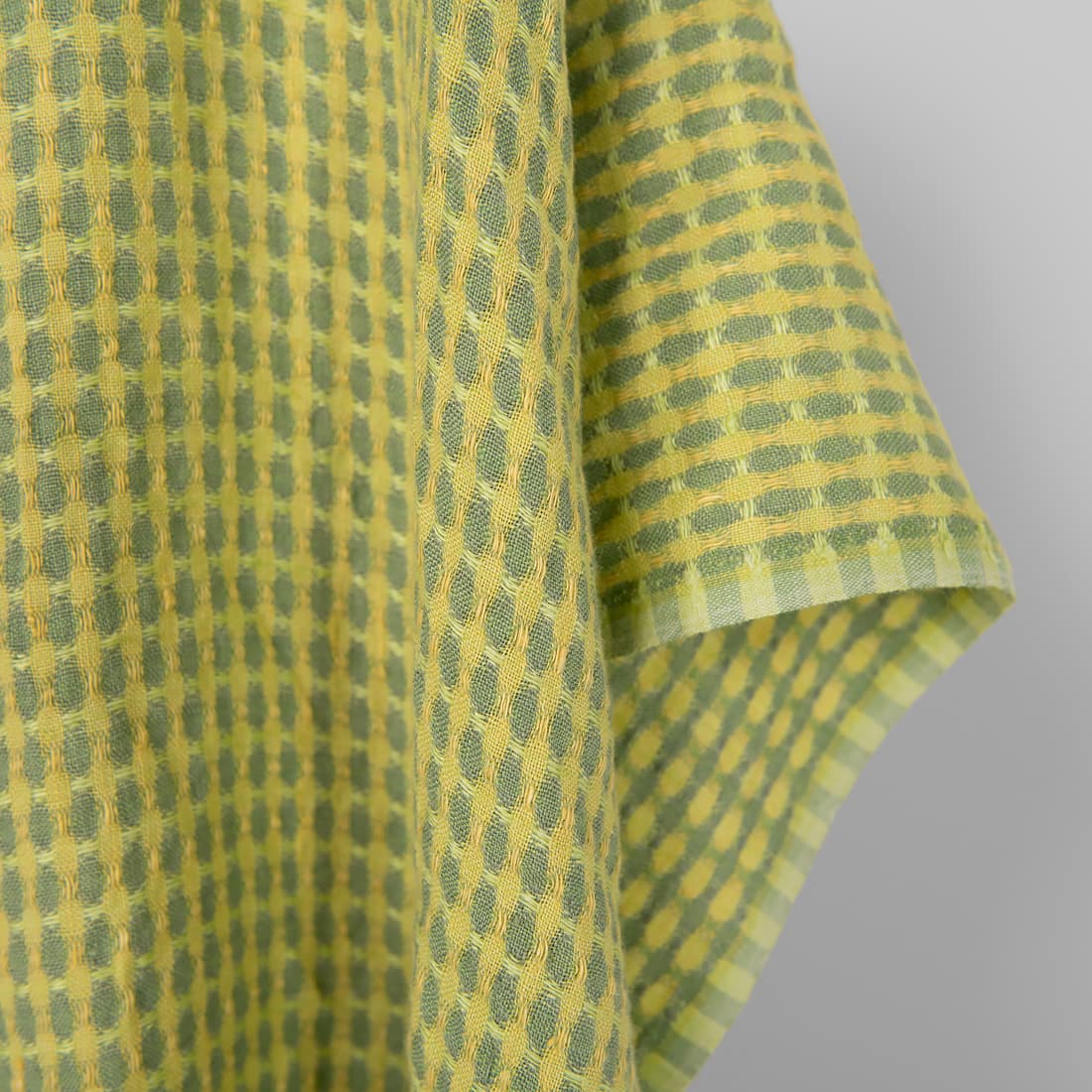
The secret lies in the geography. Lithuania sits in a climatic “sweet spot” for flax; the damp, cool maritime air and nutrient-rich soil produce plants that are taller, with longer, stronger fibers than those grown anywhere else. While Italian or Belgian linens are known for being ultra-fine and smooth, Lithuanian linen is prized for its signature robust, rustic texture. It’s a designer’s dream for adding visual weight to a room.
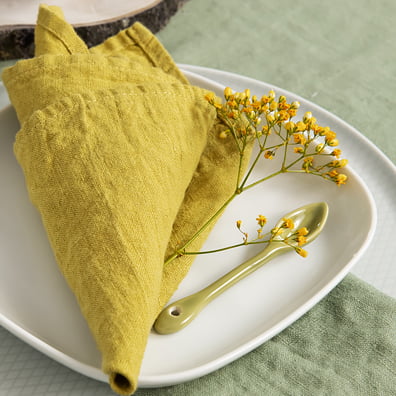
Beyond the aesthetics, the performance is unmatched. It is exceptionally durable, the kind of heirloom textile that lasts for generations, and it actually improves with age, becoming noticeably softer and more lustrous with every wash. It’s also a champion of sustainability because the flax thrives naturally in the Baltic climate, so it requires very little irrigation or pesticides. For a home that values both longevity and low-impact luxury, it’s the ultimate choice.
The New Heirloom Aesthetic: Styling Lithuanian Linen for the Modern Eye
The ways you can incorporate linen into your home are truly endless. It doesn’t have to be limited to the “French farmhouse” look we see everywhere; in fact, more contemporary, geometric designs are a versatile way to bring a soulful, heirloom quality to almost any style of interior. It’s all about that extra layer of texture, whether you choose a bold pattern or a quiet solid, and the creative potential it brings to a room.
Restful Layers: The Magic of Linen Bedding
Naturally, the first thing we think of is bedding, and for good reason. Linen is hypoallergenic and antibacterial, making it a dream for sensitive skin. It’s also a functional powerhouse: fast-drying, highly breathable, and naturally thermo-regulating, so it keeps you cool in the summer and cozy in the winter.
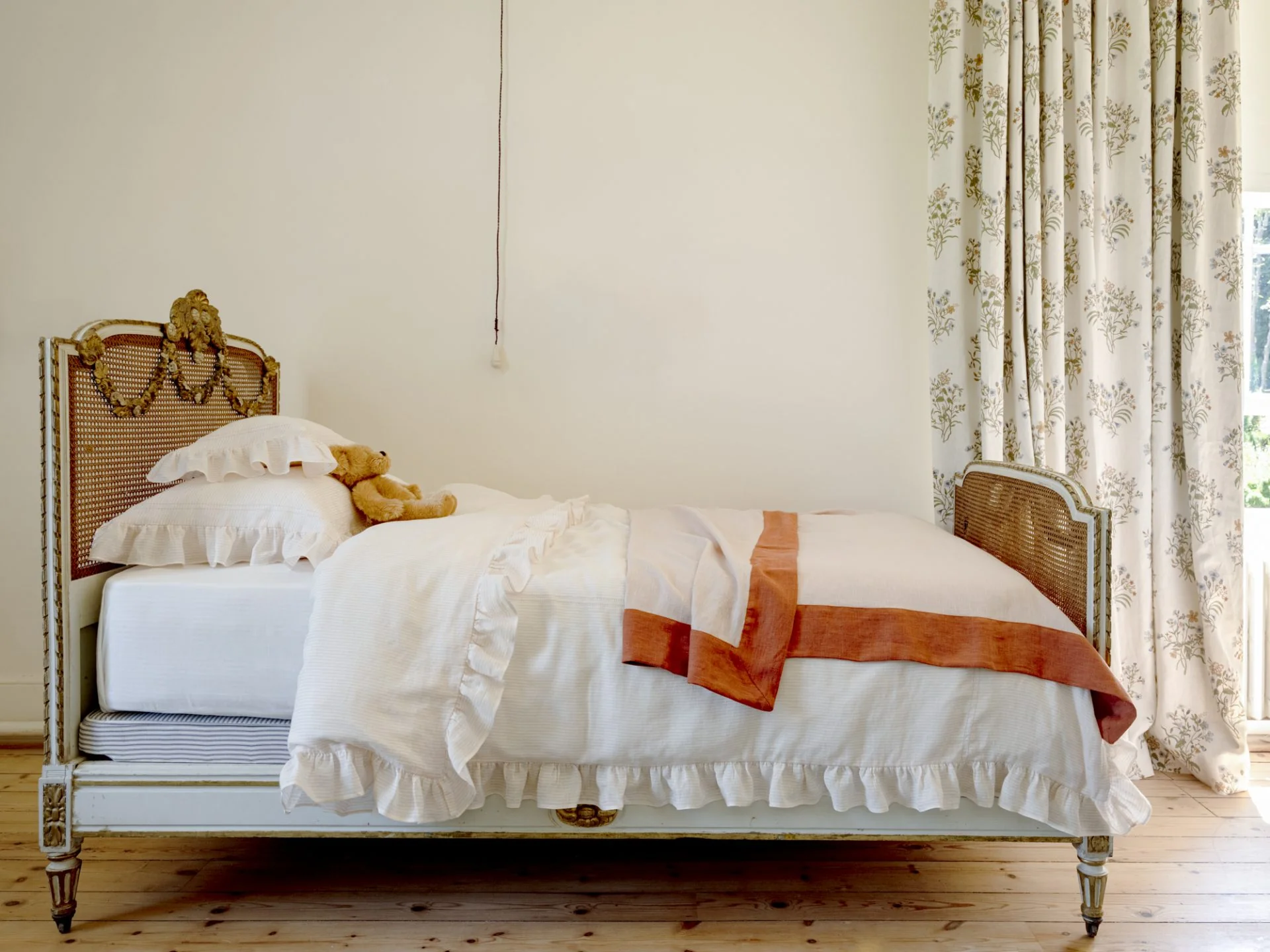
But don’t stop at the sheets. You can build a real focal point by layering thicker linen throws in rich accent colors and mixing in cushions with different weights. It transforms the bed from just a place to sleep into a masterclass in texture that anchors the entire room.
Structured Comfort: Linen in Furniture
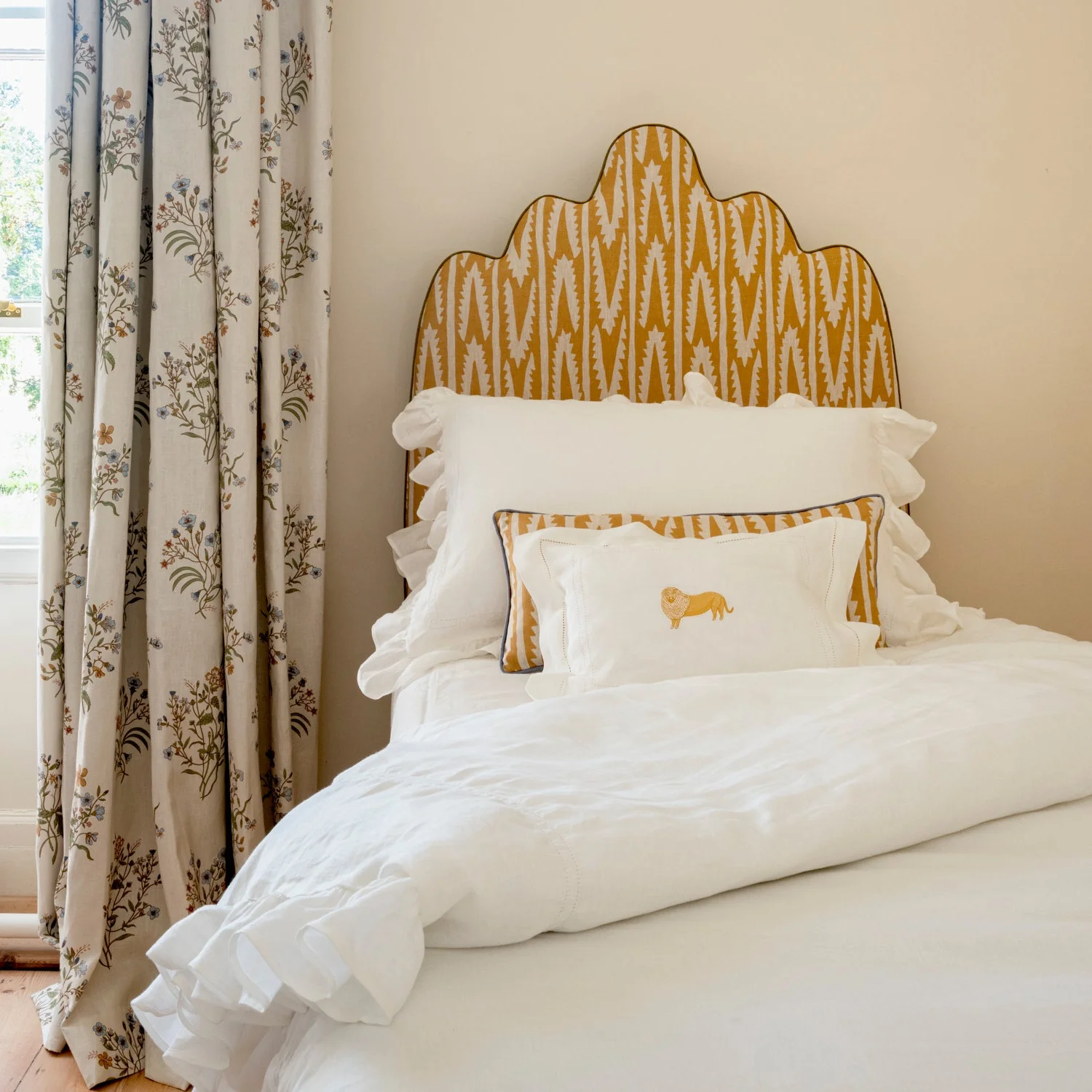
I’m a big fan of fabric headboards. They aren’t just a comfortable necessity for those restless nights when sleep feels out of reach; they serve as a vital textural layer for the bedroom. Whether you opt for a bold block color or a sophisticated pattern, a linen-wrapped headboard adds an architectural softness to the space. It’s that perfect bridge between furniture and fabric, grounding the room while making it feel infinitely more inviting.
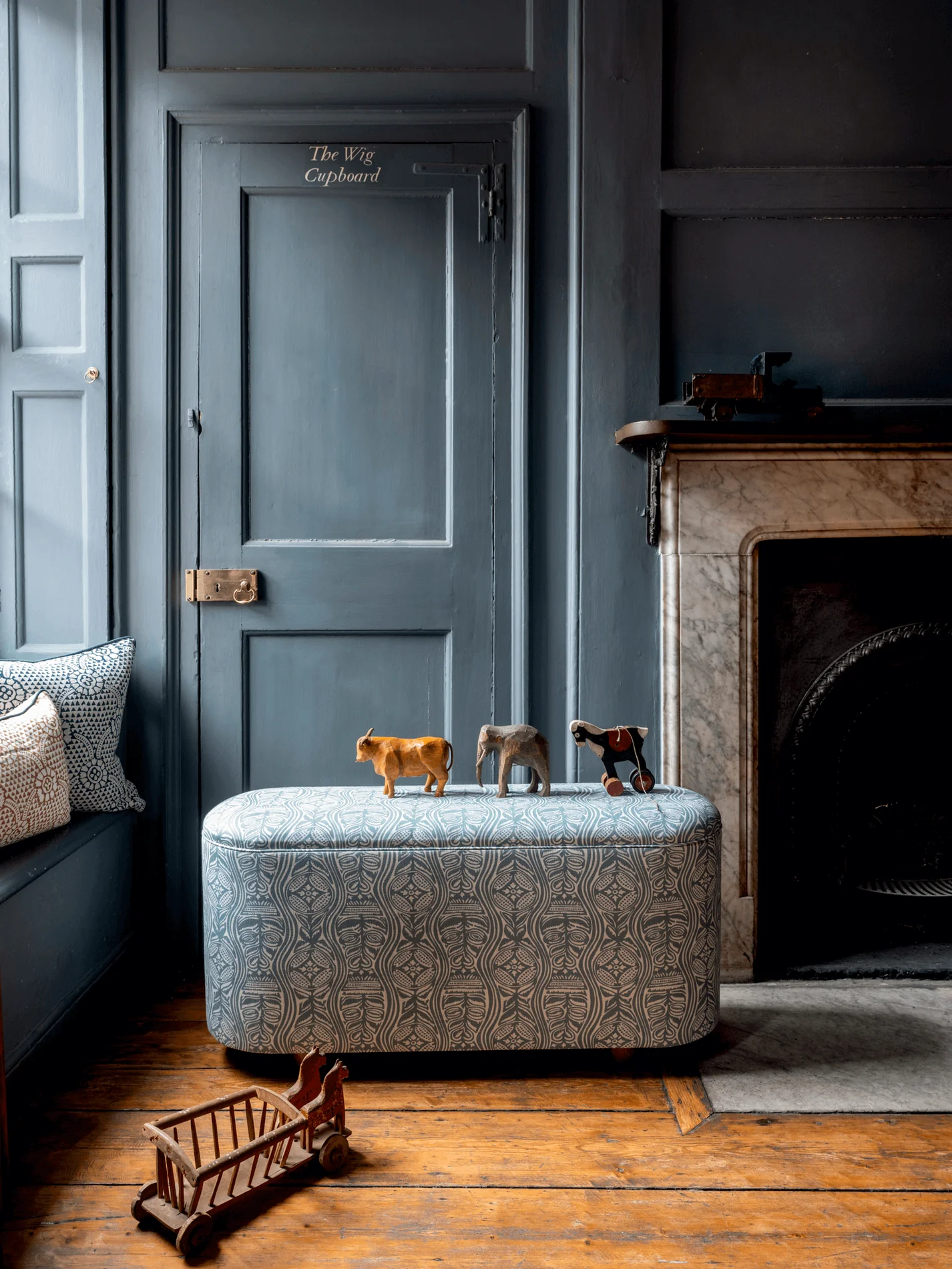
Every designer knows that storage is prime decor real estate. You can truly never have enough of it, so what better place to hide away your beautiful linen cushions and throws at night than a beautifully upholstered ottoman?
Choosing an ottoman in a bold accent color like a deep teal or a rich charcoal provides a tactile anchor for the room while serving as a “win-win” solution. It’s a stylish place to sit while putting your socks on in the morning and a secret vault for your textile collection.
They are incredibly versatile, too; don’t feel limited to the bedroom. An upholstered linen ottoman is excellent on a landing for spare towels or in the living room as a soft coffee table that doubles as a home for stray blankets and throws.
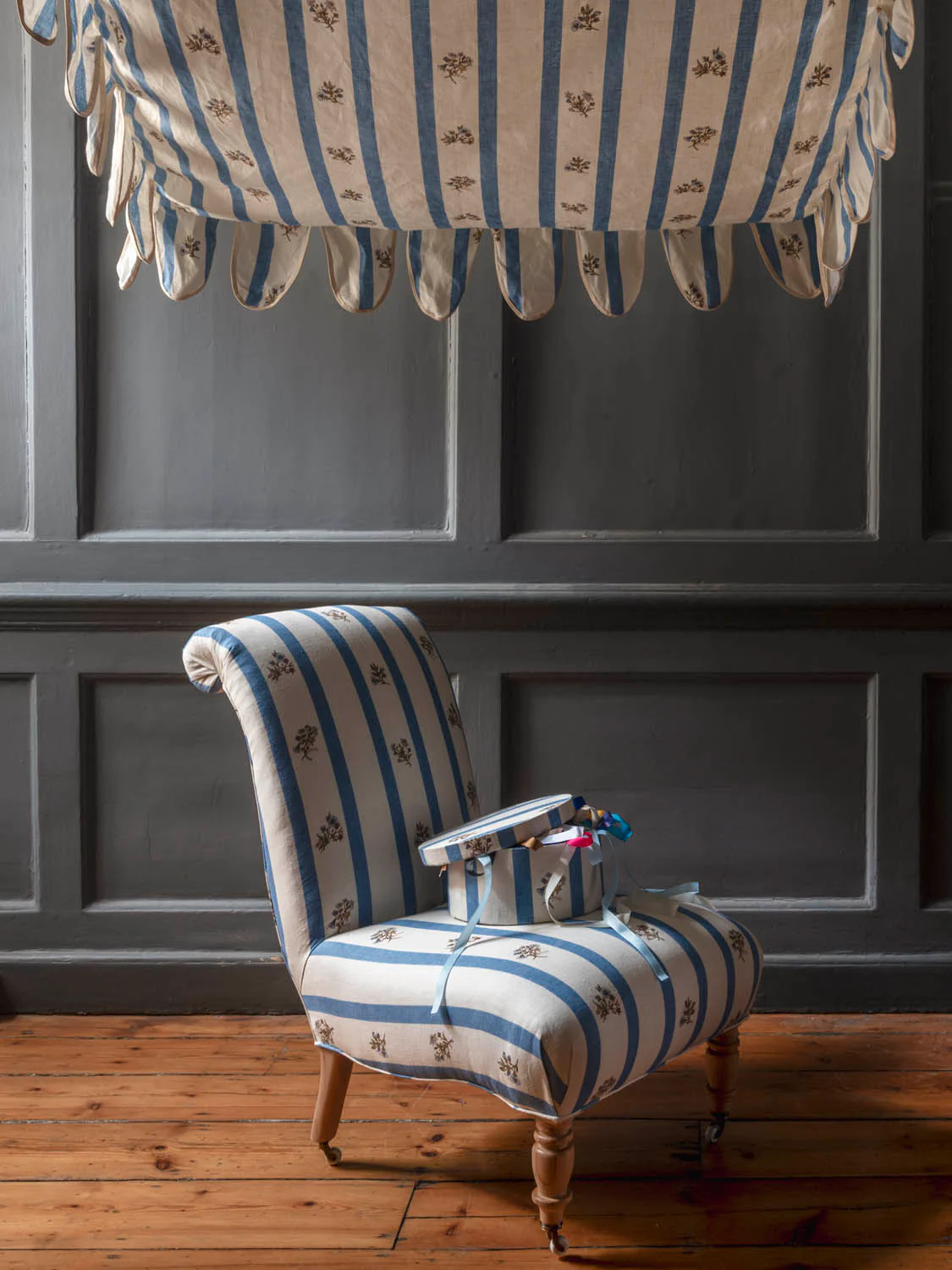
Let’s be honest: the vast majority of us have “the chair” in our bedroom, that one spot where clothes with another day’s wear left in them inevitably get dumped. But just because it’s a workhorse doesn’t mean it shouldn’t be beautiful.
A common question I get is, “Is linen actually sturdy enough for furniture?” The answer is a resounding yes. Because linen is significantly stronger than cotton, a heavyweight weave like those found in Lithuanian flax is ideal for a hard-working armchair. It offers a crisp, tailored look that synthetics just can’t replicate. It doesn’t pill; it’s naturally dirt-resistant, and it develops a beautiful patina over time. It’s the ultimate investment piece, a chair that doesn’t just sit in the room but tells a story of durability and grace.
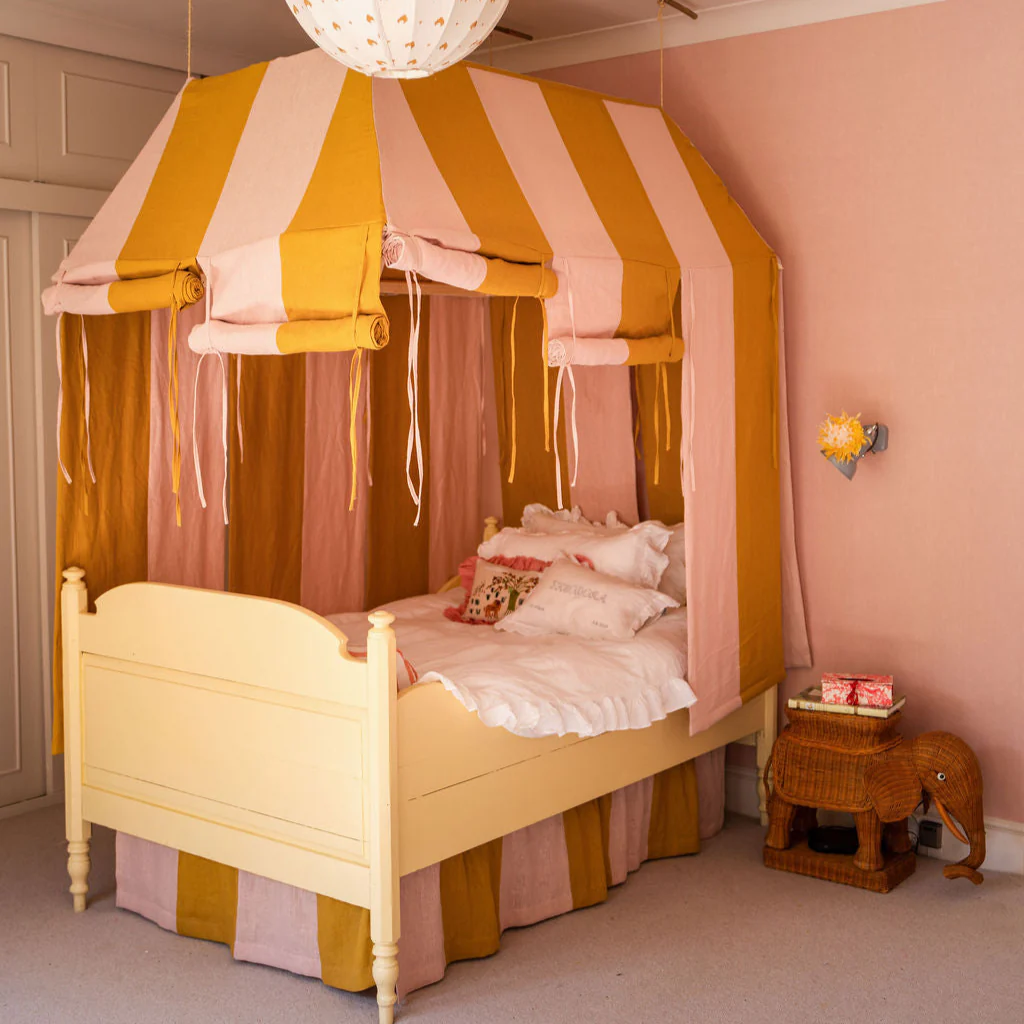
As a child, I remember my grandmother had the most beautiful, ornate, twisted-wood four-poster bed. It was the kind of furniture that probably required its own structural engineering just to keep the floor joists from giving way, and it instilled in me a lifelong dream of having a bed canopy of my own.
I’m still dreaming, of course, and coming across pictures of billowy Lithuanian linen canopies certainly doesn’t help my restraint. There is something about the way heavy linen hangs, the effortless drape, and the way it catches the light that makes the dream feel so much more attainable than the heavy wood of the past. It’s the ultimate expression of “textural storytelling”: a private sanctuary made of flax and memories.
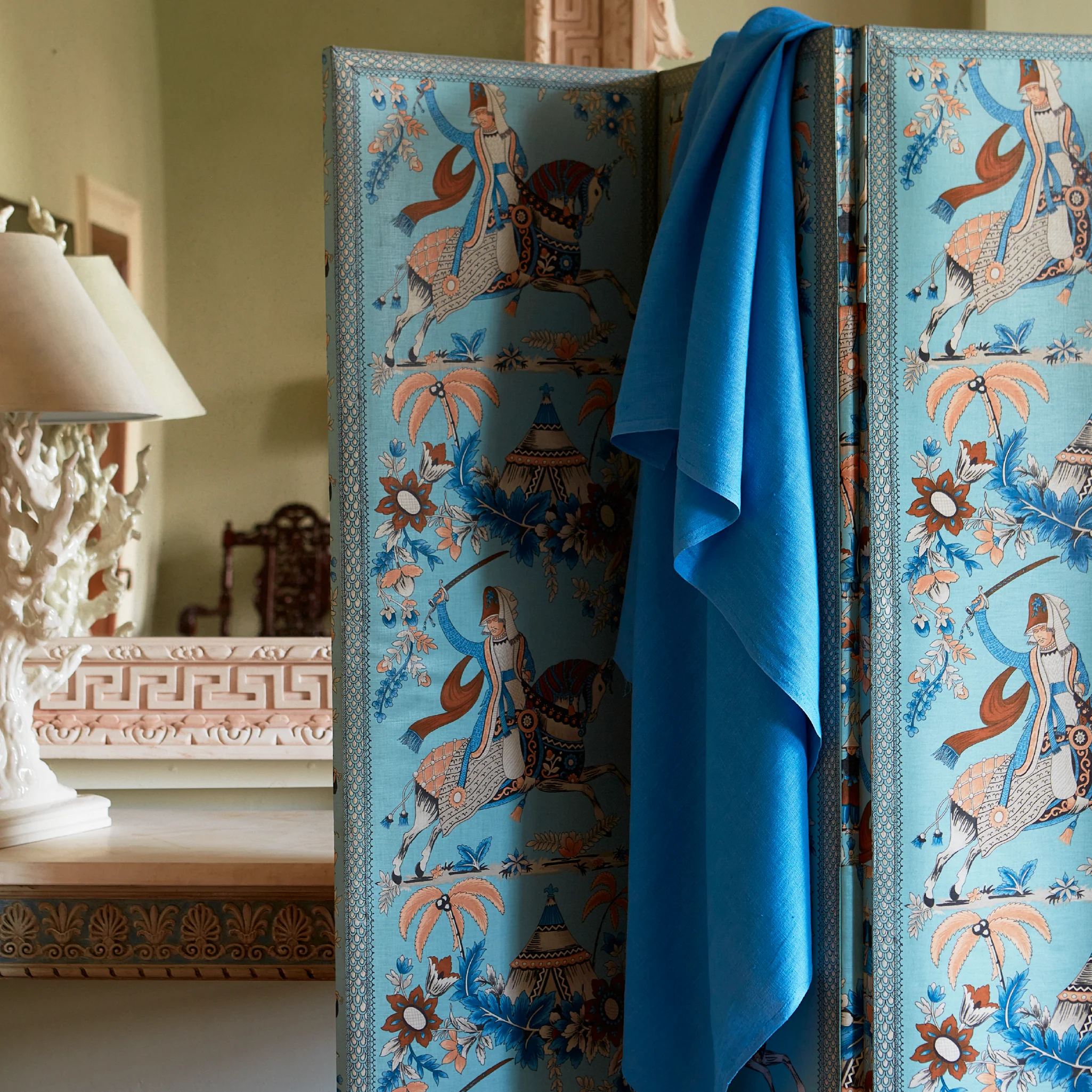
Textile privacy screens aren’t something you see often in modern decor, but I am a big devotee. They introduce a beautiful textural layer at a height where you usually only see hard walls, and their versatility is unmatched; you can move them around to completely redefine a space in seconds. Perhaps the best-kept secret, though, is the extra bit of acoustic insulation they provide. They soften the echoes of a room in a way you never knew you needed until they’re there.
The Fluid Layer: Drapes, Runners, and the Art of the Table
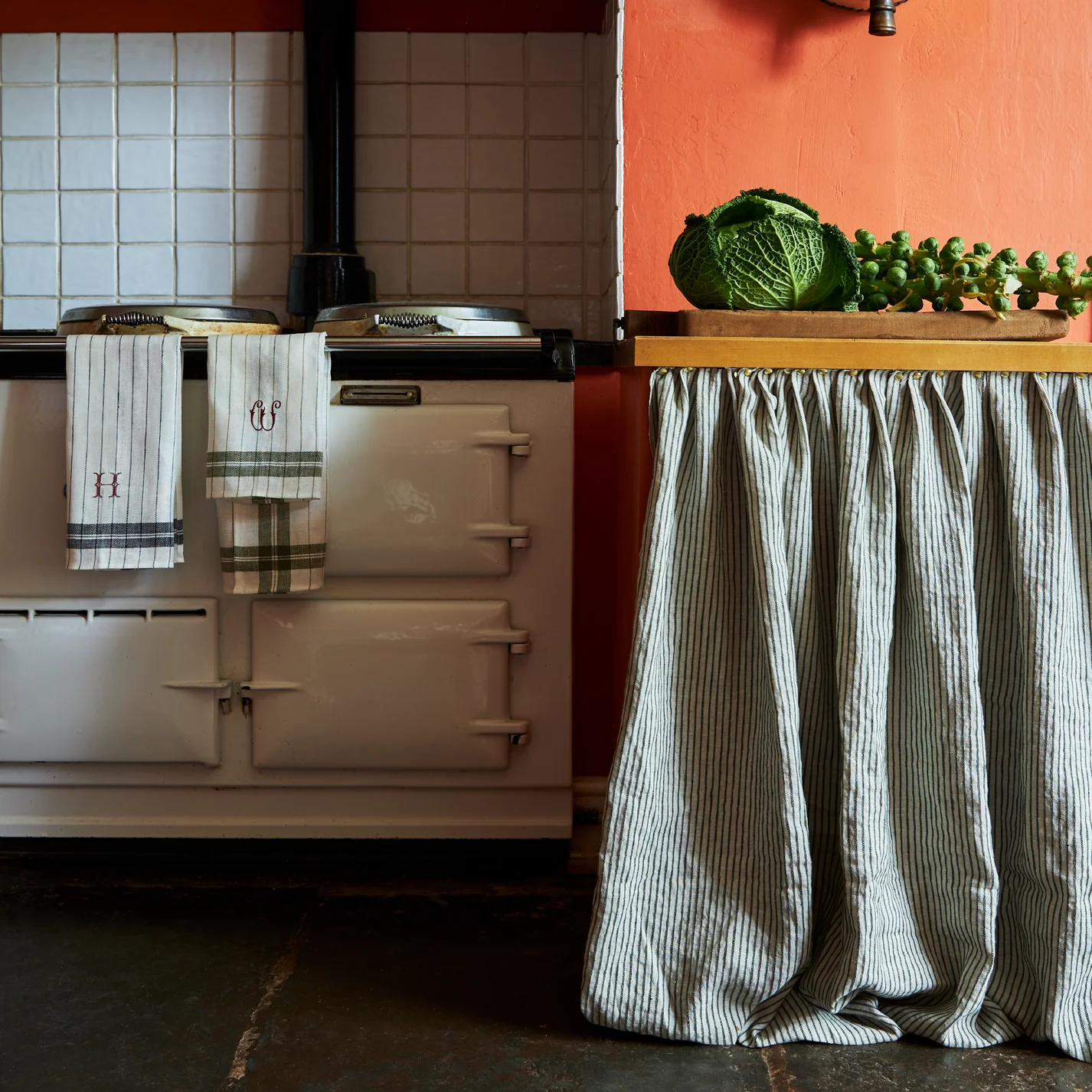
Drapes and blinds are an obvious choice for linen, offering a raw, organic texture that other textiles just can’t match. However, I love to use linen in more unexpected places. Adding a heavy linen curtain to a doorway, for example, is a brilliant way to exclude drafts while looking incredible. I’m also a huge fan of using linen as a cupboard front in the kitchen; replacing cabinet doors with fabric softens the hard lines of a space like nothing else.
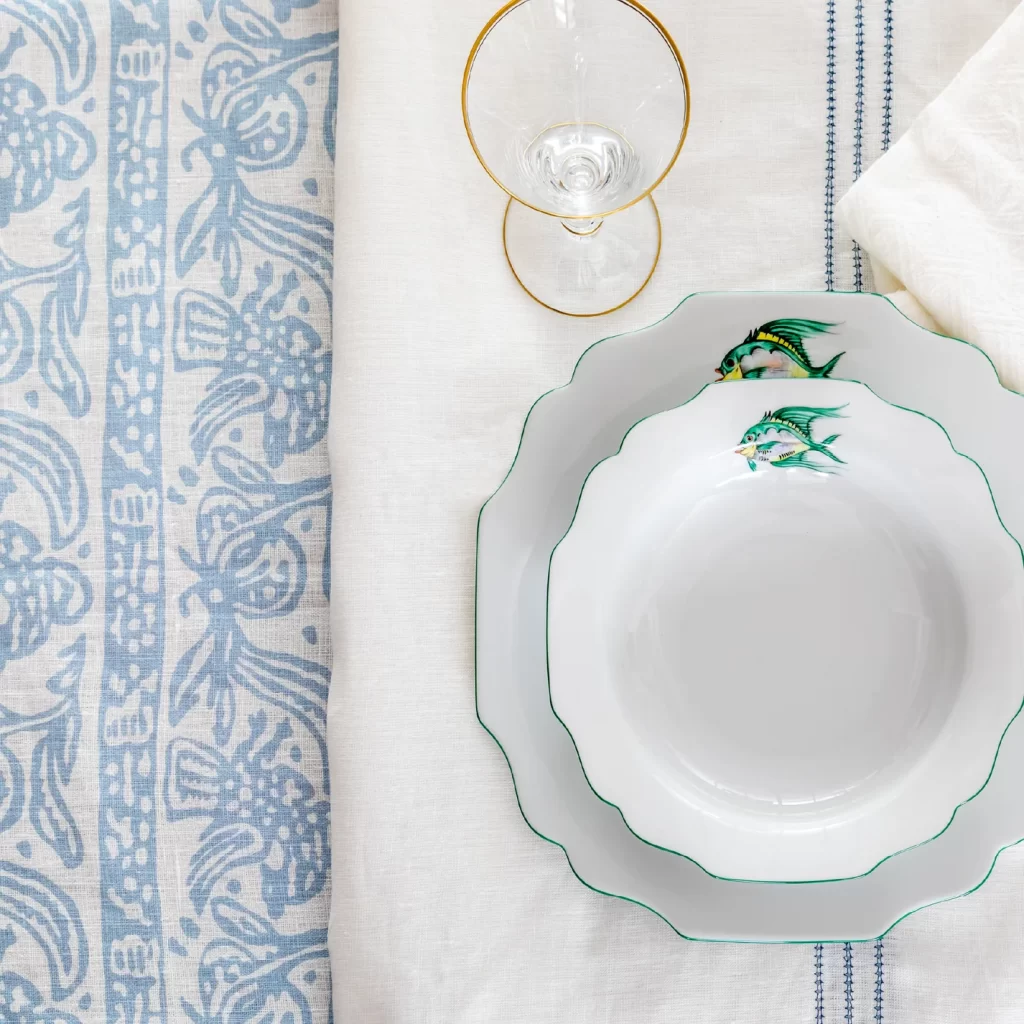
And, of course, let’s not forget the table. There is something so restorative about an elegantly laid table featuring layers of contrasting tablecloths, runners, and napkins. It turns a simple meal into an event, grounded by the tactile weight of the flax.
Feeling the Difference: How to Spot the Real Deal
It’s important to be honest about the heritage we love. Unfortunately, due to shifting agricultural subsidies, Lithuanian flax farming has dropped significantly over the last few decades. Today, many of the great Lithuanian factories import their raw flax from the “Flax Belt” of France and Belgium.
Does this impact the quality? Not at all. In fact, it often means the base fiber is the best available globally. The magic remains in the Lithuanian manufacturing process, the traditional weaving techniques, and that signature, heavy stone-washing that gives the fabric its soul.
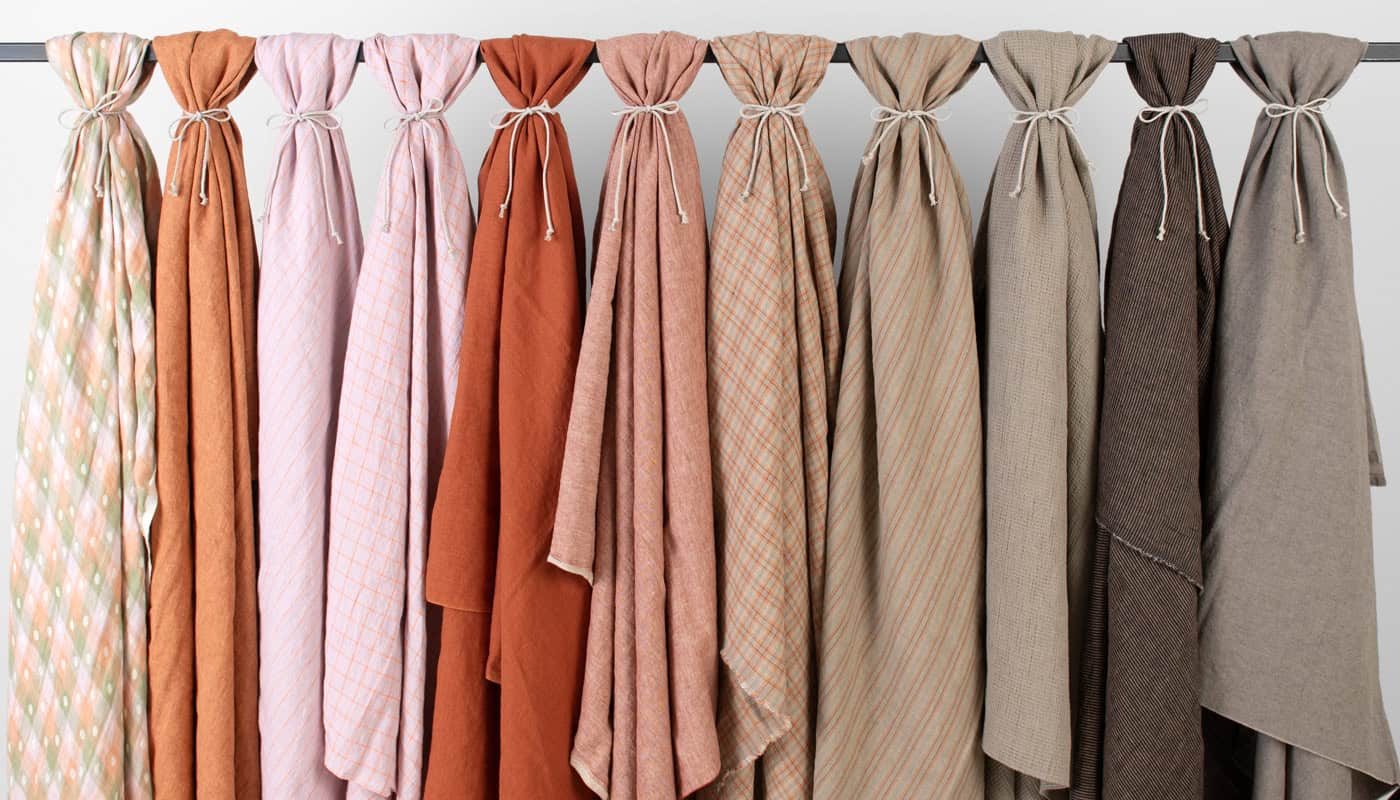
Obviously, the easiest way to know you’re getting the real deal is a “Made in Lithuania” label. Beyond that, trust your hands: genuine Lithuanian linen should feel heavy and substantial. It has a structural “thrum” to it. If it feels flimsy, overly smooth, or suspiciously shiny, it’s likely not the heirloom-quality flax we’re looking for.
Designer’s Tip: Keep an eye out for the European Flax® or OEKO-TEX® certifications on the care label. These aren’t just fancy logos; they are your guarantee that the linen is sustainably traced and free from harmful chemicals. When you see these alongside a “Made in Lithuania” tag, you know you’ve found the gold standard.
Conclusion: Investing in a Legacy
At the end of the day, Lithuanian linen is so much more than a design trend or a seasonal aesthetic. It is a 5,000-year-old tradition that has survived because of its sheer resilience and soul. When you bring these pieces into your space, whether it’s a structural headboard, a runner, or a set of heavy drapes, you aren’t just filling a room with “stuff.” You are introducing a heritage that makes a modern house feel like a permanent, grounded home.
It is durable enough for the “clothes chair,” soft enough for the dreamiest canopy, and storied enough to last a lifetime.
Final Thought: We don’t just decorate with linen; we live with it.
Leave a Reply