
There’s something wonderfully grounding about vinegar and pickling pots, objects that whisper stories of old kitchens, earth, and the slow art of preservation. My first memory with stoneware was not even in a kitchen; it was in my mother’s living room and involved a huge green jug, an umbrella and a little boy ending up in A&E with a nasty gash on his head and possibly a slight concussion. Those heavy, curvaceous vessels were once used to store and ferment. They’re rustic, utilitarian, and utterly perfect for adding depth and authenticity to any interior. Gentle reminder: keep out of reach of small children.
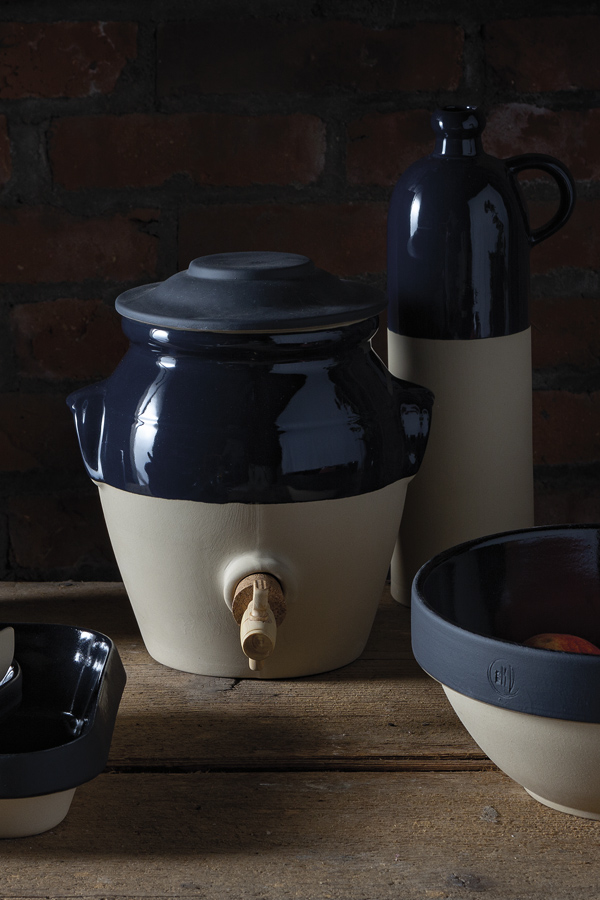
Table of Contents
A Quiet Elegance in Form and Function
As an interior designer with a love for slow decor, I’m always drawn to pieces that blend honest craftsmanship with quiet presence. Traditional vinegar and pickling pots, often made from earthenware or stoneware, have this beautiful duality: simple shapes, yet deeply expressive textures. The glazes range from deep tobacco browns to muted greys and soft cream tones, giving them a tactile warmth that modern ceramics sometimes lack.
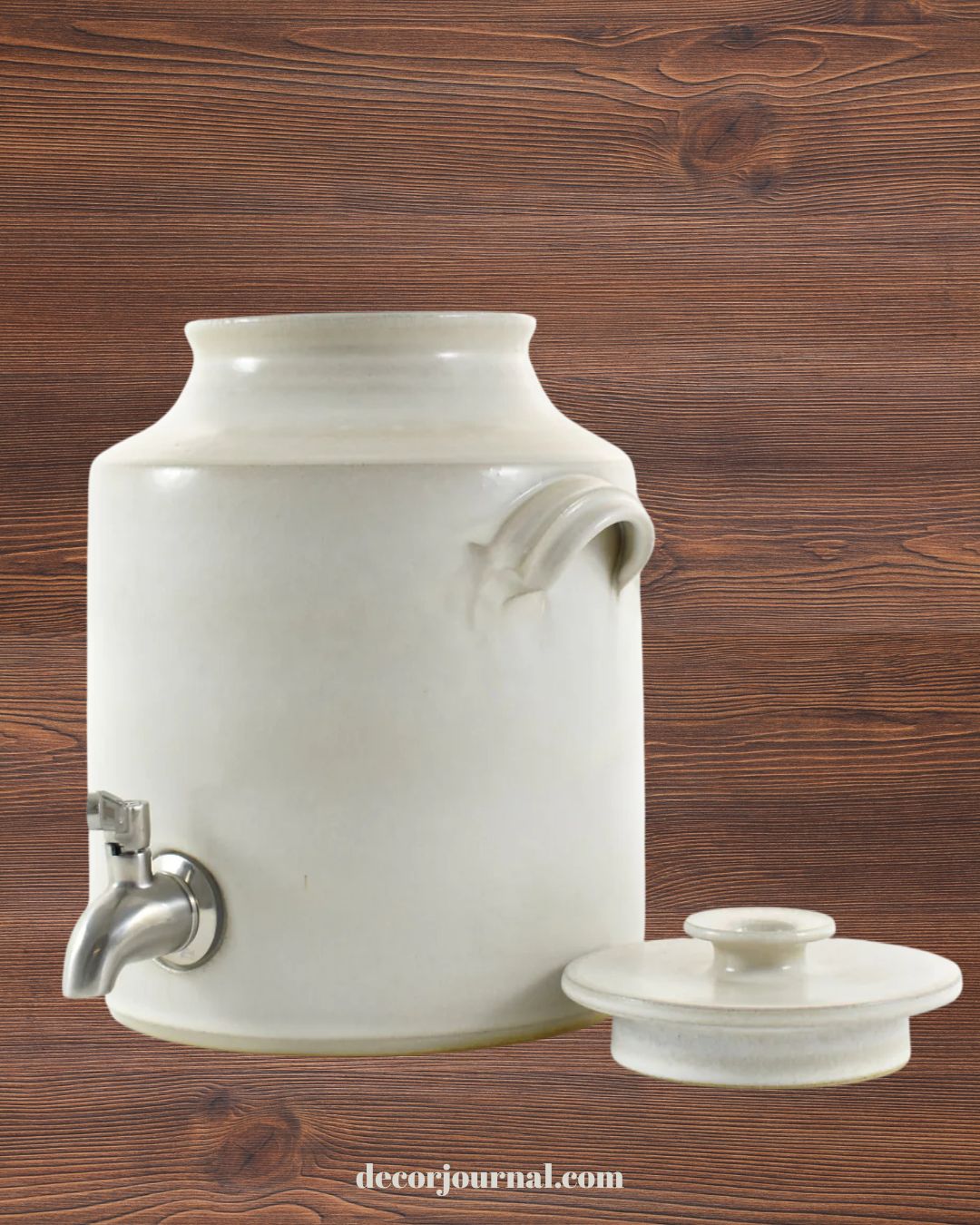
Whether they come from an old French farmhouse or a Japanese onggi maker’s studio, these pots carry with them a sense of continuity, of how humans have always interacted with food, nature, and home.
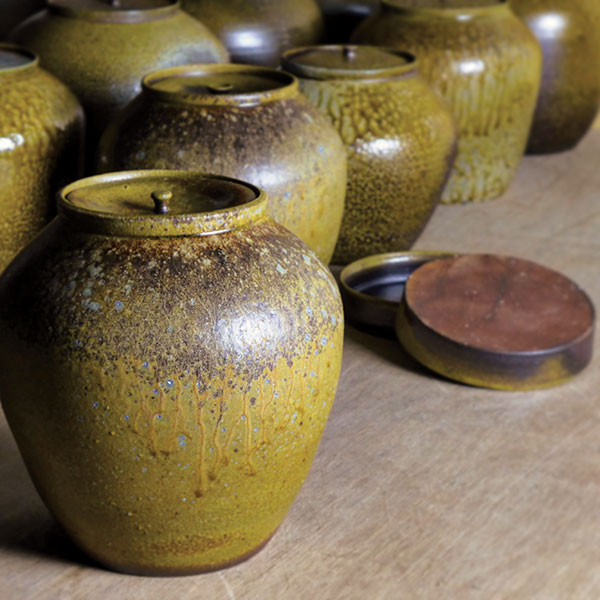
Ban Onggi is a type of Japanese salt-glazed pottery fired at high temperatures (around 2300–2400°F) in an oxidising kiln atmosphere. During firing, salt reacts with the silica in the clay to create a natural glaze, giving the pieces both beauty and durability. The oxidation process also speeds cooling, resulting in a glossy surface and distinctive yellow-brown tones.
Styling Tips: From Pantry to Living Room
Vinegar and pickling pots make the most charming companions in a kitchen. I’d happily have one for white wine, another for red, and a third bubbling away with cider, each transforming into a fragrant vinegar, infused with herbs, flowers, and spices, their silky “mother” growing more delicious by the day.
And oh, the pickling pots! Brimming with vibrant vegetables to see me through the winter and keep my microbiome in tip-top condition. There’s only one catch: these beauties are no lightweights. Traditionally destined for larders, pantries, or cool cellars, they’re not exactly countertop-friendly. But don’t let that stop you. With a little creativity and perhaps a touch of decorative styling, you can make them part of your home’s story, rather than hidden kitchen relics. Think of them as sculptural accents with a secret life of flavour.
Styling Tips:
As Sculptural Anchors: Place a large vinegar pot beside a console table or fireplace. Its weight and simplicity ground the space, adding a note of timelessness.
As Vessels for Greenery: I adore pairing the cool neutrality of a stoneware pot with the fresh, architectural lines of olive branches or dried lunaria. It’s a perfect study in contrast.
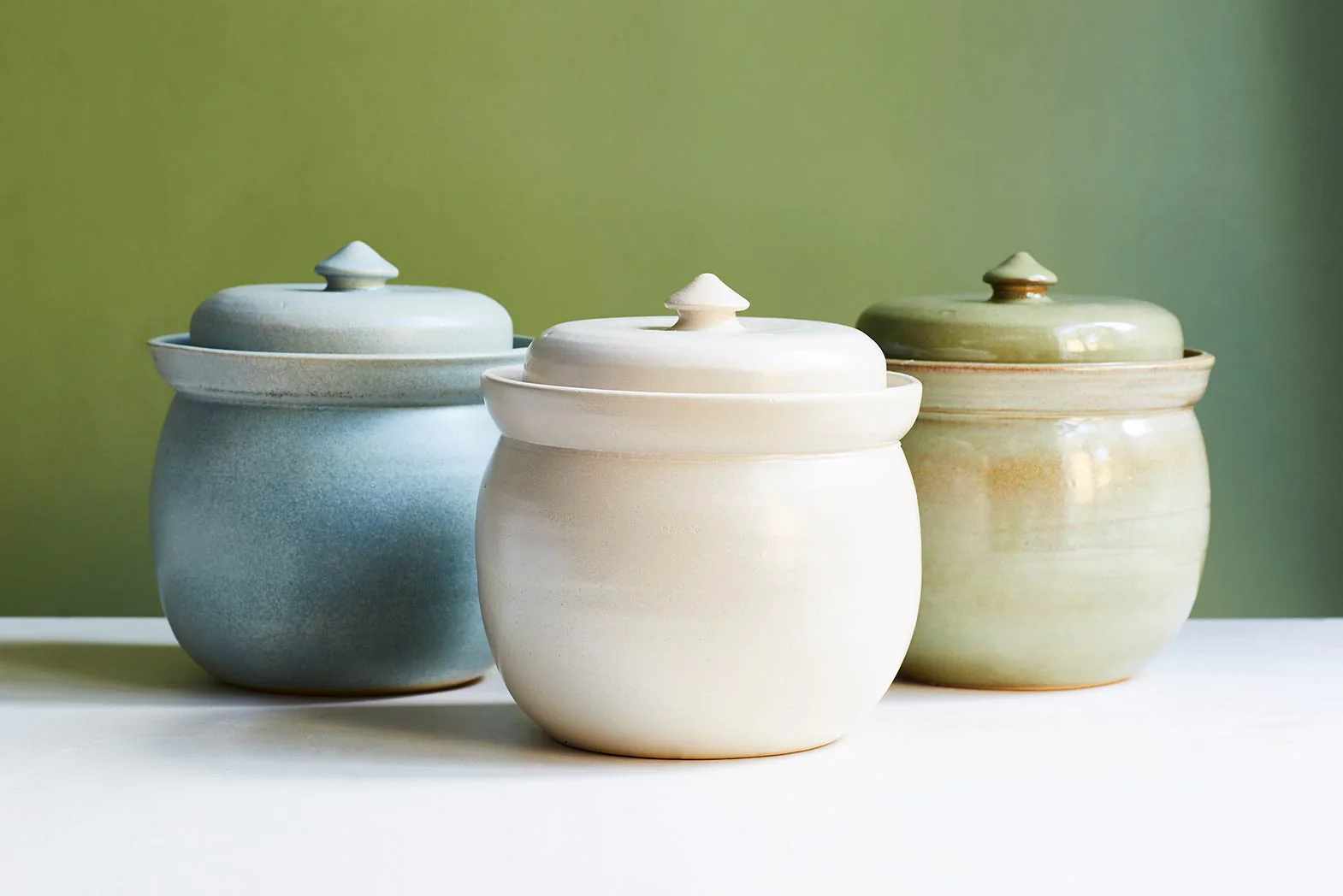
In Groups: A trio of mismatched pickling jars, perhaps one with a chipped rim and another with a glossy glaze, creates a quiet still life that feels collected over time, not styled overnight.
In Bathrooms: Use smaller vinegar pots to hold bath salts, brushes, or even rolled towels. Their rustic materiality brings warmth to otherwise clinical spaces.
The Imperfect Beauty of Patina
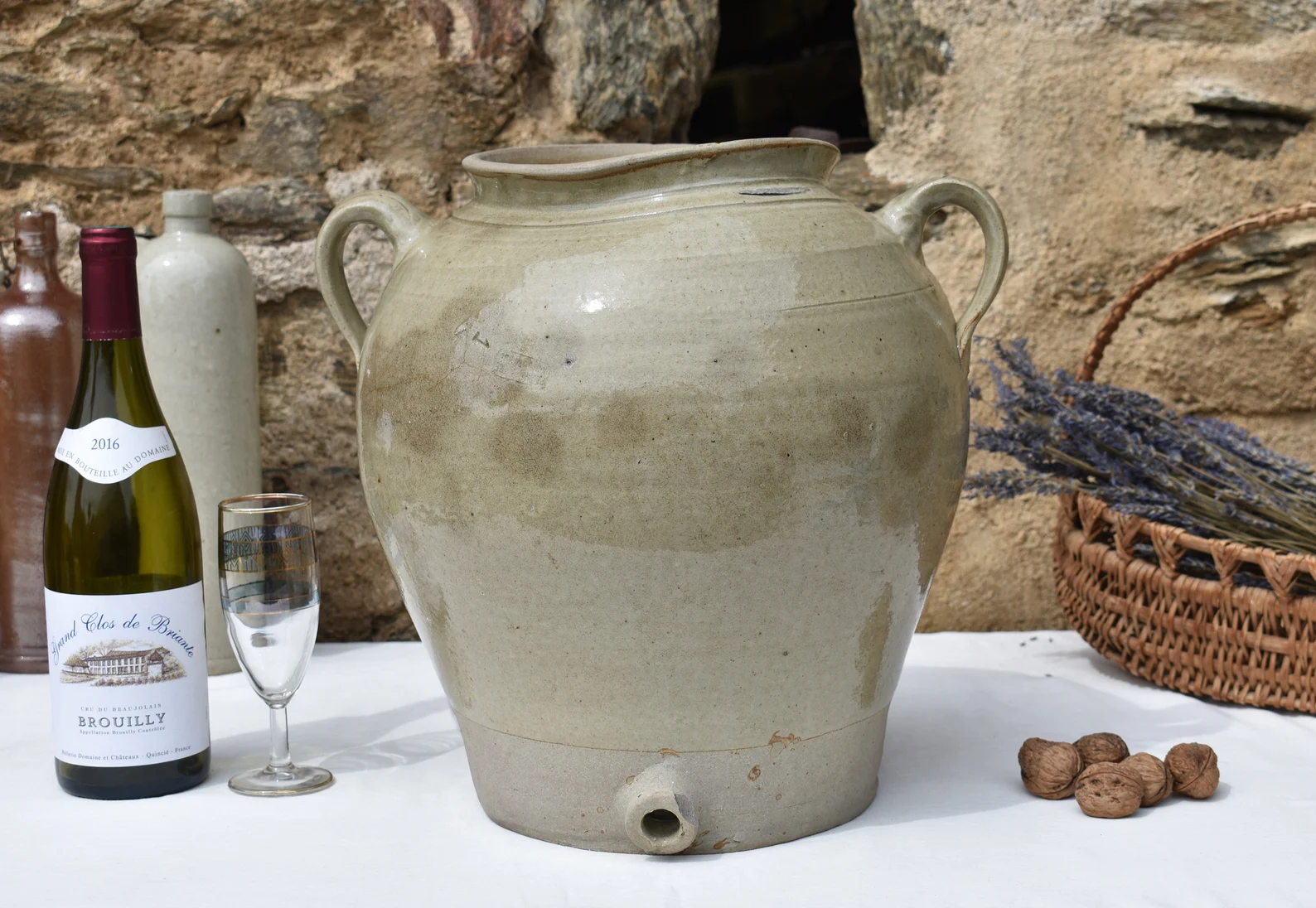
Even brand-new vinegar and pickling pots have a delightfully primitive charm. They transport us to a time when form followed function, when utility was beauty enough. But it’s the older, well-used ones that truly capture my heart, the pots with a few gentle scars, a fine crackle in the glaze, and the quiet patina of a life well lived.
Those so-called imperfections really are the very essence of perfection. They tell stories, add soul, and bring a room the kind of character no factory finish can replicate. In a world racing toward the sleek and the flawless, these humble vessels remind us that real beauty often lies in the irregular, the well-loved, and the enduring.
Where to Find Them
This is the perfect excuse to lose yourself at antique fairs, though I can promise you’ll return with far more than just vinegar and pickling pots. (Consider yourself warned!) Etsy is also a treasure trove, brimming with both antique finds and beautifully crafted new pieces. Many contemporary potters are reimagining these traditional forms, giving them a modern twist with vibrant, eye-catching glazes.
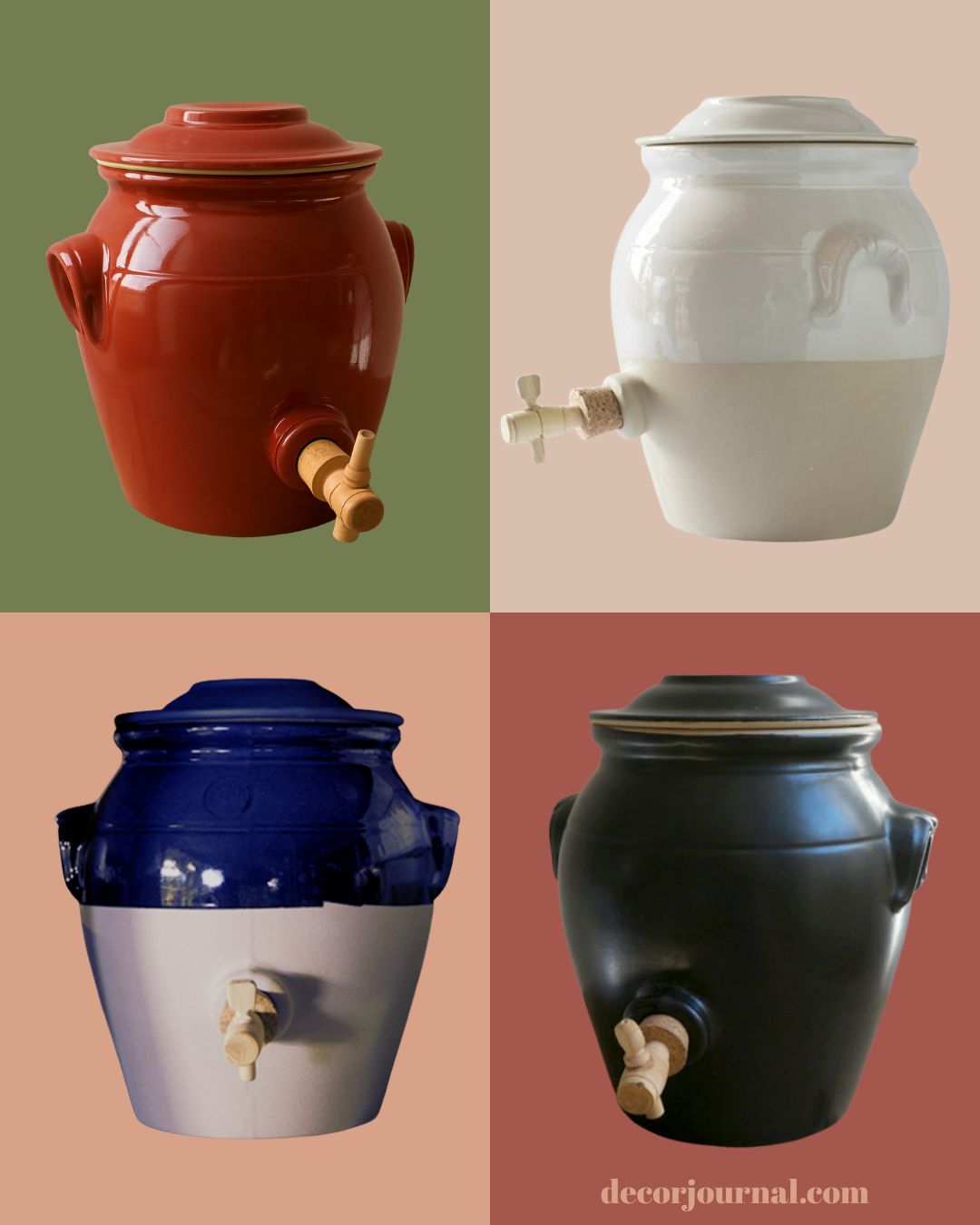
Be sure to explore local makers too; supporting artists close to home always adds a lovely personal touch. My absolute favourite, however, is the French brand Manufacture de Digion. Their vinegar pots come in a dreamy palette: Blue Ink, White, Natural, Matte, Black, Seafoam, Praline, and Garrigue Green. Each piece arrives with a boxwood tap and cork stopper, the perfect marriage of utility and elegance.
You can’t purchase directly from their website (tragic, I know), but plenty of stockists carry the brand. And a word of warning: once you see their moody, impossibly chic lookbook, you may find yourself wanting far more than just vinegar and pickling pots.
Final Thoughts
These robust, almost primitive-looking vessels have a grounded authenticity of their own. They may not sparkle like crystal or shine like brass, but they add a soulful, grounded quality to interiors like no other. They are visual reminders of patience, process, and homegrown beauty.
In design, it’s easy to chase novelty. But sometimes, the most powerful statement is made by a humble vessel, one that has quietly stood the test of time and is a quiet reminder for us to slow down.
2 responses to “The Humble Beauty of Vinegar and Pickling Pots: A Timeless Accent for the Modern Home”
The pot really hurt my head 🤕
I know, and it was a beautiful pot too. Probably Victorian:D